Have Any Question?

 +44 7452 122728




 Back





Recording Financial Transactions (FA1)
The Recording Financial Transactions (FA1) Course introduces the fundamentals of bookkeeping and financial record-keeping. It equips learners with the skills to accurately process transactions, maintain accurate financial documentation and organised accounting records.
Learning Options
- Live Interactive Sessions
- Dedicated 1-to-1 Tutor Support (30-min Weekly)
- Expert Trainers with Industry Experience
- Flexible Schedule
- Networking Opportunities
- High Pass Rates
- 24/7 Personalised Support
- Online Video-Based Learning
- Flexible Schedule
- Expert Trainers with Industry Experience
- High Pass Rates
- 24/7 Personalised Support
- Interactive Learning Materials
- Live Online Classes
- Expert Trainers with Industry Experience
- Live Assessment and Feedback
- Interactive Learning Materials
- Networking Opportunities
- High Pass Rates Morning Schedule:
Overview
The Recording Financial Transactions (FA1) Course is an excellent starting point for individuals new to accounting and finance. Designed for aspiring accounting professionals, it focuses on recording business transactions, processing financial documentation, and understanding double-entry bookkeeping principles.
Delegates develop skills in recording sales and purchases, preparing journal entries and maintaining financial records. They learn to reconcile accounts, identify discrepancies and correct accounting errors. These skills support accurate and organised financial transaction processing.
As part of ACCA's Foundations in Accountancy qualifications, this course helps learners develop practical bookkeeping skills and an understanding of financial transaction processing. It provides a foundation for progressing towards further accounting qualifications and entry-level finance roles.
Course Objectives
Understand the key principles of bookkeeping and financial transaction management
Develop the ability to process financial documents accurately and efficiently
Gain proficiency in preparing journal entries, ledger accounts, and trial balances
Learn techniques for identifying and rectifying errors in financial records
Develop skills in recording sales, purchases, cash, bank, and payroll transactions
Understand the purpose of reconciliations and apply basic reconciliation procedures
Enhance organisational efficiency by maintaining precise financial records
Upon completion, learners will possess the foundational skills required to manage financial transactions, support financial reporting processes, and advance their journey toward ACCA qualifications and a thriving career in accounting.

Average completion time
1 Month
with unlimited support
100% online
Start anytime
Study At Your Own Pace
Blended Learning
Study At Your Own PaceCourse Details
Develop your understanding of essential financial, business and management accounting techniques with ACCA Applied Knowledge. You'll learn basic business and management principles and the skills required of an accountant working in business.
Course Outline
Module 1: Types of Business Transactions and Documentation
- Types of business transaction
- Types of business documentation
- Process of recording business transactions within the accounting system
Module 2: Duality of Transactions and Double Entry Bookkeeping
- Double-entry bookkeeping
- Journal entries
- Elements of the financial statements
Module 3: Banking System and Transactions
- The banking process
- Documentation
Module 4: Payroll
- Processing payroll transactions within the accounting system
Module 5: General Ledger Accounts
- Prepare general ledger accounts
Module 6: Cash and Bank
- Maintaining cash records
- Maintaining a petty cash record
Module 7: Sales and Credit Transactions
- Recording sales, customer account balances and trade receivables
Module 8: Purchases and Credit Transactions
- Recording purchases, supplier account balances and trade payables
Module 9: Reconciliation
- Purpose of reconciliations
- Reconcile the cash records
- Reconcile individual supplier accounts
Module 10: Preparing the Trial Balance
- Prepare the trial balance
- Correcting errors
Entry Requirements
Educational Background: No prior accounting experience is required; however, a basic understanding of mathematics and business concepts is recommended for smoother progression.
Language Proficiency: Learners should have a good command of English, as all course materials, assessments, and discussions are conducted in English.
Interest in Accounting: This course is ideal for individuals with a keen interest in building foundational accounting knowledge and pursuing further ACCA qualifications.
Learning Outcomes
Master Financial Record-Keeping: Gain a comprehensive understanding of bookkeeping, journal entries, and ledger management to ensure accurate and compliant financial documentation.
Develop Transactional Accuracy: Learn to process financial transactions efficiently, identify and correct errors, and prepare trial balances with confidence.
Build Ethical Accounting Practices: Acquire the skills to adhere to ethical standards, maintain regulatory compliance, and support organisational financial efficiency.
Prepare for Advanced Accounting: Lay a strong foundation for further ACCA qualifications and advanced career opportunities in accounting and finance.
Target Audience
Junior Accountant
Accounts Assistant
Finance Administrator
Bookkeeper
Audit Trainee
Financial Data Entry Clerk
Payroll Administrator
The Recording Financial Transactions (FA1) Course is ideal for individuals seeking to develop their foundational skills in accounting and finance. Below are the professionals and learners who can benefit from this course:
MPES Support That Helps You Succeed
At MPES, we offer comprehensive support to help you succeed in your studies. With expert guidance and valuable resources, we help you stay on track throughout your course.
- MPES Learning offers dedicated support to help you succeed in Accounting and Finance courses.
- Get expert guidance from tutors available online to assist with your studies.
- Check your eligibility for exemptions with the relevant professional body before starting.
- Our supportive team is here to offer study advice and support throughout your course.
- Access a range of materials to help enhance your learning experience. These resources include practice exercises and additional reading to support your progress.
Course Includes
- Expert-led Sessions
- Digital Delegate Pack
- 24/7 Tutor Support
- Downloadable Resources & Challenges
- Interactive Learning
- Exercise Files
- Scenario-Based Learning
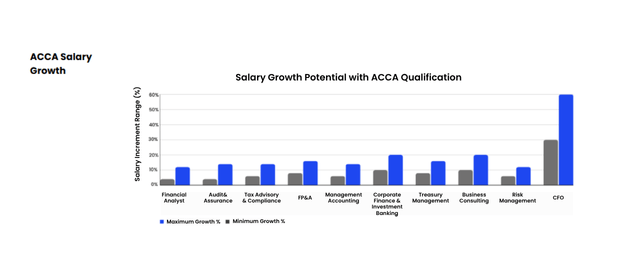
ACCA Salary Growth
Career Growth Stories
Discover how MPES Learning transforms careers with real success stories.

Arvy Pasanting

As a qualified accountant, studying at MPES has been a very rewarding experience. Its team of passionate and dedicated mentors gave me the confidence and knowledge I needed to not just excel at my current role as an auditor, but also inspired me to expand my horizons.
Arvy Pasanting
David Ford
I was recommended MPES after searching for a way to pursue a career in the accounting profession, I have studied with them throughout my journey utilising both their “in class” and online learning opportunities that fit around the needs of my employer, I have found them to be consummate professionals delivering first class accounting courses with support always available.
David Ford
Aaron Allcote
As a finance officer, MPES has been a huge help in understanding the process of recording and processing transactions from all different perspectives. The courses are very easy to follow, and the training they provide can be applied to real-life scenarios. The courses have been a huge help for me, and I would highly recommend them.
Aaron Allcote
Bob Beaumont
I completed all of my ACA studies with MPES and I think you would struggle to find a better training provider anywhere in the British Isles. MPES' tutors are excellent both at delivering training and giving individualised feedback and coaching. the supporting materials and the out of class support are also great.
Bob Beaumont
George Evans
The Financial Risk Management Course at MPES was invaluable in deepening my understanding of risk assessment and mitigation strategies. The hands-on learning approach allowed me to apply new concepts directly to my work. I highly recommend it for professionals in finance.
George Evans
James Robinson
As a financial consultant, I am always seeking ways to enhance my expertise. The Investment Analysis Course at MPES exceeded my expectations, offering practical skills and knowledge that I can apply immediately in my consulting work. It's an outstanding choice for professionals in finance.
James Robinson
Laura Bennett
The Corporate Finance Course I attended at MPES was transformative. The depth of knowledge shared by the instructors and the relevance of the topics covered have directly impacted on our financial strategy. I strongly endorse this program for anyone in a leadership position in finance.
Laura Bennett
Emma Johnson
The Financial Modeling and Valuation Course at MPES was incredibly insightful. The practical applications and real-world examples helped solidify my understanding of complex concepts. I highly recommend this course to anyone looking to enhance their financial acumen.
Emma JohnsonACCA Roadmap

Have Questions? We’ve Got You
If you have any questions, we’re here to help. Find the answers you need in the MPES detailed FAQ section.
Q. What is the Recording Financial Transactions (FA1) Course?
This Recording Financial Transactions (FA1) Course is an introductory ACCA course that covers the fundamentals of bookkeeping and financial record-keeping. It helps learners understand how businesses document, record, and process financial transactions within an accounting system.
Q. Why is accurate financial transaction recording important for businesses?
Accurate financial transaction recording helps businesses maintain reliable financial information, monitor cash flow, and track income and expenditure. It also supports financial reporting and informed business decisions.
Q. Does the Recording Financial Transactions (FA1) Course cover computerised accounting systems?
Yes, this Recording Financial Transactions (FA1) Course introduces the key features of computerised accounting systems, including transaction entry, data storage, and record management. Learners also explore how these systems support accurate financial processing and help identify recording errors.
Q. Can a trial balance agree even when accounting errors exist?
Yes, a trial balance can balance even when certain accounting errors remain. For example, recording an amount in the wrong account may leave total debits and credits equal, making further checks necessary.
Q. How are credit sales different from cash sales in accounting?
Cash sales involve receiving payment immediately, while credit sales allow customers to pay later. Credit sales create trade receivables, which businesses record and monitor until the outstanding amount is settled.
Q. What is the difference between trade receivables and trade payables?
Trade receivables represent amounts customers owe a business for credit sales. Trade payables represent amounts the business owes suppliers for goods or services purchased on credit.
Q. Why is bank reconciliation important in financial record-keeping?
Bank reconciliation helps businesses compare their accounting records with bank statements to identify discrepancies, missing transactions, and timing differences. It supports accurate cash records and helps resolve inconsistencies in financial information.
Q. How can completing the Recording Financial Transactions (FA1) Course support my career growth?
Completing the FA1 Course helps learners develop foundational bookkeeping skills relevant to entry-level accounting and finance roles. It also provides a starting point for pursuing further ACCA qualifications, supporting long-term career development in accounting.
Q. How do general ledger accounts support financial management?
General ledger accounts organise financial transactions into categories such as assets, liabilities, income, and expenses. This allows businesses to monitor account balances and maintain structured accounting information.
Q. What is the difference between an invoice and a credit note?
An invoice requests payment for goods or services supplied, while a credit note reduces or cancels an amount previously invoiced. Both documents help businesses maintain accurate sales and purchase records.
Related Courses
Explore additional courses designed to complement your learning journey and enhance your professional skills. Expand your knowledge with these expertly curated options tailored to your career goals.

Resources
Access a wide range of free resources to support your learning journey. From blogs to news and podcasts, these valuable guides are available at no cost to help you succeed.


How to Become a Forensic Accountant? Skills and Salary Explained
Maria Thompson21-Jul-2026