Have Any Question?
 +44 7452 122728




 Back
Back





CIMA’s CGMA® Financial Reporting Training (F1)
The CIMA’s CGMA® Financial Reporting (F1) Course offers a deep dive into the principles and practices of financial reporting, providing learners with the skills and knowledge to prepare, interpret, and communicate essential financial information.
Learning Options
- Live Interactive Sessions
- Dedicated 1-to-1 Tutor Support (30-min Weekly)
- Expert Trainers with Industry Experience
- Flexible Schedule
- Networking Opportunities
- High Pass Rates
- 24/7 Personalised Support
- Online Video-Based Learning
- Flexible Schedule
- Expert Trainers with Industry Experience
- High Pass Rates
- 24/7 Personalised Support
- Interactive Learning Materials
- Live Online Classes
- Expert Trainers with Industry Experience
- Live Assessment and Feedback
- Interactive Learning Materials
- Networking Opportunities
- High Pass Rates
Overview
The CIMA’s CGMA® Financial Reporting (F1) Course is a cornerstone for individuals pursuing a career in accounting and finance. It provides a robust framework for understanding how financial data is prepared, presented, and used for organisational success.
This course focuses on the preparation of financial statements, the application of accounting standards, and the interpretation of financial data. Learners will learn how to present financial information that meets the needs of stakeholders and supports strategic decision-making.
Delivered by MPES, this course provides a practical and theoretical foundation for navigating the complexities of financial reporting, making it an essential step for aspiring Chartered Global Management Accountants (CGMAs) and finance professionals.
Course Objectives
Gain insights into the frameworks and standards governing financial reporting, including IFRS
Develop the ability to prepare accurate and comprehensive financial statements
Build skills to evaluate financial information and assess organisational performance
Understand and apply key international accounting standards to financial reporting tasks
Learn to uphold ethical principles and regulatory compliance in financial reporting practices
Develop the ability to present financial data that supports strategic business decisions
Lay a strong foundation for progression within the CIMA Qualification framework and the broader accounting profession
Upon completing this course, learners will possess the technical expertise and professional confidence to handle financial reporting responsibilities, making them valuable assets to their organisations and setting the stage for future success in management accounting.

Average completion time
4 Month
with unlimited support
100% online
Start anytime
Study At Your Own Pace
Blended Learning
Study At Your Own PaceCourse Includes
- Expert-led Sessions
- Digital Delegate Pack
- 24/7 Tutor Support
- Downloadable Resources & Challenges
- Interactive Learning
- Exercise Files
- Scenario-Based Learning
Course Details
Develop your understanding of essential financial, business and management accounting techniques with ACCA Applied Knowledge. You'll learn basic business and management principles and the skills required of an accountant working in business.
Entry Requirements
Educational Background: While no prior experience in financial reporting is required, a basic understanding of accounting principles and business concepts will be advantageous for learners starting this course.
Language Proficiency: A strong command of English is necessary, as all learning materials, examinations, and discussions are delivered in English.
Interest in Financial Reporting: This course is well-suited for individuals aspiring to build a career in finance and accounting, especially those aiming to excel in financial reporting and compliance.
Learning Outcomes
Understand Financial Reporting Frameworks: Gain a detailed understanding of International Financial Reporting Standards (IFRS) and their application in preparing financial statements for various types of entities.
Prepare Accurate Financial Statements: Learn to produce compliant income statements, balance sheets, cash flow statements, and disclosures while adhering to ethical and professional standards.
Analyse Financial Performance: Develop skills to interpret financial statements and understand the financial health of an organisation to support decision-making and strategy.
Ensure Regulatory Compliance: Learn to identify and implement financial reporting requirements while maintaining adherence to global and local accounting standards.
Lay the Foundation for Advanced Studies: Build a strong platform for higher-level CIMA qualifications and progress toward achieving the CGMA® designation.
Target Audience
Assistant Accountant
Finance Analyst
Accounts Assistant
Audit Assistant
Financial Reporting Assistant
Trainee Accountant
Corporate Finance Analyst
The CIMA’s CGMA® Financial Reporting (F1) Course is designed for learners aiming to advance their careers in financial reporting and accounting. Ideal candidates include:
Course content
Identify Regulators and Describe Their Role
Apply Corporate Governance Principles to Financial Reporting
Identify the Main Elements of Financial Statements
Explain Specific Financial Reporting Standards
Apply Financial Reporting Standards to Prepare Basic Financial Statements
Distinguish Between Different Types of Taxes
Calculate Tax for Corporates
Explain Some Relevant Issues That Affect Taxation
Distinguish Between the Types and Sources of Short-Term Finance
Explain and Calculate Operating and Cash Cycles
Apply Different Techniques Used to Manage Working Capital
Module 1: Regulatory Environment of Financial Reporting
Module 2: Financial Statements
Module 3: Principles of Taxation
Module 4: Managing Cash and Working Capital
MPES Support That Helps You Succeed
At MPES, we offer comprehensive support to help you succeed in your studies. With expert guidance and valuable resources, we help you stay on track throughout your course.
- MPES Learning offers dedicated support to help you succeed in Accounting and Finance courses.
- Get expert guidance from tutors available online to assist with your studies.
- Check your eligibility for exemptions with the relevant professional body before starting.
- Our supportive team is here to offer study advice and support throughout your course.
- Access a range of materials to help enhance your learning experience. These resources include practice exercises and additional reading to support your progress.
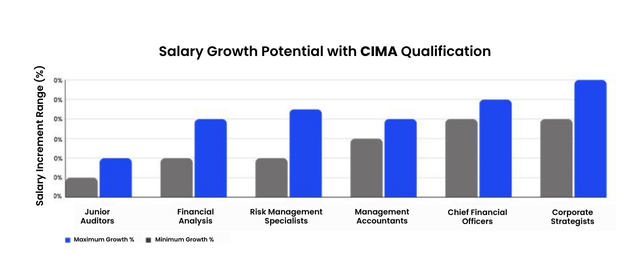
CIMA Salary Growth
Career Growth Stories
Discover how MPES Learning transforms careers with real success stories.

Arvy Pasanting

As a qualified accountant, studying at MPES has been a very rewarding experience. Its team of passionate and dedicated mentors gave me the confidence and knowledge I needed to not just excel at my current role as an auditor, but also inspired me to expand my horizons.
Arvy Pasanting
David Ford
I was recommended MPES after searching for a way to pursue a career in the accounting profession, I have studied with them throughout my journey utilising both their “in class” and online learning opportunities that fit around the needs of my employer, I have found them to be consummate professionals delivering first class accounting courses with support always available.
David Ford
Aaron Allcote
As a finance officer, MPES has been a huge help in understanding the process of recording and processing transactions from all different perspectives. The courses are very easy to follow, and the training they provide can be applied to real-life scenarios. The courses have been a huge help for me, and I would highly recommend them.
Aaron Allcote
Bob Beaumont
I completed all of my ACA studies with MPES and I think you would struggle to find a better training provider anywhere in the British Isles. MPES' tutors are excellent both at delivering training and giving individualised feedback and coaching. the supporting materials and the out of class support are also great.
Bob Beaumont
George Evans
The Financial Risk Management Course at MPES was invaluable in deepening my understanding of risk assessment and mitigation strategies. The hands-on learning approach allowed me to apply new concepts directly to my work. I highly recommend it for professionals in finance.
George Evans
James Robinson
As a financial consultant, I am always seeking ways to enhance my expertise. The Investment Analysis Course at MPES exceeded my expectations, offering practical skills and knowledge that I can apply immediately in my consulting work. It's an outstanding choice for professionals in finance.
James Robinson
Laura Bennett
The Corporate Finance Course I attended at MPES was transformative. The depth of knowledge shared by the instructors and the relevance of the topics covered have directly impacted on our financial strategy. I strongly endorse this program for anyone in a leadership position in finance.
Laura Bennett
Emma Johnson
The Financial Modeling and Valuation Course at MPES was incredibly insightful. The practical applications and real-world examples helped solidify my understanding of complex concepts. I highly recommend this course to anyone looking to enhance their financial acumen.
Emma JohnsonCIMA Raodmap

Have Questions? We’ve Got You
If you have any questions, we’re here to help. Find the answers you need in the MPES detailed FAQ section.
Q. What is CIMA’s CGMA® Financial Reporting Training?
This
training develops expertise in financial reporting, covering international
standards, regulatory frameworks, and data analysis, helping professionals
prepare and interpret financial statements effectively.
Q. Who should attend this course?
Finance
managers, accountants, auditors, analysts, and individuals pursuing CIMA
certifications will benefit from the course’s insights and practical
applications.
Q. How will this course help my career?
It
enhances your financial reporting skills, boosts your decision-making
abilities, and supports career progression in finance-related roles.
Q. Is prior financial knowledge required?
Basic
finance knowledge is beneficial but not mandatory, as the course provides
comprehensive training to build expertise.
Q. How is this course structured?
The
course includes theoretical insights, practical exercises, and discussions
aligned with CIMA’s CGMA® Operational Level standards.
Q. What topics are covered in the CIMA CGMA® Financial Reporting (F1) Course?
The
course covers key areas such as the preparation and presentation of financial
statements, regulatory frameworks, accounting standards, and the analysis and
interpretation of financial performance.
Q. Who is the ideal audience for this course?
This
course is designed for individuals aspiring to develop their financial
reporting expertise, including finance professionals, aspiring management
accountants, and those working towards their CGMA® designation.
Q. What kind of support is provided during the course?
Learners
benefit from expert-led training sessions, comprehensive study materials, and
access to resources such as case studies, financial reporting templates, and
interactive workshops.
Q. What career opportunities does this course open up?
Completion
of the F1 course prepares learners for roles such as financial analyst,
management accountant, or financial reporting specialist, and is a key step
towards achieving the CGMA® designation.
Q. What is the learning approach used in this course?
The
course combines practical exercises, real-world case studies, and theoretical
knowledge to ensure learners can confidently apply financial reporting concepts
in their professional roles.
Related Courses
Explore additional courses designed to complement your learning journey and enhance your professional skills. Expand your knowledge with these expertly curated options tailored to your career goals.

Resources
Access a wide range of free resources to support your learning journey. From blogs to news and podcasts, these valuable guides are available at no cost to help you succeed.


How to Become a Forensic Accountant? Skills and Salary Explained
Maria Thompson21-Jul-2026