Have Any Question?
 +44 7452 122728




 Back
Back




Discretionary Account: Definition, Examples, Pros and Cons
A Discretionary Account is an investment account where a Financial Adviser or Portfolio Manager makes investment decisions for clients without prior approval. It offers professional portfolio management, timely decision-making, and tailored investment strategies aligned with the investor’s financial objectives and investment goals.Table Of Contents


 44 7452 122728
 04-Jul-2026
Author-Veronica Davis
The stock market never waits; prices rise in seconds, and opportunities disappear just as fast as possible. This is where Discretionary Account gives Fund Managers and Portfolio Managers the power to act instantly. No repeated approvals, no delayed decisions. Just timely moves based on market conditions and investment goals.
In such situations, time is a real luxury. Tracking every market shift is not always practical. That is why Discretionary Accounts have become popular among busy professionals and high-net-worth investors. In this blog, we will explore what is a Discretionary Account, how it works, its advantages and whether it is the right investment approach for you. Let's get started!
What is a Discretionary Account?
A Discretionary Account is an investment account that allows a Portfolio Manager, Financial Adviser or authorised broker to buy and sell securities on behalf of an investor without obtaining prior approval for every transaction. Investment decisions are made according to the investor's financial objectives, risk tolerance, and agreed investment strategy, allowing the manager to respond quickly to changing market conditions.
To activate a Discretionary Account, the investor signs a discretionary agreement that grants trading authority to the investment professional managing the account. This arrangement enables timely trade execution, professional portfolio management, and quicker responses to changing market conditions.

How Does a Discretionary Account Work?
A Discretionary Account works by granting a professional Portfolio Manager or Financial Adviser the authority to manage investments on behalf of the client. The process typically involves the following steps:
1) Define Investment Objectives
The process begins with understanding the investor's financial goals, investment horizons, risk tolerance, and income requirements. These factors form the basis of the investment strategy and decision-making process.
2) Establish the Investment Mandate
The investor signs a discretionary management agreement that authorises the Portfolio Manager to make investment decisions without seeking approval for each transaction. The agreement outlines financial goals, investment limits, asset preferences, and any restrictions. These restrictions may include avoiding certain industries, asset types, or high-risk investments.
3) Build and Manage the Portfolio
Based on the agreed strategy, the Portfolio Manager selects suitable investments such as shares, bonds, mutual funds, or other financial instruments. The portfolio is diversified to balance risk and maximise potential returns.
4) Monitor Market Conditions
The Portfolio Manager continuously monitors market movements, economic trends, and investment performance. This enables timely adjustments to the portfolio when market conditions or investment opportunities change.
5) Rebalance the Portfolio
As market values fluctuate, the portfolio is reviewed and rebalanced to have the desired asset allocation and risk level. This helps ensure the portfolio remains aligned with the investor's objectives.
6) Report Performance to the Investor
Although the Portfolio Manager makes day-to-day investment decisions, investors receive regular reports detailing portfolio performance, investment holdings, transactions, and overall progress towards their financial goals. This keeps them informed while reducing the need for constant involvement in investment decisions.
Develop the capabilities required to become a future business leader with the Strategic Business Leader (SBL) Course – Join now!
Advantages of Discretionary Accounts
Discretionary Accounts offer several advantages for investors who prefer professional investment management and efficient portfolio handling. These accounts are especially useful for individuals who lack the time or expertise to monitor financial markets regularly. The advantages include:
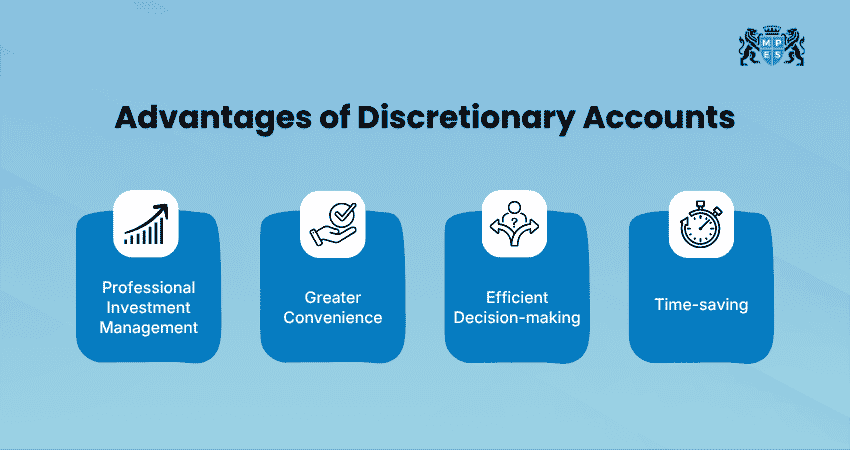
1) Professional Investment Management
Discretionary Accounts are managed by experienced investment professionals. These experts analyse market trends, assess risks, and make accurate investment decisions on behalf of clients. Their industry knowledge and market experience help investors build portfolios aligned with long-term financial goals.
2) Greater Convenience
Discretionary Accounts reduce the need for constant involvement from investors. Clients do not have to approve every transaction individually. This makes investing more convenient for busy professionals and individuals with limited market knowledge. Investors can rely on professional portfolio management while focusing on personal responsibilities and other financial priorities.
3) Efficient Decision-making
Financial markets can change quickly. Hence, Discretionary Accounts allow Portfolio Managers to respond immediately to market movements and investment opportunities. Faster decision-making can help reduce delays and improve portfolio performance. This flexibility allows managers to react promptly without waiting for client approval.
4) Time-saving
Managing investments requires regular research, market analysis, and portfolio monitoring. With a Discretionary Account, these responsibilities are handled by the Portfolio Manager. This significantly saves investors time while ensuring their portfolios remain actively managed. Moreover, investors benefit from continuous portfolio reviews and professional oversight without needing to track markets daily.
Disadvantages of Discretionary Accounts
Although Discretionary Accounts offer several advantages, they also involve certain limitations and risks. Investors should understand these drawbacks before choosing this type of investment account. Thus, the disadvantages are:
1) High Cost
Discretionary Accounts often involve higher management fees than standard investment accounts. Investors may pay advisory fees, portfolio management charges, and transaction-related costs. These expenses can reduce overall investment returns over time.
2) Trust-related Risks
Investors place significant trust in the Portfolio Manager’s judgment and expertise. Poor investment decisions or unethical practices can negatively affect the portfolio. Choosing a reliable and experienced adviser is therefore essential.
3) Performance Variability
Investment performance is not guaranteed in a Discretionary Account. Portfolio returns may vary depending on market conditions and the manager’s investment strategy. Even experienced professionals can face periods of underperformance.
4) Delegation of Decision-making
Investors give direct control over daily investment decisions in a Discretionary Account. Some individuals may feel uncomfortable allowing another person to make trading decisions on their behalf. This reduced involvement may not suit investors who prefer active control over their portfolios.
Evaluate, improve, and manage organisational performance with the Advanced Performance Management (APM) Course - Register now!
How to Set up a Discretionary Account?
Setting up a Discretionary Account involves selecting the right Financial Adviser and defining a clear investment strategy. Here are the key steps involved in the process:
1) Choose a Trusted Financial Adviser or Broker: Select a qualified investment professional with strong industry experience, good client reviews, and a fiduciary commitment to act in your best interest.
2) Define Your Financial Goals: Discuss your investment objectives, risk tolerance, financial time horizon, and any investment restrictions to create a suitable and personalised investment strategy.
3) Review the Discretionary Agreement Carefully: Read the agreement thoroughly before signing. Understand the adviser’s authority, fee structure, investment approach, and account terms.
4) Fund the Investment Account: Deposit the required investment amount into the account. Ensure the funding aligns with the agreed strategy and minimum investment requirements.
5) Maintain Regular Communication: Stay updated on portfolio performance through periodic reviews and discussions with the adviser. Regular communication helps keep investments aligned with your financial goals.
Conclusion
A Discretionary Account offers investors a convenient way to manage investments through professional expertise and faster decision-making. It allows Portfolio Managers to respond quickly while bridging investments with financial goals and risk tolerance. Understanding how it works and its advantages helps investors make informed financial decisions with greater confidence.
Enhance your understanding of auditing standards and ethics with the Advanced Audit and Assurance (AAA) Course - Join now!
Frequently Asked Questions
Q. Who is Eligible to Open a Discretionary Account?
Individuals, high-net-worth investors, businesses, and institutions can open a Discretionary Account through authorised financial advisers or brokerage firms. Eligibility requirements may differ based on the provider, investment amount, financial objectives, and regulatory requirements in a specific region.
Q. Do Discretionary Accounts Guarantee Profits?
No, Discretionary Accounts do not guarantee profits, as investment returns depend on market conditions and the performance of selected assets. However, professional portfolio management, timely decision-making, and diversified investment strategies help manage risk and improve the potential for achieving long-term financial objectives.
Q. Who Manages a Discretionary Account?
A Discretionary Account is managed by a Financial Adviser, Portfolio Manager, or an authorised broker. They make investment decisions on behalf of the investor based on agreed financial goals, risk tolerance, and investment strategies. Their role is to manage the portfolio professionally and responsibly.