Have Any Question?
 +44 7452 122728




 Back
Back



Tangible Assets: Definition, Types, Examples, and Valuation
Tangible Assets are physical resources with measurable value, such as land, buildings, equipment, vehicles, and inventory, used to support business operations. They are used to produce goods, deliver services, and generate revenue over time, making them an essential part of a company's financial strength and long-term growth.Table Of Contents


 44 7452 122728
 11-Jul-2026
Author-Maria Thompson
Whether it is a factory, a delivery fleet, or office equipment, these assets form the backbone of every successful business. They help organisations produce goods, deliver services, and support day-to-day operations. Collectively, these resources are known as Tangible Assets.
Knowing how these assets are classified, valued, and managed can improve financial decision-making, support accurate reporting, and provide a clearer picture of a company's overall financial health. In this blog, we will explore what are Tangible Assets, their types, valuation methods, and why they play such an important role in business success. Read on to learn more!
What are Tangible Assets?
Tangible Assets are physical resources that have measurable financial value and can be seen or touched. They are owned by individuals or organisations and are used to support day-to-day operations, produce goods, and generate revenue.
Since Tangible Assets have a physical form and economic value, they are recorded on the balance sheet and often represent a significant portion of a company's total assets. These assets contribute directly to an organisation's ability to operate and maintain long-term value. For accounting purposes, they are typically classified as either current assets or fixed assets, depending on their nature and expected use.
1) Current Assets: Short-term assets that are consumed, sold, or converted into cash within one year.
2) Fixed Assets: Long-term assets that are used to operate the business and generate value over several years.
Why do Tangible Assets Matter?
Tangible Assets provide a physical foundation that supports both business operations and financial success. Here are the key reasons why they matter:
1) Support Daily Business Operations: Tangible Assets provide the physical resources organisations need to produce goods, deliver services, and carry out everyday business activities efficiently.
2) Strengthen Financial Reporting: Since they are recorded on the balance sheet, they give stakeholders a clear view of an organisation's financial position and asset base.
3) Assist in Business Valuation: The value of Tangible Assets contributes to determining an organisation's overall worth, making them important during mergers, acquisitions, and investment decisions.
4) Support Financing Opportunities: Many Tangible Assets can be used as collateral when securing loans, helping organisations access funding for growth and expansion.
5) Improve Strategic Decision-making: Accurate tracking and valuation of Tangible Assets help organisations make informed decisions about investment, budgeting, maintenance, and asset replacement.
Types of Tangible Assets
Tangible Assets come in many forms, depending on how they support an organisation's operations and long-term objectives. Some are used directly in daily business activities, while others are held to generate value or support future growth. The following are some of the most common types of Tangible Assets:
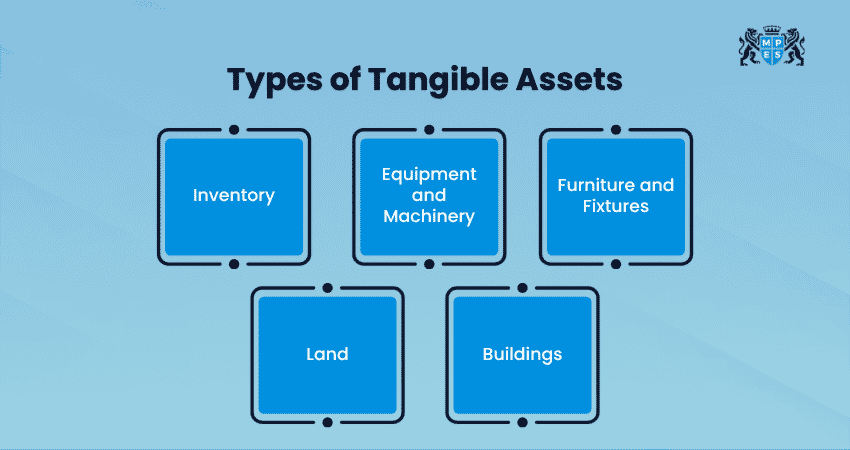
1) Inventory
Inventory consists of goods held for sale or materials used in the manufacturing process. It is classified as a current asset because it is expected to be sold, consumed, or converted into cash within the normal operating cycle.
2) Equipment and Machinery
Equipment and machinery are long-term assets used to manufacture products, deliver services, or carry out business operations. These assets provide value over multiple years and are typically depreciated throughout their useful life.
3) Furniture and Fixtures
Furniture and fixtures are Tangible Assets that include office furniture, workstations, shelving, and permanently installed items that help organisations perform their daily activities. These are treated as fixed assets and are depreciated over their expected useful life.
4) Land
Land is a long-term Tangible Asset owned for business operations, expansion, or investment purposes. Unlike other asset types, land generally has an unlimited useful life and is therefore not depreciated.
5) Buildings
Buildings include offices, factories, warehouses, and other structures owned by an organisation. Whether they are fully occupied, partially used, or temporarily unused, these buildings remain as assets as long as they are owned or controlled by the organisation and continue to provide future economic benefits.
Unlock the power of financial insights with Management Accounting Training (MA) - Join now!
How Tangible Assets Work in Accounting?
Tangible Assets are recorded on the balance sheet at their purchase cost and any costs incurred to make the asset ready for use, such as delivery, installation, and professional fees. The assets are then classified as either current or non-current assets based on their expected period of use or holding. This classification helps organisations accurately report their financial position.
Most long-term Tangible Assets are depreciated over their useful life to reflect wear and tear or obsolescence, while land is generally not depreciated. Proper recording and valuation help ensure accurate financial reporting and compliance with accounting standards.
How Tangible Assets Appear in Financial Statements?
Tangible Assets are recorded in a company's financial statements to reflect their value and financial impact. They appear in different sections based on their type, helping stakeholders understand an organisation's resources, asset values, depreciation, and overall financial position. Here is how they appear in financial statements:
1) Balance Sheet (Statement of Financial Position)
Long-term Tangible Assets are generally reported as Property, Plant, and Equipment (PP&E) under Non-current Assets, while current Tangible Assets such as inventory are reported under Current Assets. They are generally recorded at their original cost, less accumulated depreciation and any accumulated impairment losses. Land is also classified as a Tangible Asset but is generally not depreciated because it has an indefinite useful life.
2) Income Statement
Tangible Assets affect the income statement through depreciation expense. The cost of most Tangible Assets, excluding land, is allocated over their estimated useful life and recognised as depreciation expense. This reflects the gradual reduction in an asset's value as it is used in business operations.
Examples include:
1) Annual depreciation of machinery
2) Depreciation of office equipment
3) Depreciation of company vehicles
3) Cash Flow Statement
Tangible Assets appear in the cash flow statement under Investing Activities.
1) Purchase of Tangible Assets → Cash Outflow
2) Sale of Tangible Assets → Cash Inflow
These transactions show how an organisation invests in, acquires, and disposes of long-term assets to support its operations and future growth.
4) Notes to the Financial Statements
Additional information about Tangible Assets is disclosed in the notes to the financial statements, providing additional details about their valuation, depreciation, and changes during the reporting period.
Asset Cost and Valuation:
1) Original cost of assets
2) Additions and disposals during the reporting period
Depreciation Information:
1) Depreciation methods used
2) Estimated useful lives
3) Accumulated depreciation
Impairment Losses:
1) Any impairment losses recognised during the reporting period
2) Circumstances affecting the recoverable value of assets, where applicable
How to Value Tangible Assets?
Tangible Assets can be valued using different methods depending on their purpose, condition, and market availability. Selecting the appropriate valuation approach helps businesses determine an asset's fair value for accounting, financial reporting, insurance, or sale. Below are a few ways to value Tangible Assets:
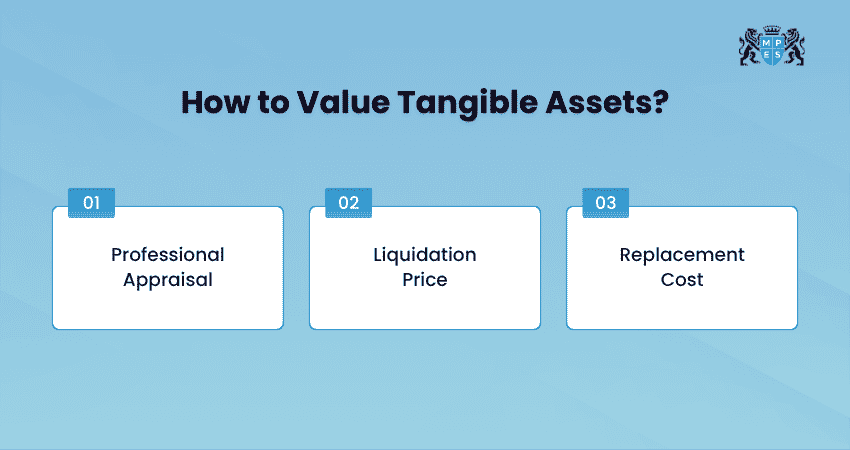
1) Professional Appraisal
When an organisation requires the most accurate valuation of a Tangible Asset, it may engage an independent professional appraiser with expertise in the relevant asset type. The appraiser assesses the asset's condition, market demand, age, and other factors that influence its value.
Following the assessment, the appraiser prepares a detailed valuation report outlining the asset's condition, quality, and any other factors influencing its value. This report provides an objective estimate of the asset's value.
2) Liquidation Price
The liquidation price is the estimated amount an organisation can recover by quickly selling a Tangible Asset, typically during financial distress or business closure. Unlike market or appraised value, this method focuses on the asset's immediate selling price under time-sensitive conditions.
Because the sale is often urgent, buyers expect discounted prices, making the liquidation value generally lower than the asset's fair market value. It may also account for selling expenses and the challenges of finding buyers for specialised or less liquid assets.
3) Replacement Cost
The replacement cost method estimates the amount required to replace a Tangible Asset with a similar one that offers the same functionality at current market prices. Rather than considering the asset's age or resale value, this approach focuses on the cost of obtaining an equivalent replacement.
This valuation method is commonly used for insurance purposes, helping organisations determine appropriate coverage. In the situation of a loss or damage, it provides an estimate of the amount needed to replace the asset instead of compensating for its current market value.
Understand the impact of new technologies on business strategy with Business and Technology (BT) Training - Register now!
Examples of Tangible Assets
Understanding common examples of Tangible Assets makes it easier to identify how they contribute to business operations and financial performance. Let’s check some examples below:
1) Real Estate: Land and commercial properties, including offices, warehouses, manufacturing plants, and other business premises.
2) Machinery and Equipment: Industrial machines, production equipment, tools, and other assets used to support operational activities.
3) Vehicles: Business-owned cars, vans, trucks, forklifts, and other transportation assets used for commercial purposes.
4) Furniture and Fixtures: Office furniture, workstations, shelving, cabinets, and permanently installed fixtures that support workplace operations.
5) Computer Hardware: Computers, servers, printers, and networking devices used to support business operations.
6) Raw Materials: Basic materials and components purchased for use in the manufacturing or production process.
7) Work-in-Progress (WIP): Partially completed goods that are still undergoing production before becoming finished products.
8) Finished Goods: Completed products that are for sale or distribution to customers.
Tangible Assets vs Intangible Assets
Both Tangible and Intangible Assets contribute to an organisation's value, but they differ in their nature. Tangible Assets can be seen or touched, such as buildings, machinery, and vehicles. In contrast, intangible assets have no physical presence and include items such as patents, trademarks, copyrights, and goodwill. The following points highlight the key differences between Tangible Assets and Intangible Assets:
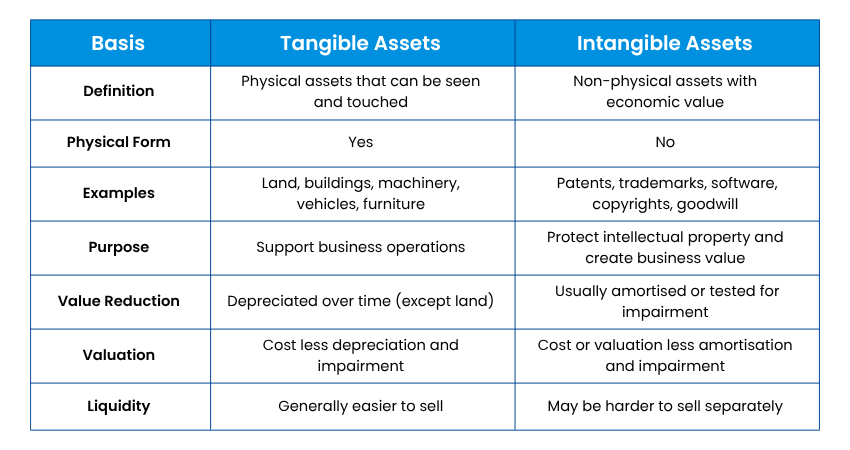
1) Physical Presence
1) Tangible Assets: They can be seen, touched, and measured since they have a physical form. Examples include buildings, machinery, vehicles, and equipment.
2) Intangible Assets: Intangible Assets have no physical existence. They exist in legal, intellectual, or digital form, such as patents, trademarks, copyrights, and brand reputation.
2) Valuation Method
1) Tangible Assets: Their value is easier to determine because they have a purchase price, market value, and can be measured using depreciation.
2) Intangible Assets: Their value is more difficult to calculate as it depends on factors such as brand recognition, intellectual property, customer loyalty, and future earning potential.
3) Liquidity
1) Tangible Assets: These assets are generally easier to sell or convert into cash since they have an active resale market.
2) Intangible Assets: They are less liquid because their value is often linked to the business itself and may require specialised agreements to transfer ownership.
4) Business Importance
1) Tangible Assets: They support day-to-day operations by enabling businesses to manufacture products, deliver services, and carry out administrative functions.
2) Intangible Assets: They create competitive advantages through innovation, intellectual property, customer trust, and strong brand identity.
5) Industries Where They Dominate
1) Tangible Assets: They represent a significant portion of assets in industries such as manufacturing, construction, transportation, and logistics.
2) Intangible Assets: They account for much of the value in technology, software, media, pharmaceuticals, and consulting businesses, where innovation and intellectual property are key.
6) Risk Factors
1) Tangible Assets: They are exposed to physical risks such as theft, fire, natural disasters, and wear and tear.
2) Intangible Assets: They face legal, competitive, and market-related risks, including patent expiry, copyright infringement, and declining brand reputation.
7) Examples
1) Tangible Assets: Land, buildings, machinery, office furniture, vehicles, inventory, and equipment.
2) Intangible Assets: Patents, trademarks, copyrights, goodwill, software, licences, and brand value.
8) Long-term Value
1) Tangible Assets: Most Tangible Assets gradually lose value due to depreciation and regular use, although some assets like land may appreciate over time.
2) Intangible Assets: Their value may increase over time as brand reputation, innovation, customer loyalty, or intellectual property grows.
Advantages and Disadvantages of Tangible Assets
Tangible Assets provide businesses with measurable value and operational support, but they also come with ongoing costs and risks. Let’s check their key advantages and disadvantages:
Advantages of Tangible Assets
Below are the advantages of Tangible Assets:
1) Easy to Value: Their market value and purchase cost make them easier to assess and record.
2) Can be Used as Collateral: They can secure loans and improve access to business financing.
3) Support Daily Operations: They help businesses produce goods, deliver services, and maintain operations.
4) Have Resale Value: Most Tangible Assets can be sold or exchanged when no longer needed.
5) Generate Long-term Value: Well-maintained assets can continue supporting business operations and generating value for many years.
Disadvantages of Tangible Assets
Below are a few disadvantages of Tangible Assets:
1) Depreciate Over Time: Most assets lose value through wear, ageing, and regular use.
2) Require Ongoing Maintenance: Repairs, servicing, and upkeep increase ownership costs.
3) Exposed to Physical Damage: Fire, theft, accidents, and natural disasters can reduce their value.
4) Lower Liquidity: Some assets, such as buildings and machinery, can take time to sell.
5) Need Storage and Insurance: Businesses incur additional costs to protect and manage physical assets.
Conclusion
Tangible Assets are essential resources that provide measurable value and support an organisation's day-to-day operations. Understanding their types, valuation methods, advantages, and limitations enables businesses to make informed financial decisions, maintain accurate accounting records, and maximise long-term asset value. Effective asset management also contributes to operational efficiency and financial stability.
Learn the principles that form the foundation of every successful Accountant with the ACCA Applied Knowledge Course – Join now!
Frequently Asked Questions
Q. What are the Challenges in Valuing Intangible Assets?
Valuing Intangible Assets can be challenging because they have no physical form or readily available market price. Their value often depends on future earnings, market conditions, legal rights, and estimation methods, making the valuation process more subjective than that of Tangible Assets.
Q. How do Businesses Protect Their Tangible Assets?
Businesses protect Tangible Assets by using physical security, regular maintenance, insurance, inventory controls, and legal safeguards. These measures help prevent theft, minimise damage from accidents or disasters, reduce financial losses, and ensure assets remain secure and operational.
Q. What is the Difference Between Fixed Tangible Assets and Current Tangible Assets?
Fixed Tangible Assets are long-term resources, such as buildings and machinery, used to support business operations and are not intended for sale. Current Tangible Assets, such as cash, inventory and raw materials, are short-term resources expected to be used, sold, or converted into cash within one year.