Have Any Question?
 +44 7452 122728




 Back
Back




What is Business Acumen? Importance, Skills, and Examples
Business Acumen is the ability to understand how an organisation works, make informed decisions, manage resources, and create measurable business value. It combines knowledge of finance, customers, markets, and strategy. Strong Business Acumen improves financial awareness, business judgment, decision-making, and problem-solving abilities.Table Of Contents


 44 7452 122728
 20-Jun-2026
Author-Maria Thompson
Success in business is not just about working harder. It is about understanding what truly drives results. Professionals who understand how businesses operate and make the right decisions often create the greatest impact within an organisation. This ability is known as Business Acumen. It helps individuals connect their daily responsibilities to broader business goals.
Whether you are an employee aiming for career progression or a leader looking to drive better outcomes, strong Business Acumen can be a valuable asset. In this blog, we will explore What is Business Acumen, why it is important, the key skills it involves, and practical ways to develop it. Let's get started!
What is Business Acumen?
Business Acumen refers to the ability to understand how a business operates and how different decisions affect its performance, profitability and growth. It goes beyond technical skills and focuses on applying commercial knowledge to achieve positive outcomes. It involves combining knowledge of:
1) Finance: Analysing budgets, costs, revenue and profitability to support effective financial decisions.
2) Strategy: Aligning actions and decisions with the organisation's long-term goals and objectives.
3) Operations: Understanding how business processes, resources and workflows contribute to efficiency and performance.
4) Customers: Recognising customer needs, preferences and expectations to deliver value and improve satisfaction.
5) Market Conditions: Staying aware of industry trends, competition and economic factors that influence business success.

Why is Business Acumen Important?
Business Acumen is important because it helps professionals understand how their decisions and actions affect the overall success of an organisation. Rather than focusing only on their individual responsibilities, individuals with strong Business Acumen can view the bigger picture and align their work with business goals.
It also helps professionals develop valuable skills such as financial awareness, problem-solving, and decision-making. As a result, Business Acumen not only improves individual performance but also supports long-term business success and career development.
How to Develop Business Acumen?
Business Acumen is not an ability that people are born with. It can be developed through learning, experience, observation and continuous improvement. Below are the strategies that can help strengthen your business understanding:
1) Commit to Continuous Learning
The business world evolves constantly due to technological advancements, changing customer expectations and market developments. Staying informed about industry trends and business practices is essential for building Business Acumen.
Professionals can develop their knowledge by reading business publications, following industry news, listening to podcasts, attending webinars and studying successful organisations.
2) Seek Guidance from a Mentor
Mentors provide valuable knowledge gained from years of practical experience. Working with an experienced mentor can help professionals gain a deeper understanding of business operations, leadership challenges and strategic decision-making.
Mentors often share insights that cannot easily be found in textbooks or training courses. They help professionals understand business realities, avoid common mistakes, and develop critical thinking skills.
3) Gain Diverse Work Experience
Exposure to different departments and functions helps professionals understand how organisations operate as a whole. Working across various business areas provides a broader perspective and develops commercial awareness.
For example, someone working in marketing may benefit from understanding sales processes, customer service operations and Financial Management. Similarly, finance professionals can gain valuable insights by learning about product development and customer engagement.
4) Engage with Customers
Customers play a central role in every business. Understanding their needs, preferences and challenges helps professionals make more informed business decisions. Professionals who understand customer perspectives are often better equipped to find opportunities for growth and innovation.
Even more, engaging directly with customers allows employees to gain reliable insights into customer behaviour, market demands and service expectations. This knowledge can help improve products, services and overall customer experience.
5) Register for a Course
Formal training programmes can provide structured learning opportunities for developing Business Acumen. Courses covering business management, finance, leadership, strategic planning, and organisational behaviour help individuals build essential knowledge and skills.
These training programmes also expose to practical case studies and real-world business challenges. This helps translate theoretical concepts into practical decision-making abilities.
Learn to support responsible business decision-making with the CIMA Fundamentals of Ethics, Corporate Governance and Business Law (BA4) Course – Sign up soon!
Essential Business Acumen Skills for Professionals
Business Acumen is built on a combination of skills that help professionals understand how organisations operate and achieve their goals. Here are some of the most important skills:
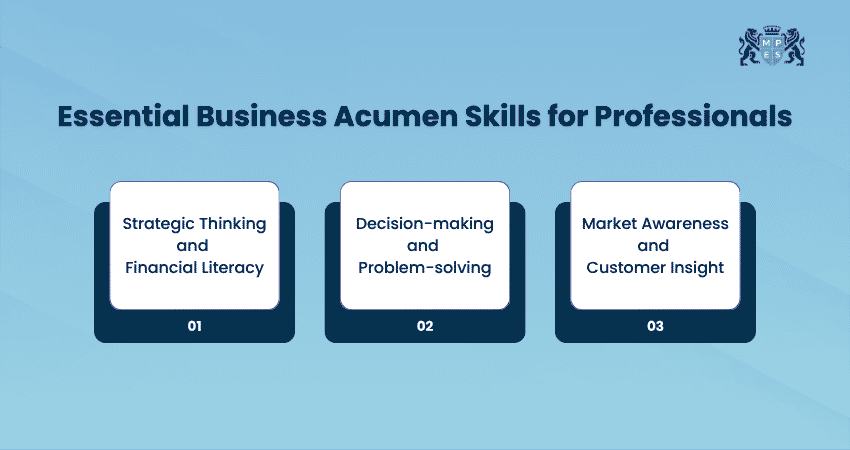
1) Strategic Thinking and Financial Literacy
Strategic thinking involves analysing situations, identifying opportunities and planning actions that support long-term business objectives. Professionals with strategic thinking skills can evaluate potential outcomes and align their decisions with organisational goals.
Meanwhile, financial literacy is equally important. Understanding concepts such as revenue, profit margins, budgeting, cash flow and return on investment helps professionals assess the financial impact of their decisions.
2) Decision-making and Problem-solving
Every business faces challenges that require effective decision-making. Professionals with strong Business Acumen can gather relevant information, evaluate alternatives and select the most suitable course of action.
In the same way, problem-solving skills help individuals identify root causes, analyse risks and develop practical solutions. Rather than reacting impulsively, they take a structured approach to addressing business challenges.
3) Market Awareness and Customer Insight
Successful businesses understand their markets and customers. Market awareness involves staying informed about industry developments, competitor activities, economic conditions and emerging trends.
Similarly, customer insight focuses on understanding customer needs, preferences and purchasing behaviours. These insights help organisations develop products and services that meet market demand.
Build the financial insight needed to support strategic decision-making with the CIMA Fundamentals of Management Accounting (BA2) Course – Register today!
Careers that Require Strong Business Acumen
Business Acumen is valuable in nearly every profession, but some roles rely heavily on this capability. Examples include:
1) Chief Executive Officers (CEOs)
2) Business Managers
3) Project Managers
4) Entrepreneurs
5) Business Analysts
6) Sales Managers
7) Marketing Managers
8) Operations Managers
9) Financial Analysts
10) Product Managers
11) Executive Leaders
12) Human Resource (HR) Managers
In these positions, professionals regularly make decisions that influence organisational performance, resource allocation, customer satisfaction and profitability. Even technical professionals such as engineers, IT specialists, and healthcare managers increasingly benefit from understanding business principles.
Examples of Business Acumen
Now that you know What is Business Acumen, let’s check some of the real-world examples of how it has been used effectively:
1) Starbucks Adapting to Customer Preferences
Starbucks continuously analyses customer trends and preferences. The company broadened its menu to include plant-based options, mobile ordering, and loyalty programmes to meet changing consumer expectations. These decisions have helped Starbucks strengthen customer engagement and drive growth.
2) Apple's Focus on Customer Experience
Apple demonstrates Business Acumen by understanding that customers value user experience as much as technology. By forming a connected ecosystem of products and services, Apple has built strong customer loyalty and sustained in the technology market.
3) Microsoft's Shift to Cloud Computing
Under the leadership of Satya Nadella, Microsoft focused heavily on cloud computing services rather than relying mainly on traditional software sales. This strategic move significantly increased revenue and strengthened Microsoft's position in the technology industry.
Conclusion
Business Acumen is the most valuable skill that enables professionals to understand how organisations operate and make decisions that support business success. By strengthening your understanding of business principles and adopting a broader perspective, you can enhance your professional value, make a greater impact in your role and position yourself for long-term career success.
Develop a clear understanding of finance, strategy and business operations with the CIMA Certificate in Business Accounting Training – Join now!
Frequently Asked Questions
Q. What are the Five Key Drivers to Business Acumen?
Five key drivers of Business Acumen include financial literacy, market awareness, strategic thinking, operational understanding and customer focus. Together they help individuals make informed decisions, align actions with goals, evaluate risks, spot opportunities and contribute effectively to overall organisational performance.
Q. What are the Key Components of Business Acumen?
The essential components of Business Acumen are knowledge of finance, understanding business models, strategic planning, industry awareness and decision-making ability. These elements enable professionals to interpret data, assess performance, anticipate trends, communicate insights and guide strategies that improve business outcomes.
Q. What are the Signs of a Poor Business Acumen?
Signs of poor Business Acumen include weak financial understanding, inability to analyse data, short-sighted decisions, lack of market awareness and misaligned priorities. Individuals may overlook risks, miss opportunities, struggle to justify actions and fail to link work to organisational goals.