Have Any Question?
 +44 7452 122728




 Back
Back




Partial Payment: Meaning, Types, Benefits, and Examples
Partial Payments allow customers to pay a portion of the total amount due upfront, with the remaining balance paid later under agreed terms. It helps businesses improve cash flow while giving customers financial flexibility, creating a payment arrangement that benefits both parties through clear terms and agreed schedules.Table Of Contents


 44 7452 122728
 11-Jul-2026
Author-Maria Thompson
Paying the full cost upfront is not always convenient, especially for high-value purchases or long-term services. Many customers prefer the flexibility of paying in stages, while businesses want the assurance of receiving payments on time. Partial Payment helps strike this balance by making transactions more affordable and easier to manage for both parties.
Whether you're a customer looking for flexible payment options or a business aiming to improve cash flow, understanding Partial Payment can help you make better financial decisions. In this blog, you will learn about its meaning, types, benefits, examples, and more. So, let’s begin!
What is a Partial Payment?
A Partial Payment is a payment arrangement where a customer pays a portion of the total purchase amount upfront and settles the remaining balance later under agreed terms. The initial payment acts as a deposit or instalment towards the total cost.
Businesses often offer Partial Payment to improve cash flow while making products and services affordable for customers who cannot pay the full amount immediately. Depending on the business and its payment provider, customers may have the flexibility to choose from different payment methods.
Types of Partial Payments
Depending on the payment agreement and the type of transaction, businesses and customers can choose from different Partial Payment types that suit their financial needs. Let's look at the key ones below:
a) Scheduled Partial Payments: Scheduled Partial Payments follow a pre-agreed payment plan, where customers pay fixed amounts on specific dates. They are commonly used for loans, tuition fees, or large purchases.
b) Unscheduled Partial Payments: Unscheduled Partial Payments are additional payments made outside the agreed schedule. Customers usually make these payments when they have extra funds, helping reduce the outstanding balance sooner.
c) Partial Payments in Revolving Credit: In revolving credit accounts, like credit cards, customers can pay less than the total balance due. These payments often meet the minimum payment requirement, while the remaining balance is carried forward.
d) Fixed-amount Partial Payments: Fixed-amount Partial Payments require customers to pay a predetermined amount at regular intervals. The payment amount is based on the agreed terms between the customer and the business or lender.
Why Businesses Use Partial Payments?
Businesses use Partial Payments to improve cash flow by receiving a portion of the payment upfront rather than waiting for the full amount. This minimises the potential risk of late payments while providing funds to support daily operations.
Also, Partial Payments make products and services affordable, encouraging more customers to complete their purchases. This can increase sales, improve customer satisfaction, and build stronger long-term relationships by giving customers flexibility in managing their payments. Additionally, partial payments help businesses maintain steady revenue flow and reduce dependency on full upfront payments.
What are the Benefits of Partial Payments?
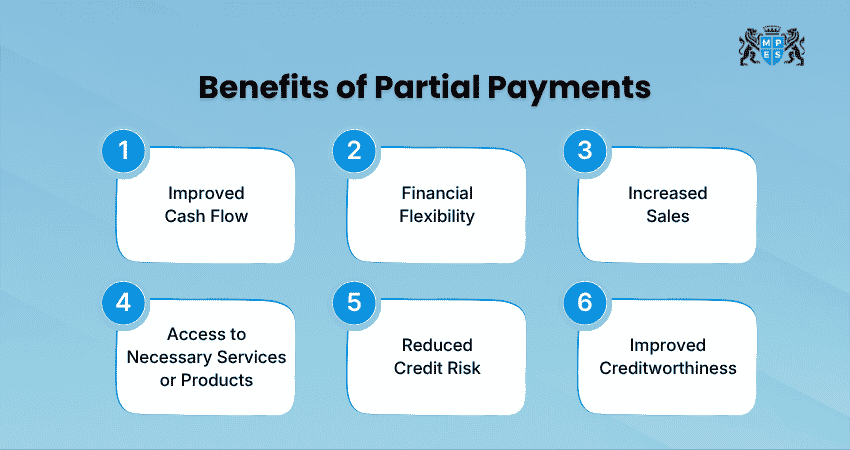
Partial Payments offer advantages for both businesses and customers by making payments more flexible and manageable. Let’s look at some of the key benefits below:
1) Improved Cash Flow
Businesses receive a portion of the payment upfront, helping maintain healthy cash flow and cover daily operating expenses without waiting for the full payment. This improves financial stability and supports smoother business operations.
2) Financial Flexibility
Customers can spread the cost over time instead of paying the full amount at once. This makes it easier to manage monthly budgets, reduce financial pressure, and purchase products or services without straining their finances.
3) Increased Sales
Flexible payment options encourage more customers to complete purchases, particularly for higher-value products and services. They also make products and services accessible to a wider customer base. This can lead to higher conversion rates and improved revenue growth.
4) Access to Necessary Services or Products
Partial Payments make essential or expensive products and services more affordable, allowing customers to buy what they need without delaying their purchase. This is especially helpful when immediate access is important but full payment is not possible. It ensures customers can meet urgent needs without financial barriers.
5) Reduced Credit Risk
Receiving an upfront payment lowers the outstanding balance, reducing the financial risk for businesses if customers fail to pay the remaining amount. It also improves the chances of recovering a larger portion of the total payment. This helps businesses minimise potential losses and improve payment security.
6) Improved Creditworthiness
Making Partial Payments on time can help customers build a positive payment history, which may strengthen their credit profile and improve future borrowing opportunities. Consistent payments also demonstrate responsible financial management. This supports long-term financial credibility and access to better credit options.
Learn how businesses thrive in practice and build essential business knowledge with the Business and Technology (BT) Course now!
What Happens to an Invoice When a Partial Payment is Made?
When a Partial Payment is made, the invoice is not closed immediately. Instead, it remains active until the full amount has been paid. Let’s learn what happens below:
a) The Invoice Remains Open: After a Partial Payment is received, the invoice is marked as partially paid and stays open. The remaining unpaid amount becomes the outstanding balance that still needs to be settled.
b) The Original Due Date Usually Stays the Same: Unless both parties agree to new payment terms, the original due date continues to apply. Making a Partial Payment reduces the balance but does not automatically extend the payment deadline.
c) The Payment is Recorded: The payment is recorded along with details like the amount paid, payment date, and outstanding balance. This helps businesses maintain accurate financial records and avoid payment disputes.
d) Future Payments are Applied to the Same Invoice: Any additional payments are applied to the remaining balance of the original invoice until it is fully paid. A new invoice is not created unless the business follows a different billing arrangement.
Can Partial Payments Trigger Late Fees or Penalties?
Yes, they can. While a Partial Payment reduces the amount owed, the remaining balance may still be considered overdue if it is not paid according to the agreed terms. Let’s learn more about it below:
a) Late Fees: If the remaining balance is not paid by the due date and no alternative arrangement has been agreed upon, the business or lender may charge late fees.
b) Minimum Payment Requirements: For credit accounts, paying less than the required minimum payment may be treated as a missed payment. This can result in late fees and other account penalties.
c) Interest Charges: If the outstanding balance carries interest, it will continue to accrue until the remaining amount is paid in full. This increases the overall cost of the payment.
d) Penalty Rates or Additional Charges: Some agreements include higher interest rates or extra charges when payments become overdue. Making a Partial Payment may not prevent these penalties from being applied.
e) Changes to Credit or Account Status: A long-overdue balance may affect a customer's credit record or account standing. In some cases, it can lead to restricted access to credit or other services.
How to Create Partial Payment Request on an Invoice?
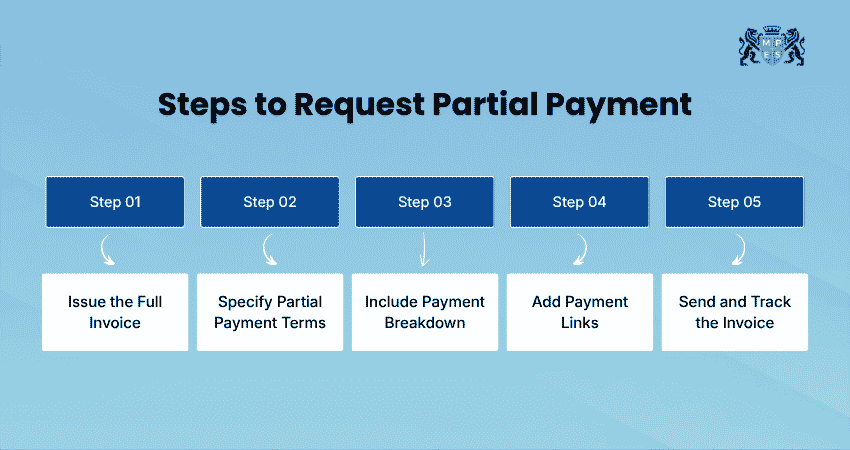
Creating a Partial Payment request is straightforward when the payment terms are clearly communicated. Following a structured process helps customers understand how much to pay, when payments are due, and how to complete the transaction. A clear and organised approach also helps reduce payment delays and improves overall customer experience. Let’s look at the process below:
1) Issue the Full Invoice
Start by sending an invoice that shows the total amount due. This provides a clear reference before breaking the payment into smaller amounts. Also, it ensures complete transparency from the beginning. Providing the full amount upfront helps customers understand the total financial commitment clearly.
2) Specify Partial Payment Terms
Clearly state the payment terms, such as the deposit amount, payment schedule, and due dates. This ensures both parties understand their payment responsibilities, and clear terms help prevent misunderstandings and payment disputes. Well-defined terms also improve trust and ensure smoother payment management.
3) Include Payment Breakdown
Show how the total amount is divided by listing the upfront payment and the remaining balance. A clear breakdown helps customers know exactly what they need to pay and when, and makes the invoice easier to review and track.
4) Add Payment Links
Include secure payment links to make payments easy and convenient, encouraging faster payment completion. Also, offering multiple payment options can further improve the customer experience. Convenient payment methods can significantly reduce delays and improve collection rates.
5) Send and Track the Invoice
Send the invoice through a reliable invoicing system that records Partial Payments and tracks outstanding balances. Monitor payments regularly and send reminders for any remaining amounts to ensure timely collection. This helps maintain accurate records and improves the chances of receiving the full payment on time.
Build skills for better business decisions with the Management Accounting (MA) Course – Join now!
Example of Partial Payment
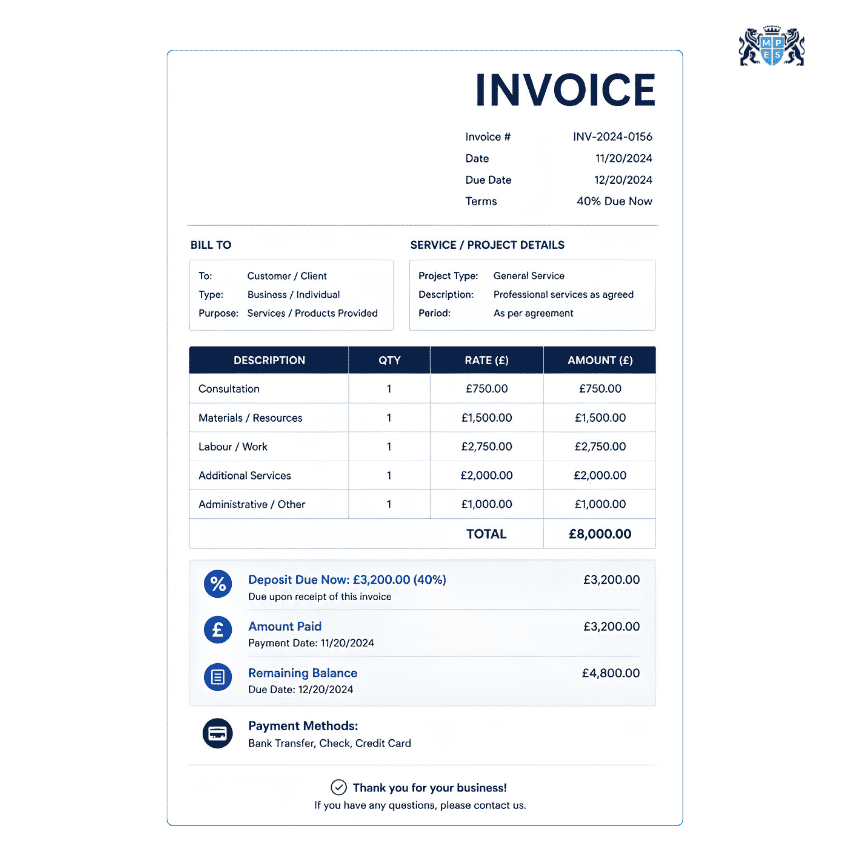
Before looking at the sample invoice, let's see how it works. In this example, the total invoice amount is £8,000, and the business requests a 40% deposit (£3,200) before starting the work. Once the deposit is received, the invoice is marked as partially paid, while the remaining £4,800 stays outstanding until the agreed due date.
This arrangement benefits both parties. The business receives an upfront payment to cover initial costs and reduce payment risk, while the customer avoids paying the full amount at once. The invoice remains open until the outstanding balance is paid in full.
How to Choose a Partial Payment Strategy?
Choosing the right Partial Payment strategy starts with assessing your financial situation. Review your income, monthly expenses, existing debts, and emergency savings to determine how much you can comfortably pay without affecting your financial stability.
Carefully review the payment terms, including due dates, interest rates, minimum payment requirements, and any late payment penalties. If you have multiple debts, prioritising higher-interest balances while using Partial Payments for lower-interest obligations. This can help reduce overall costs and manage repayments effectively.
Tips for Managing Partial Payments Effectively
Managing Partial Payments effectively helps businesses maintain healthy cash flow, reduce payment delays, and avoid disputes. Let’s look at some simple practices below that can improve payment tracking and ensure a smoother experience for both businesses and customers:
a) Track Payments Regularly: Monitor every Partial Payment and apply it to the correct invoice. Accurate tracking helps maintain updated financial records and reduces accounting errors.
b) Clearly State the Remaining Due Date: Include the due date for the outstanding balance in the invoice. This sets clear expectations and helps customers pay on time.
c) Send Payment Reminders: Once the initial payment is received, send timely reminders before the remaining balance is due. This encourages prompt payment and reduces the chances of overdue invoices.
d) Show the Full Invoice Amount: Always display the total invoice amount, including any applicable taxes, fees, or shipping charges. This improves transparency and helps prevent misunderstandings.
e) Keep Customer Payment Records: Maintain accurate records of customer payment details and transaction history. This makes it easier to follow up on outstanding balances and resolve payment queries.
Conclusion
Partial Payment can help both businesses and customers manage transactions with confidence and flexibility. When supported by clear payment terms, accurate invoicing, and timely follow-ups, it improves cash flow, reduces financial pressure, and strengthens trust between both parties. Choosing the right payment approach can create a smoother payment experience while supporting long-term financial stability.
Build a strong foundation in accounting with the ACCA Applied Knowledge Courses – Join today!
Frequently Asked Questions
Q. How Should Partial Payments be Recorded in Accounting?
Record a Partial Payment by debiting the cash account and crediting the related receivable or payable account for the amount received. Keep the original invoice marked as partially paid so it remains open until the outstanding balance is fully settled.
Q. Can Customers Make Multiple Partial Payments on the Same Invoice?
Yes, customers can make multiple Partial Payments on the same invoice until the full amount is paid. This approach is used for deposits, instalment plans, and retainer agreements, allowing businesses to track payments while keeping the invoice open until the balance is cleared.
Q. What is the Difference Between a Partial Payment and an Instalment Payment?
A Partial Payment is a one-time payment made towards an outstanding balance without following a fixed schedule. In contrast, an Instalment Payment is one of several pre-agreed, scheduled payments that divide the total amount into regular, manageable payments.