Have Any Question?
 +44 7452 122728




 Back
Back




Payroll Accounting: Definition, Types, Process and Examples
Payroll Accounting involves tracking employee salaries, taxes, deductions, and payments to keep a company’s financial records accurate and organised. It helps businesses manage payroll costs, meet legal requirements, maintain transparency, and ensure employees are paid correctly and on time while supporting better financial planning.Table Of Contents


 44 7452 122728
 13-Jun-2026
Author-Richard Harris
Every payday tells a story. Behind each payslip is a carefully managed process that ensures employees are paid accurately, taxes are calculated correctly, and financial records remain compliant. This process is known as Payroll Accounting.
Whether you are running a small business or managing a large workforce, Payroll Accounting plays a vital role in tracking salaries, deductions, benefits, and payroll taxes. In this blog, we will explore what Payroll Accounting is, its different types, the steps involved in the process, and practical examples that show how it works in real-world business operations.
What is Payroll Accounting?
Payroll Accounting is a specialised area of Accounting that focuses on employee compensation. It involves recording, tracking, and managing all financial transactions related to payroll. These transactions include wages, salaries, bonuses, deductions, benefits, and payroll taxes.
It helps businesses ensure employees are paid accurately and on time, while also supporting compliance with tax regulations and reporting requirements. By maintaining accurate payroll records, organisations can improve financial control, reduce errors, and streamline payroll management.

Importance of Payroll Accounting
Payroll is one of the largest and most critical expenses for many organisations. Accurate Payroll Accounting ensures employees are paid correctly and on time while helping businesses meet tax and regulatory requirements. It also reduces costly errors, improves financial accuracy, and supports employee trust and satisfaction.
1) Keep Accurate Employee Expense Records
Payroll Accounting helps organisations keep reliable records of all employee-related expenses. These records include salary details, wages, bonuses, overtime payments, tax withholdings, benefits, and other payroll deductions. Keeping detailed payroll records supports transparency and ensures financial information remains up to date.
Accurate record-keeping also helps businesses meet regulatory requirements and simplify audits. It provides a reliable source of payroll data for financial reporting, budgeting, and workforce planning while reducing the risk of errors and legal issues.
2) Track Tax and Legal Compliance Records
Payroll Accounting helps organisations maintain accurate records of payroll taxes, statutory deductions, and legally required transactions. It ensures that employee and employer tax obligations are calculated correctly, paid on time, and properly documented for future reference.
Maintaining these records supports tax laws, labour regulations, and reporting requirements. It also provides evidence during audits, reduces the risk of penalties, and helps organisations demonstrate adherence to legal and financial obligations.
3) Evaluate Profitability More Efficiently
Payroll Accounting provides accurate insights into employee-related expenses, which are often among an organisation’s highest operational costs. By recording payroll transactions correctly, businesses can better understand labour costs and their impact on overall financial performance.
Accurate payroll data supports financial reporting, budgeting, and cost analysis. It also helps organisations measure profitability more effectively, control expenses, and make informed decisions to improve operational efficiency and profit margins.
Improve budgeting and costing skills with the Managing Costs and Finance (MA2) Course – Join now!
Types of Payroll Accounting
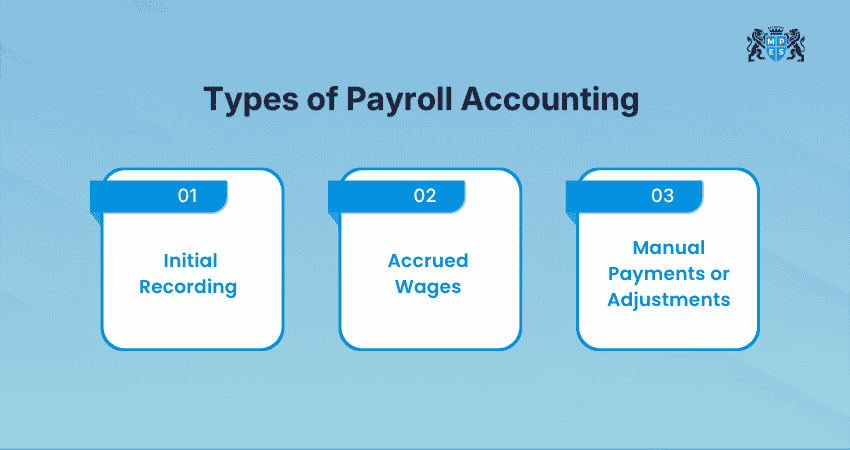
Payroll Accounting includes several accounting entries used to record payroll transactions accurately. These entries ensure payroll expenses, liabilities, and adjustments are properly reflected in financial statements. Different types of Payroll Accounting are:
1) Initial Recording
The initial payroll recording is made at the end of each pay period to document employee compensation and related deductions. This entry captures gross wages, salaries, bonuses, and other earnings before any deductions are applied.
It also records payroll withholdings such as taxes, insurance contributions, retirement plans, and other authorised deductions. Accurate initial recording ensures payroll transactions are properly reflected in financial records and forms the foundation for subsequent Payroll Accounting entries.
2) Accrued Wages
Accrued wages refer to employee earnings that have been incurred but not yet paid by the organisation. Since payroll is often processed after the work has been completed, businesses must record these unpaid wages as a liability until payment is made.
Recording accrued wages ensures labour expenses are recognised in the correct accounting period, even if the actual payment occurs later. This helps maintain accurate financial statements, supports accrual-based accounting, and provides a true representation of the organisation’s financial position.
3) Manual Payments or Adjustments
Manual payments are payroll payments made outside the regular payroll cycle. They are typically used to correct payroll errors, process retroactive pay adjustments, or issue final payments to departing employees.
Although these payments are processed separately, they must still be recorded in the payroll and accounting systems. Properly tracking manual payments helps maintain accurate payroll records, ensures reliable financial reporting, and supports payroll-related legal requirements.
How to Manage Payroll Accounting Process?
Managing Payroll Accounting requires a structured process that ensures employee compensation is calculated accurately and recorded properly. Following a consistent payroll workflow helps organisations maintain compliance and reduce payroll-related errors.
1) Determine Gross Earnings
Gross earnings are the total amount an employee earns before any deductions are made. This includes basic salary, hourly pay, overtime wages, bonuses, commissions, and allowances. It is the starting point of the payroll process because all other calculations depend on it.
For example, if an employee receives a monthly salary of £2,000, overtime pay of £200, and a bonus of £300, their gross earnings would be £2,500. Businesses must calculate this amount carefully to ensure employees are paid correctly.
2) Compute Payroll Deductions
Payroll deductions are amounts taken from the employee’s gross earnings before the final salary is paid. These deductions can include income tax, pension contributions, insurance payments, student loan repayments, or loan repayments. Some deductions are required by law, while others may be voluntary.
Accurate deduction calculations are important because they help employees receive the correct pay and ensure the business meets legal requirements. Incorrect deductions can lead to payroll errors, employee complaints, or tax penalties.
3) Establish Net Pay
Net pay is the amount an employee receives after all payroll deductions are removed from gross earnings. It is commonly called take-home pay because this is the final amount paid to the employee.
For instance, if an employee earns £2,500 and £500 is deducted for taxes and other contributions, the employee will receive £2,000 as net pay. Calculating net pay correctly helps maintain employee trust and payment accuracy.
4) Account For Employer Liabilities
Employer liabilities are additional payroll costs paid by the company apart from employee wages. These may include employer National Insurance contributions, pension contributions, employee benefits, and insurance costs.
Recording employer liabilities helps businesses understand the total cost of employing workers. Proper tracking also ensures the company pays all required contributions on time and maintains accurate financial records.
5) Process Payroll Payments
After payroll calculations are completed, the company processes payments to employees. Salaries are usually transferred directly to bank accounts, while deducted amounts are sent to tax authorities, pension providers, or insurance companies.
Timely payroll payments are very important because employees depend on receiving their wages on schedule. Late or incorrect payments can reduce employee confidence and may also result in legal or financial penalties for the business.
6) Record Payroll Journal Entries
Payroll journal entries are accounting records used to track payroll transactions in the company’s financial system. These entries record salary expenses, payroll deductions, employer contributions, and salary payments.
Properly recording payroll entries helps businesses prepare accurate financial statements and monitor payroll costs. It also supports auditing, legal requirements, and better financial management.
Advance your Accounting skills with the Financial Accounting (FFA) Course - Register now!
Advantages of Hiring an Accountant for Payroll Management
Managing payroll can be time-consuming and complex, especially as a business grows. Hiring an Accountant to oversee payroll helps ensure employees are paid accurately, payroll records remain legally and financially accurate, and payroll processes run efficiently. It also allows business owners to focus on core business activities rather than administrative tasks.
1) Reduces Payroll Errors: An Accountant helps review payroll information before payments are processed. By checking employee hours, deductions, tax calculations, and salary details, they can minimise errors and reduce the need for costly corrections.
2) Ensures Employees are Paid on Time: Accountants follow structured payroll schedules and ensure key tasks are completed within the required timeframe. This reduces the risk of missed deadlines and helps employees receive accurate payments on schedule, maintaining trust and satisfaction.
3) Improves Business Efficiency: Hiring an Accountant creates a more organised payroll process by ensuring calculations, records, deductions, and payments are handled correctly. This reduces administrative pressure and allows businesses to manage payroll more efficiently.
4) Handles Tax and Legal Requirements: Accountants help organisations manage tax obligations, statutory deductions, and reporting requirements. Regular payroll reviews reduce the risk of penalties, audit issues, and reporting errors.
Disadvantages of Manual Payroll Accounting
While manual Payroll Accounting may work for small organisations, it can become increasingly difficult to manage as payroll requirements grow. The following challenges often make manual payroll processes time-consuming, complex, and prone to errors:
1) Keeping Up with Legislative Changes: Payroll regulations, tax laws, and reporting requirements are frequently updated. Manual payroll processes require constant monitoring of these changes, increasing the risk of incorrect reporting, errors, and potential financial penalties.
2) Managing Multiple Pay Structures: Organisations often employ staff under different compensation models, including hourly wages, salaries, commissions, bonuses, and overtime arrangements. Calculating these manually can be time-consuming and increases the likelihood of payroll inaccuracies.
3) Supporting Remote and International Workforces: Managing payroll for employees across different locations introduces additional complexity. Payroll teams must account for varying tax regulations, employment laws, and statutory requirements, making manual payroll administration more challenging and difficult to scale.
Strengthen Finance Fundamentals with Maintaining Financial Records (FA2) Course – Register now!
Payroll Accounting Examples
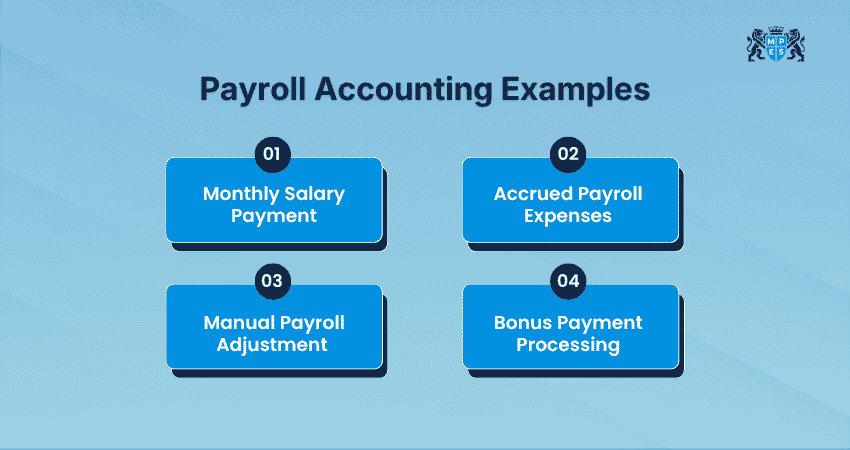
Understanding Payroll Accounting becomes easier when examining practical examples. The following scenarios demonstrate how payroll transactions are typically recorded and managed within an organisation.
Example 1: Monthly Salary Payment
Suppose a company employs ten staff members with a combined monthly gross salary expense of £30,000. Payroll deductions for taxes, pension contributions, and insurance amount to £8,000.
The organisation records the £30,000 payroll expense while recognising the £8,000 deduction liability. The remaining £22,000 is recorded as net pay payable to employees. This entry ensures that both payroll expenses and payroll obligations are reflected accurately in the accounting records.
Example 2: Accrued Payroll Expenses
Assume an organisation pays employees on the fifth day of each month for work completed during the previous month. At the end of June, employees have earned £12,000 in wages that will not be paid until July.
To comply with accrual accounting principles, the organisation records an accrued wage liability of £12,000 at the end of June. This ensures labour expenses are recognised in the period during which the work was performed rather than when payment occurs
Conclusion
Payroll Accounting helps organisations manage employee compensation, maintain accurate financial records, and meet tax and employment obligations. It ensures payroll transactions are recorded correctly and consistently. Effective Payroll Accounting reduces errors, improves financial visibility, and supports compliance. It also helps streamline payroll processes and contribute to organisational success.
Gain practical Accounting skills with the best ACCA Foundation Courses - Join now!
Frequently Asked Questions
Q. What are Payroll Journal Entries?
Payroll Journal Entries are accounting records used to document employee wages, salaries, payroll taxes, deductions, and employer contributions. They ensure payroll transactions are accurately reflected in financial statements, support reporting requirements, and help organisations maintain complete and reliable payroll records.
Q. What Exactly Does Payroll Accounting Include?
Payroll Accounting includes recording and managing all employee-related financial transactions, such as salaries, wages, bonuses, overtime, tax deductions, pension contributions, and benefits. It also involves tracking payroll liabilities, maintaining statutory records, and ensuring accurate financial reporting and timely employee payments.
Q. What is a Payroll Checklist?
A payroll checklist is a list of tasks used to ensure employees are paid accurately, on time, and in compliance with company policies and tax regulations.