Have Any Question?
 +44 7452 122728




 Back
Back




What is Accounting: Definition, Importance, and Examples
Accounting is the backbone of Financial Management, offering clarity to businesses and individuals. This blog dives into the fundamentals of What is Accounting, its types, real-world examples, and the skills required to excel in this indispensable field. Explore how it works, its importance, and much more. Let’s dive straight into it.
Table Of Contents


 44 7452 122728
 06-Jan-2025
Author-Maria Thompson
Ever wondered how businesses track financial health or ensure regulatory compliance? The answer lies in Accounting a systematic process of recording, analysing, and reporting financial transactions. This blog unravels What is Accounting, its diverse types, and its critical role in decision-making, ensuring you're equipped with insights into this essential practice.
What is Accounting?
Accounting systematically keeps a record, summarises, and analyses economic transactions to provide a clear idea of a business enterprise’s financial health. It is the spine of Financial Management, promoting accuracy, transparency, and compliance. Understanding What is Accounting also helps businesses organise data into meaningful reviews, together with balance sheets and earnings statements, that help stakeholders in making informed choices while also reflecting assets like Goodwill in Accounting where applicable.
Accounting is more than simply managing numbers; it's also known as the language of commercial enterprise. It communicates the monetary activities of an organisation to buyers, regulators, and bosses. By imparting insights into profitability, cash flow, and economic stability, Accounting empowers businesses to strategise, grow, and remain compliant with legal requirements. It is a necessary tool for developing trust and long-term achievement.

How Does Accounting Work?
Accounting functions follow a structured process that involves:
a) Identifying and recording financial transactions
b) Classifying transactions into accounts
c) Summarising data in financial statements
d) Interpreting the results for insights and decision-making
This cyclical process ensures that businesses stay financially organised and compliant. It also explains how Accounting work helps businesses maintain accurate financial records and support effective decision-making.
Types of Accounting
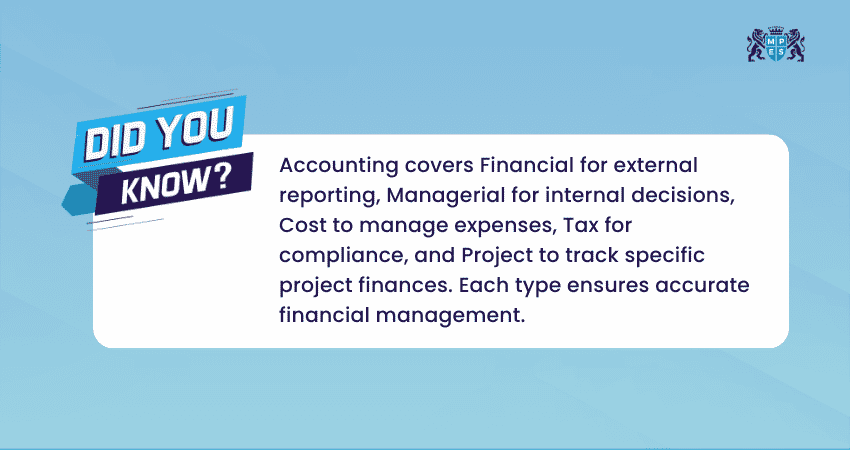
In this section, we will discuss various types of Accounting:
1) Financial Accounting
It prepares accurate financial statements, like Cash Flow, balance sheets, and income statements, to inform external stakeholders, such as investors and regulators.
2) Managerial Accounting
Caters to internal stakeholders by analysing costs, budgets, and performance metrics for strategic planning and operational control.
3) Cost Accounting
A subset of managerial Accounting focuses on calculating and managing costs related to products and services to optimise profitability.
4) Tax Accounting
Specialises in preparing and filing tax returns while ensuring compliance with tax laws and identifying tax-saving opportunities.
5) Project Accounting
Tracks the financial performance of specific projects, ensuring they remain within budget and meet financial objectives.
What is the Accounting Cycle?
The Accounting cycle indicates the step-by-step process Accountants use to track and manage financial transactions:
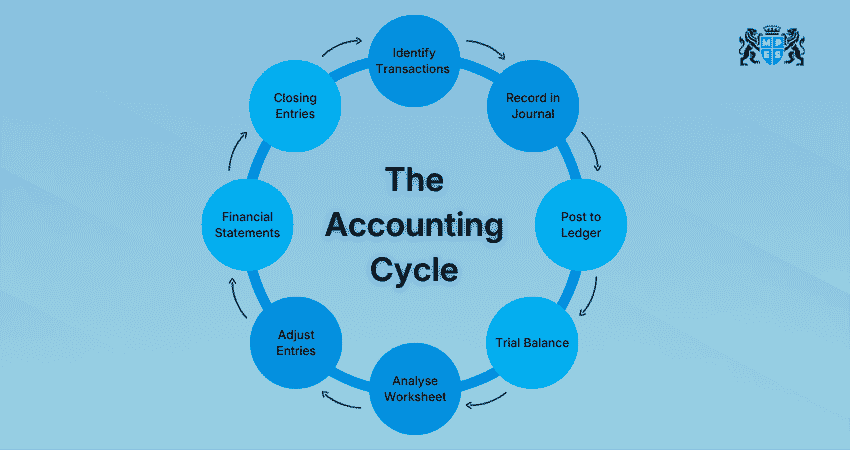
a) Identify Transactions
b) Record in Journal
c) Post to Ledger
d) Trial Balance e) Analyse Worksheet f) Adjust Entries
g) Financial Statements
h) Closing Entries
This systematic Accounting cycle helps ensure accuracy and consistency in financial reporting.
Strengthen business reporting skills through the Management Information (MI) Training – Register now!
Importance of Accounting
Accounting is critical for groups and individuals and operates as the basis of economic decision-making and compliance. By providing accurate facts and insights, Accounting drives organisational success and guarantees transparency and accountability in every financial transaction. The importance of Accounting also lies in helping businesses manage budgets, monitor financial performance, and support long-term growth.
1) Facilitates Decision-making
Accounting provides data-driven insights, enabling businesses to make informed decisions regarding investments, expansions, and cost management.
2) Meets Legal Requirements
By maintaining accurate records and adhering to regulations, Accounting ensures compliance with legal standards and avoids potential penalties.
Accounting Skills Needed to Become an Accountant
Key skills for Accountants include:
a) Proficiency in Accounting Software
b) Analytical thinking and problem-solving
c) Strong attention to detail
d) Understanding financial regulations
e) Communication and teamwork
What are Accounting Standards?
Accounting standards are formal guidelines ensuring consistency, transparency, and legal compliance in Financial Reporting, fostering trust among stakeholders, and aiding informed decisions. These Accounting Standards help organisations maintain consistency and accuracy in financial reporting across different industries and regions.
1) IFRS
The International Financial Reporting Standards (IFRS) provide a global framework for preparing financial statements, enhancing transparency and comparability.
2) UK GAAP
UK Generally Accepted Accounting Practice (UK GAAP) refers to the body of accounting standards issued by the UK’s Financial Reporting Council for organisations preparing financial statements in the UK and Ireland.
Advantages of Accounting
Accounting helps businesses manage finances effectively by tracking income, expenses, and overall performance. Below are some key advantages of Accounting:
1) Informed Decision-making:
Provides accurate financial data to help businesses plan budgets, control costs, and make better decisions.
2) Legal and Tax Compliance:
Helps organisations meet tax regulations, maintain proper records, and prepare for audits.
3) Access to Loans and Investments:
Creates reliable financial statements that improve trust among banks, lenders, and investors.
4) Performance Tracking:
Allows businesses to compare profits, expenses, and growth over different periods.
5) Fraud Prevention:
Maintains organised records and internal controls that help detect errors and reduce fraud risks.
6) Legal Evidence:
Accounting records serve as official financial proof during audits, disputes, and legal proceedings.
7) Better Financial Planning:
Supports budgeting, cash flow management, and long-term business growth planning.
8) Improved Transparency:
Provides clear financial information that builds confidence among stakeholders and management.
Advance your professional Accounting journey with the Assurance (AS) Training – Join now!
Accounting Example
Consider a Small Business Owner using Accounting Software to track monthly revenue and expenses. By accurately recording and categorising income and expenses, they can generate key financial documents, such as a profit-and-loss statement and a balance sheet. These tools enable the business owner to monitor cash flow, evaluate business performance, and make informed financial decisions.
Additionally, maintaining accurate and up-to-date records ensures adherence with tax regulations, streamlining the tax filing procedure and avoiding potential penalties. This highlights how Accounting is essential for day-to-day operations and long-term financial planning.
Bookkeeping vs Accounting
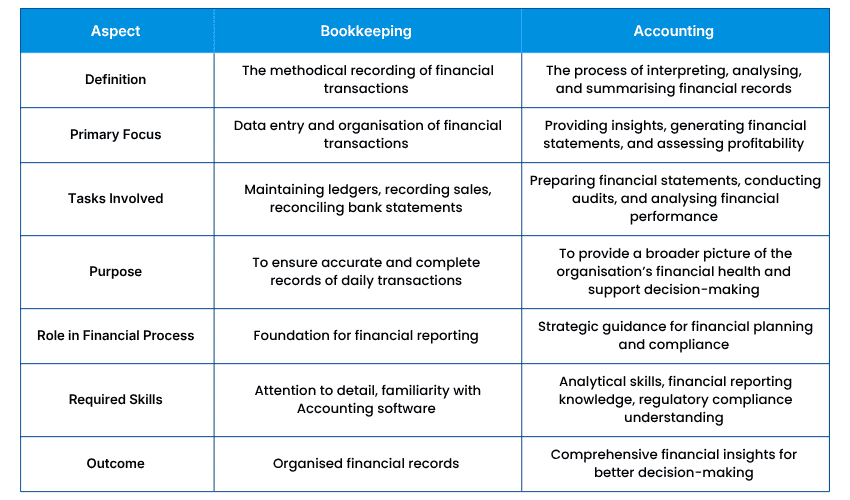
While bookkeeping focuses on the methodical recording of financial transactions, Accounting goes beyond to interpret, analyse, and summarise these records. Bookkeeping tasks include maintaining ledgers, recording sales, and reconciling bank statements, which lay the groundwork for accurate Accounting.
Conversely, Accounting involves generating financial statements, assessing profitability, and providing insights into the organisation’s economic health. Essentially, bookkeeping serves as the foundation, while Accounting uses that foundation to provide strategic guidance and ensure financial transparency. Both functions are vital, but their roles and purposes differ significantly.
Conclusion
Accounting is more than number crunching; it’s vital for financial clarity and strategic growth. Understanding What is Accounting empowers businesses and individuals to navigate financial landscapes confidently. Mastering Accounting principles is invaluable if you want to become an Accountant or manage your finances better.
Develop strong Accounting foundations for long-term professional career growth with the ACA Certificate Level Training – Join now!
Frequently Asked Questions
Q. What is an Accountant's Salary in the UK?
According to Glassdoor, Accountant salaries in the United Kingdom typically range from £22K to £66K per year, depending on experience, qualifications, industry, and location. Senior roles and specialised finance positions often offer higher salary packages.
Q. What are 7 Journal Entries?
The 7 journal entries are:
a) Simple Entry
b) Compound Entry
c) Adjusting Entry
d) Closing Entry
e) Reversing Entry
f) Opening Entry
g) Correcting Entry
Q. What are the 3 Golden Rules?
Three golden rules of Accounting:
a) Real Account: Debit what comes in, credit what goes out
b) Personal Account: Debit the receiver, credit the giver
c) Nominal Account: Debit all expenses and losses, credit all incomes and gains