Have Any Question?
 +44 7452 122728




 Back
Back




Digital Accounting: How It Works, Benefits, Types, and Trends
Digital Accounting is the use of software and digital tools to record, manage, and automate financial transactions, reporting, and other accounting processes. It helps improve accuracy, save time, strengthen data security and provide real-time financial insights. As technology continues to evolve, it supports smarter financial management.Table Of Contents


 44 7452 122728
 27-Jun-2026
Author-James Smith
How much time could your business save if invoices, payroll, reporting, and expense tracking happened automatically? As businesses generate increasing amounts of financial data, traditional accounting methods often struggle to keep pace. This has led many organisations to adopt digital solutions that simplify financial management and improve efficiency. This is where Digital Accounting marks its presence.
By using software and automation, businesses can streamline accounting tasks and gain access to updated financial information. In this blog, we will explore what is Digital Accounting, how it works, its benefits, the different services it includes, and how it can redefine the way you manage your business finances. Let's get started!
What is Digital Accounting?
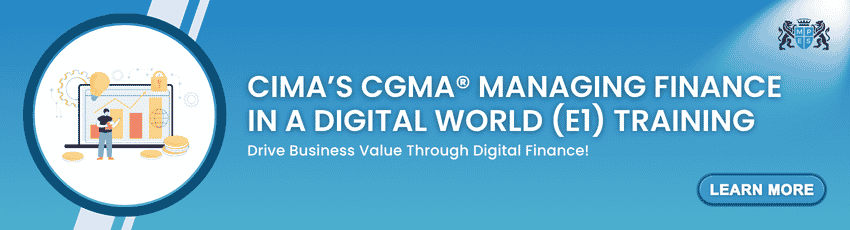
Digital Accounting refers to the use of digital technologies, software applications, cloud platforms, and automation tools to manage financial transactions and accounting processes. Instead of relying on paper-based records and manual data entry, organisations use digital systems to create, store, process, transfer, and report financial information electronically.
Digital Accounting encompasses a wide range of activities, including bookkeeping, invoicing, payroll processing, tax preparation, financial reporting, etc. These processes are often integrated into a single platform that allows businesses to access their financial data from anywhere and at any time.
How Does Digital Accounting Work?
Now, let’s check how Digital Accounting systems manage financial data and support day-to-day accounting operations. These systems streamline financial processes by combining automation, data processing, and real-time insights.
1) Collecting Financial Data
Digital Accounting systems collect financial information from various sources such as bank accounts, invoices, payment gateways, payroll systems, and expense records. This ensures that all financial activities are captured accurately from multiple channels.
2) Recording Transactions Automatically
Once the data is collected, the software records and categorises transactions automatically. This helps maintain organised financial records while reducing the risk of human error. Automation improves accuracy and saves time by eliminating manual data entry.
3) Storing Information Securely
All financial data is stored in secure digital databases or cloud-based platforms. Advanced security features such as encryption, backups, and access controls help protect sensitive information. Secure storage ensures data protection and reduces the risk of data loss or breaches.
4) Processing and Analysing Data
The software processes financial information by calculating balances, tracking expenses, reconciling accounts, and monitoring cash flow. This allows businesses to keep their accounts updated in real time. Real-time processing helps organisations maintain accurate and up-to-date financial records.
5) Generating Financial Reports
Digital Accounting systems automatically generate reports such as profit and loss statements, balance sheets, cash flow reports, and tax summaries. These reports help businesses understand their financial performance.
6) Providing Real-time Insights
Many Digital Accounting platforms include dashboards and analytics tools that provide real-time financial insights. Business owners and Accountants can quickly identify trends, monitor performance, and make informed decisions.
7) Supporting Compliance and Tax Management
Digital Accounting software helps businesses comply with accounting standards and tax regulations by maintaining accurate records, tracking tax obligations, and simplifying reporting requirements. This reduces compliance risks and ensures timely and accurate tax reporting.
Benefits of Digital Accounting
Digital Accounting offers several benefits that help businesses improve operational efficiency and financial management. Here are those benefits:
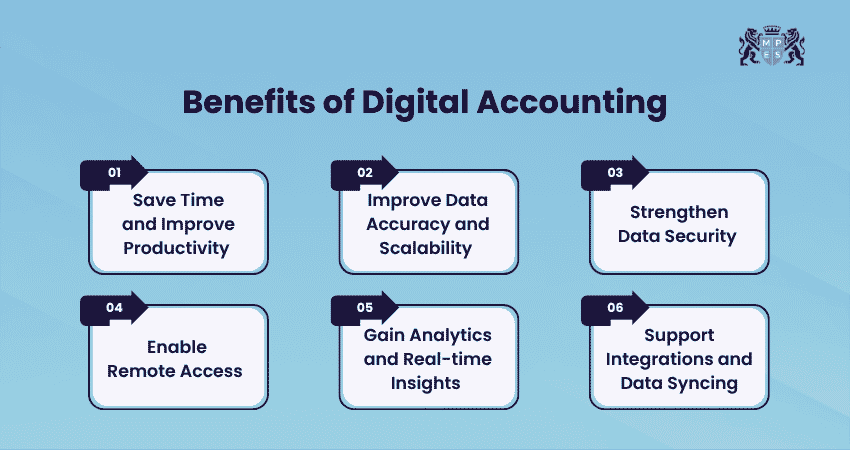
1) Save Time and Improve Productivity
One of the most significant benefits of Digital Accounting is the reduction in manual work. Tasks such as data entry, invoice generation, transaction categorisation, and reconciliation can be automated.
Accountants spend less time performing repetitive administrative tasks and more time analysing financial performance and supporting strategic decisions. This shift in productivity allows businesses to operate efficiently while reducing labour costs.
2) Improve Data Accuracy and Scalability
Manual accounting processes are prone to human errors such as incorrect calculations, duplicate entries, and missing information. Digital Accounting systems minimise these risks through automated calculations and validation checks.
Improved accuracy leads to more reliable financial reports and reduces the chances of costly mistakes. Organisations can also scale their accounting operations effectively as business transactions increase.
3) Strengthen Data Security
Financial information is highly sensitive and requires strong protection. Modern Digital Accounting platforms include advanced security features such as encryption, Multi-factor Authentication (MFA), access controls, and automated backups.
These security measures help protect data from cyber threats, unauthorised access, and accidental loss. Cloud providers also maintain robust disaster recovery systems that ensure business continuity in the event of technical failures.
4) Enable Remote Access
Cloud-based Accounting Systems allow users to access financial information from virtually anywhere with an internet connection. This flexibility supports remote working, hybrid working models, and geographically distributed teams.
Business owners can review financial reports, approve transactions, and monitor cash flow even when travelling. Accountants can collaborate with clients in real time without needing to exchange paper documents, supporting Financial Accounting in a Remote Work Era.
5) Gain Analytics and Rea-time Insights
Traditional accounting often relies on historical data that may not accurately reflect current business performance. On the other hand, Digital Accounting provides real-time access to financial information through dashboards, reports, and analytics tools.
With this facility, organisations can monitor revenue, expenses, profitability, and other key metrics instantly. These insights help managers identify trends, address challenges, and seize more opportunities.
6) Support Integrations and Data Syncing
Modern accounting software can integrate with other business applications, including Customer Relationship Management (CRM) systems, inventory management platforms, payroll software, and banking services.
These integrations remove the need for duplicate data entry and ensure information remains consistent across systems. Automated data synchronisation improves efficiency and reduces the risk of discrepancies.
Build confidence in analysing and presenting financial information with CIMA’s CGMA® Financial Reporting Training (F1) Course – Register today!
Types of Digital Accounting Services
Digital Accounting includes a wide range of financial services that help businesses manage their finances. The following are some of the most common Digital Accounting services used by organisations today:
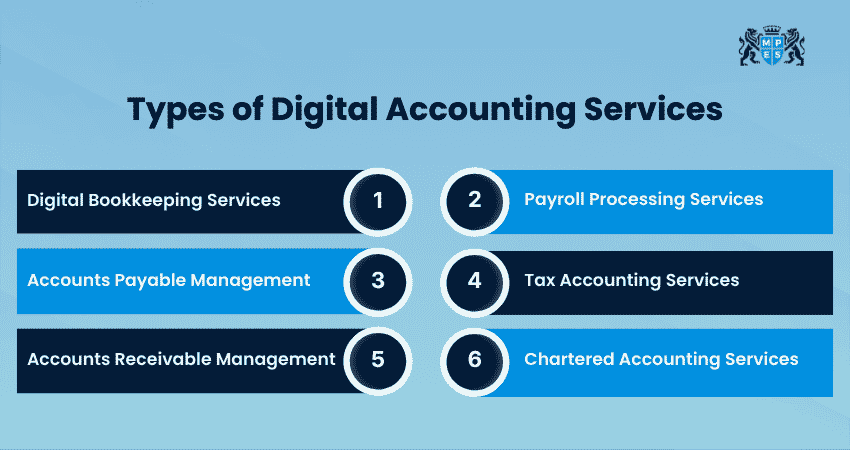
1) Digital Bookkeeping Services
Digital bookkeeping involves recording and organising financial transactions using accounting software. These services help businesses maintain accurate records of income, expenses, assets, liabilities, and equity.
Automated bookkeeping solutions can categorise transactions, reconcile accounts, and generate reports with minimal manual intervention. This ensures that financial records remain updated and accessible.
2) Accounts Payable Management
Accounts payable management focuses on handling payments owed to suppliers, vendors, and service providers. Managing these payments efficiently helps businesses maintain healthy supplier relationships and avoid payment delays.
Digital systems can automate invoice processing, approval workflows, payment scheduling, and expense tracking. This improves accuracy, reduces administrative work, and provides better control over outgoing payments.
3) Accounts Receivable Management
Accounts receivable management involves tracking and collecting payments due from customers for purchased products or services. Effective management of receivables is essential for maintaining a steady cash flow.
Digital Accounting platforms streamline invoice creation, payment reminders, customer account tracking, and collections management. This helps businesses reduce overdue payments and improve overall financial stability.
4) Payroll Processing Services
Payroll processing services use digital systems to calculate employee salaries, tax deductions, bonuses, benefits, and statutory contributions. Automating payroll helps businesses save time while reducing the risk of errors.
This is because automation reduces payroll errors and helps organisations pay employees correctly and on schedule. Digital payroll solutions also simplify compliance with employment regulations and tax requirements.
5) Tax Accounting Services
Tax accounting services help businesses manage their tax obligations using digital tools and software. These services support tax calculations, tax filing, record-keeping, and compliance with local tax regulations.
Digital tax solutions can automatically track taxable transactions, calculate liabilities, and generate reports required for tax submissions. This minimises the risk of errors, saves time, and helps organisations meet filing deadlines.
6) Chartered Accounting Services
Chartered accounting services provide professional financial expertise supported by digital technologies. Chartered Accountants use accounting software and cloud-based systems to prepare financial statements, conduct audits, provide tax advice, and support financial planning.
Digital tools enable Chartered Accountants to access financial data in real time, improve collaboration with clients, and deliver accurate financial services. This helps businesses make informed financial decisions while maintaining compliance with regulatory requirements.
Learn how to use financial information effectively with CIMA’s CGMA® Management Accounting (P1) Course – Sign up soon!
What are the Five Steps to Digitise Your Accounting Processes?
Moving from traditional accounting methods to Digital Accounting requires careful planning and implementation processes. The following steps can help businesses successfully digitise their accounting processes:
1) Evaluate Existing Processes and Identify Digital Requirements
The first step is to review your existing accounting processes and identify areas that could benefit from digitalisation. You need to assess how financial data is collected, stored, and processed while identifying challenges such as manual work, delays, or recurring errors.
Understanding these requirements helps organisations choose digital solutions that go well with their operational needs and business goals.
2) Select the Right Digital Accounting Software or Platform
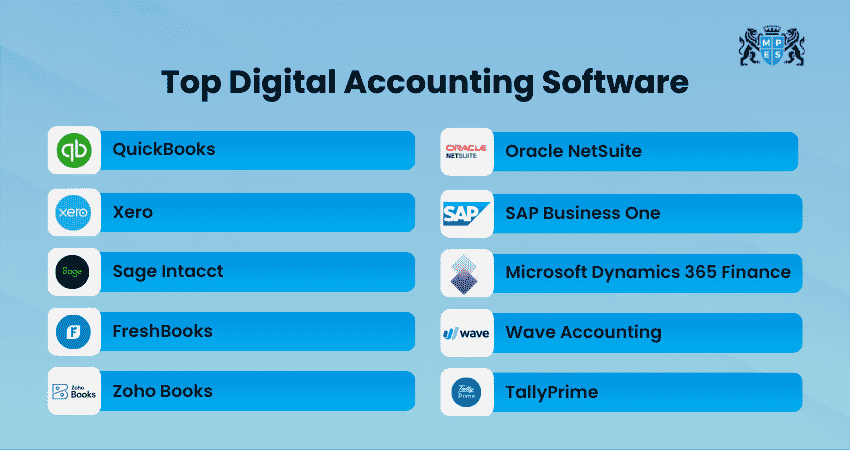
Choosing the right Digital Accounting software is essential for a successful digital transformation. Businesses should evaluate features such as automation capabilities, reporting tools, security measures, integration options, and scalability as per their business needs.
You have to ensure that the selected platform supports both current requirements and future growth while remaining easy for employees to use.
3) Train Employees and Stakeholders on the New System
Even the most advanced software cannot deliver results if users do not understand how to use it effectively. Therefore, offering proper training on how to use the Digital Accounting platforms helps employees become familiar with new processes, features, and workflows.
Providing ongoing support and guidance can also increase user confidence, reduce resistance to change, and improve overall adoption of the system.
4) Transfer and Migrate Financial Data
Once the software is selected, organisations must transfer existing financial information into the new system. This includes customer records, supplier details, transaction histories, payroll information, and financial reports.
Meanwhile, businesses should verify the accuracy of migrated data to ensure a smooth transition and prevent future accounting issues.
5) Regularly Review, Update, and Audit the Digital System
Digital Accounting is an ongoing process. So, its systems should be reviewed regularly to ensure they continue to meet business needs. Organisations should update software, monitor system performance, review security settings, and conduct routine audits.
Regular reviews help maintain accuracy, improve efficiency, and ensure compliance with changing regulations and business requirements.
Key Trends Driving Digital Transformation in Accounting
The accounting profession continues to evolve as new technologies and business priorities emerge. Several trends are accelerating the adoption of Digital Accounting solutions across industries. Below are some of the trends that drive digital transformation in Accounting:
1) Growing Adoption of Digital Transformation
Digital transformation is reshaping accounting processes across organisations of all sizes. Businesses are increasingly adopting cloud-based accounting platforms, automation tools, Artificial Intelligence (AI), blockchain technology, and advanced analytics to improve efficiency and accuracy. As organisations continue their digital transformation journeys, Digital Accounting is becoming a core part of modern business operations.
2) Regulatory Support for Digitalisation
Governments and regulatory authorities are encouraging businesses to adopt digital record-keeping and electronic tax filing systems. Digital compliance requirements are becoming more common across many regions. This regulatory support is encouraging organisations to modernise their accounting processes while improving transparency and reporting accuracy.
3) Rising Focus on Sustainability
Many organisations are working to reduce paper usage and improve environmental sustainability. Digital Accounting supports these goals by replacing physical documents with electronic records and cloud-based storage. This not only supports environmental goals but also improves efficiency and long-term business performance.
Conclusion
Digital Accounting is revolutionising the way businesses manage their finances by combining accounting expertise with modern technology. From automating routine tasks and improving accuracy to providing real-time insights, it helps organisations work efficiently and make better financial decisions. Whether for bookkeeping, payroll, tax management, or financial reporting, Digital Accounting has become an essential part of modern financial management.
Prepare for the demands of modern finance and accounting roles with the CIMA’s CGMA® Operational Level Training – Join now!
Frequently Asked Questions
Q. Is Digital Accounting Suitable for Small Businesses?
Yes, Digital Accounting is highly suitable for small businesses. It helps reduce manual work, improve accuracy, automate routine tasks, and provide better visibility into financial performance. Many accounting platforms offer affordable solutions designed specifically for small business needs.
Q. What are the Five Pillars of Accounting?
The five pillars of accounting are Assets, Liabilities, Equity, Revenue, and Expenses. These fundamental elements form the basis of financial reporting and help organisations measure their financial position and business performance.
Q. What is the Difference Between Digital Accounting and Traditional Accounting?
Digital Accounting uses software and cloud systems to record and analyse financial data in real time, while traditional accounting relies on manual bookkeeping and paper records. Digital methods improve accuracy, speed, and accessibility, whereas traditional practices are slower and error-prone.