Have Any Question?
 +44 7452 122728




 Back
Back




Role of Mentorship in Career Development: Driving Career Success
Role of Mentorship in Career Development involves sharing knowledge, offering guidance, boosting confidence, and helping individuals achieve long-term goals. It accelerates learning and enhances skill acquisition. Beyond advice, Mentorship expands networks and promotes long-term professional growth through a reciprocal approach.
Table Of Contents


 44 7452 122728
 16-Jan-2025
Author-Maria Thompson
Every professional success story has a hidden contributor: a Mentor. Often unnoticed, Mentors play a crucial role in career development. The Role of Mentorship is not just about sharing knowledge but about enabling individuals to reach their full potential. A Mentor is someone who believes in your capabilities and guides you through obstacles to help you achieve your dreams.
In this blog, the Role of Mentorship extends beyond offering advice. It provides clarity, accountability, and the confidence to make important career decisions. Let’s explore how Mentorship shapes success, builds careers, and transforms lives.
What is Mentorship?
Mentorship is a supportive relationship in which an experienced individual, called the Mentor, advises a less experienced person, called the mentee, to support their growth and success. This guidance goes beyond professional development, as Mentors share valuable life insights and practical advice.
Through Mentorship, mentees can build confidence, boost their mental well-being and expand their network. It also helps individuals develop essential self-improvement skills and gain clarity about how to achieve their long-term academic and career goals.

Role of Mentorship in Career Development
Mentorship is one of the key supports that helps grow a professional career by offering support, encouragement and direction. It assists in overcoming professional obstacles, developing foundations, and capturing opportunities to enhance people's career paths and bring them to success much faster.
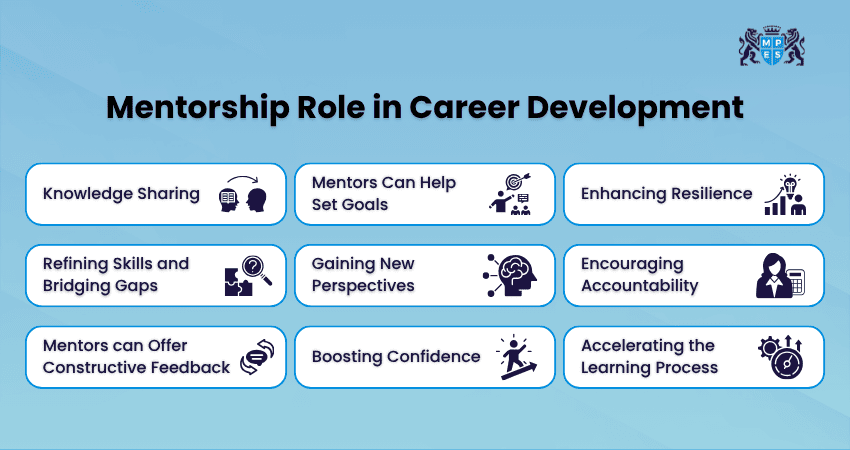
1) Knowledge Sharing
Mentors have years of experience coupled with important information a mentee may take ages to acquire on his or her own. They assist in offering hands-on tips, trends and techniques that are in the market and in practice that cannot be sourced from books or internet. That way, such knowledge sharing can prevent Mentors from making a wrong move.
2) Mentors Can Help Set Goals
A Mentor helps the mentee define clear personal or professional development goals. They often use SMART goals, specific, achievable, relevant, and time-bound, to ensure clarity. By breaking larger objectives into smaller, manageable tasks, Mentors make it easier to build skills and monitor progress effectively.
3) Enhancing Resilience
Career paths are rarely straight lines; they often include both highs and lows, such as disappointments, rejection, and changes in direction. A Mentor assists the protégé in building resilience by offering encouragement, sharing success stories of others in similar situations, and teaching effective ways to manage stress.
4) Refining Skills and Bridging Gaps
Instructors aid in pointing out what a student requires to enhance talents. They can state what these people do not know or are unable to do and then advise how to rectify this situation. This may even involve suggesting specific courses, particular certifications or types of experience that will help the mentee to secure a better job in that specialty.
5) Gaining New Perspectives
When faced with some issues or even when making choices, a Mentor gives you a new angle that was not earlier considered. They can give a neutral point of view, which may be enough for the mentees to make new decisions with their circumstances in mind. Such a widened view may help to find more effective solutions to various issues and make optimal decisions.
6) Encouraging Accountability
A Mentor also helps hold the mentee accountable for their career goals by regularly reviewing progress. They encourage persistence, even during challenging times, and motivate the mentee to stay committed to their objectives. This accountability plays an important role in maintaining consistent progress and achieving long-term success.
7) Mentors can Offer Constructive Feedback
A strong Mentorship relationship fosters trust, allowing for open and honest feedback. Mentees recognise that constructive criticism is intended to support their professional growth, not discourage them. Mentors can objectively identify areas for improvement and offer practical guidance, unlike friends who may avoid pointing out weaknesses to prevent seeming critical.
8) Boosting Confidence
There is nothing more motivating than to have an authority figure believe in your capacity as a human being. When one who has worked with you in the past and can vouch for your skills does so, it may encourage one to look for other challenges or probably apply for other jobs one may not have done.
9) Accelerating the Learning Process
A good example of where having a Mentor can help you skip all that process and just learn from what works is where a mentee can minimise their errors. Mentors give practical information that can shorten the learning period in response to various situations.
10) Receiving Career Guidance
A Mentor assists their mentee in understanding how their career goals fit into what can be done or planned for, specifically when it comes to job seeking, change of career and advancement planning. The sponsors give guidance to the mentees in understanding that there is a long-run and that the goals have to be set in smaller achievable targets.
11) Building Networking Opportunities
Having a Mentor also means having a connection list of people to refer to, as they control the access. Mentors are usually known also in their organisations, and they can recommend their mentees to organisations that need their service. These introductions may create opportunities for new fields of work, partnerships, or even job opportunities.
12) Mentors are Willing to Listen
Mentors provide a safe space for individuals to share ideas and explore possibilities. Using their experience, they offer thoughtful perspectives to help the mentees make informed decisions. Their insights guide whether to move forward or reconsider an idea, and they also support mentees in handling everyday challenges such as workplace conflicts.
What are Six Types of Mentoring Models for Career Growth?
Mentoring comes in many forms, each designed to suit different learning styles and professional needs. Understanding these six common mentoring models can help you choose the one that best supports your development and career progression.
1) One-on-One Mentoring
This is the most traditional form of Mentorship, where an experienced professional guides you individually. It offers personalised advice, dedicated support, and consistent direction, helping you build skills and advance your career effectively.
2) Peer Mentoring
Peer mentoring involves partnering with someone at a similar career stage or age. Both individuals share knowledge, exchange experiences, and alternate roles as Mentor and mentee to achieve shared growth.
3) Reverse Mentoring
In this approach, junior employees Mentor senior professionals. It focuses on bridging skill gaps, particularly in areas like digital trends or emerging technologies, while also allowing juniors to gain insights from senior experience.
4) Group Mentoring
Group mentoring involves one Mentor guiding multiple mentees at once. It encourages collaborative learning, where participants benefit from both the mentor’s expertise and the diverse perspectives of their peers.
5) Flash Mentoring
Flash mentoring is a short-term, focused interaction, often a single session, aimed at addressing a specific topic or skill. It is ideal for quick guidance and can complement other mentoring formats.
6) Informal Mentoring
Informal mentoring develops organically without a structured framework. It often arises from mutual respect and admiration, allowing for a more natural connection that can include both professional guidance and personal support.
Shape the future with our
Coaching And Mentoring Training
– Register now!
How to Find the Ideal Mentors?
For a Mentorship to be effective it is very important to select a right Mentor. As a rule, an outstanding Mentor is the person who shares the similar views on work ethic and whose skills and career background correlate with your desired job. To secure the right Mentor one should know goals and actively look for connections. Let’s break down the key steps:
Explaining the Identifying the Ideal Mentors
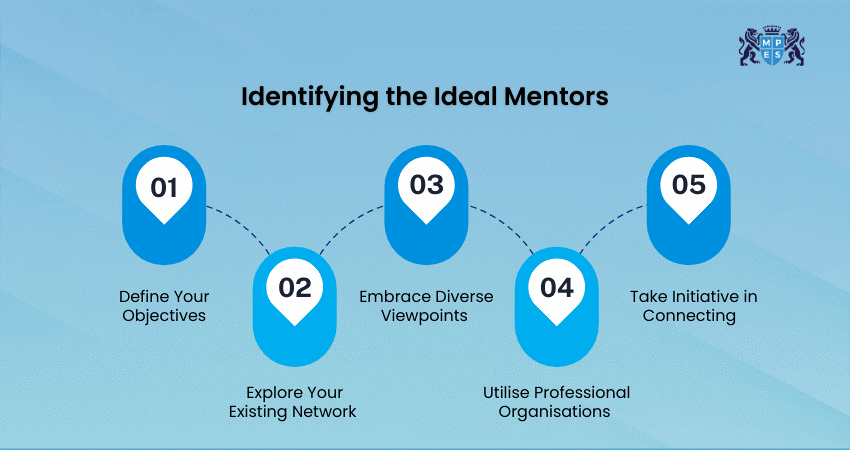
1) Define Your Objectives
First, one should get clear on your goals before deciding to find a Mentor who can guide you through your professional life. Do you need to gain Leadership skills? Switching to a new career? Identifying your goals helps you identify a Mentor whose skills and background align with what you vision yourself doing.
2) Explore Your Existing Network
Perhaps your desired role model is also in your contact list. Begin by contacting Managers, colleagues or other persons who are aware of your experience and background in the business. They already know what you are capable of and can better advise you.
3) Embrace Diverse Viewpoints
What this means is that one should not just confine oneself to high-profile coaches. Ask people from other fields or companies or with other roles or backgrounds for sponsorship. Different people can offer practical judgments and give you an innovative way of approaching issues.
4) Utilise Professional Organisations
Most employers and industry associations and professional bodies for that matter have programs for Mentorship. This kind of programs seeks to match a mentee with a Mentor or an experienced colleague depending on the specialisation desired in the future.
5) Take Initiative in Connecting
Mentoring happens when you take the initiative to seek one, so do not sit and wait for them to come to you. If you have seen the work of research professionals that you like, find them on platforms such as LinkedIn, and then message them saying that you’d like to learn from them.
Transform your path towards leadership with our
Coaching Skills Training
- Join now!
How to Build a Strong Mentor–mentee Relationship?
Building a strong Mentor-mentee relationship is all about creating a space where both individuals feel heard and motivated to grow together. Here's how such a relationship can be built:
1) Mutual Trust
Trust is the backbone of any successful mentoring relationship. When both Mentor and mentee feel comfortable being open and honest, it creates a safe environment for learning, sharing challenges, and personal growth.
2) Effective Listening
Great mentoring starts with listening. Both Mentor and mentee should actively listen to understand perspectives, concerns, and ideas, which helps build stronger connections and meaningful conversations.
3) Consistent Communication
Regular communication keeps the relationship active and productive. Whether through scheduled meetings or quick check-ins, staying connected ensures progress and avoids misunderstandings.
4) Alignment of Goals
It is important for both Mentor and mentee to be clear about what they want to achieve. Setting shared goals gives direction to the relationship and helps measure progress over time.
5) Constructive Feedback
Honest and constructive feedback helps the mentee improve and grow. When delivered positively and clearly, feedback becomes a valuable tool for development rather than criticism.
6) Defined Expectations
Setting clear expectations early on avoids confusion later. This includes agreeing on communication styles, meeting frequency, and the level of commitment from both sides.
7) Shared Commitment
A successful mentoring relationship needs effort from both sides. When both Mentor and mentee are equally committed, it creates a more meaningful and impactful experience.
8) Respecting Boundaries
Respecting each other’s time, space, and professional limits is essential. Clear boundaries help maintain a healthy and balanced relationship, thus ensuring long-term success and mutual respect.
Conclusion
The significance of the Role of Mentorship in Career Development is immense. A Mentor provides more than just advice; they foster growth and create pathways to new opportunities. By identifying the right mentor and cultivating that relationship, professionals can fast-track their success. So, embrace mentorship, and you'll discover potential you never realised you had!
Shape minds, share your expertise and lead impactful learning journeys with our range of
Train the Trainer Courses
- Sign up now!
Frequently Asked Questions
Q. What are the Five C's of Mentoring?
The quality for Mentoring as regards the subject matter are Clarity, Communication, Commitment, Consistency, and Collaboration, abbreviated as five C’s. Mentor-mentee exchange is the best when; both the mentor and the mentee, set goals, communicate, have commitment, practice activity, and foster partnership towards development.
Q. What is the Biggest Challenge in Mentoring?
One of the biggest challenges in Mentoring is building rapport and maintaining consistent communication. Effective mentorship requires both the mentor and mentee to dedicate time, engage consistently, and set clear expectations. Without trust, mentorship struggles to be effective, as open communication and constructive feedback are essential for growth.
Q. How Can Mentorship Influence Your Future?
Mentorship is very important as it offers support, confidence and fresh view of things within one’s career choice or prevents one from making certain mistakes. A mentor can speed up development, connect with some of the most important assets of the whole profession, and influence your decisions, which eventually succeed you.