Have Any Question?
 +44 7452 122728




 Back
Back




30 Accounts Receivable Interview Questions and Answers
Top Accounts Receivable Interview Questions assess your AR knowledge, software skills, and ability to handle customer disputes and payment collections. They help employers understand your accuracy, communication, and problem-solving skills. Strong answers show you can manage accounts efficiently and maintain good client relations.
Table Of Contents


 44 7452 122728
 06-Dec-2025
Author-James Smith
Getting ready for an Accounts Receivable (AR) job interview? You’re in the right place! Accounts Receivable roles are all about accuracy, organisation, and clear communication. Whether you’re managing invoices, tracking payments, or resolving client disputes, each responsibility demands consistency and professionalism. This makes strong preparation essential if you want to stand out from the competition.
In this blog, you’ll explore the top Accounts Receivable Interview Questions employers often ask. You’ll also learn about key areas such as AR processes, software, collections, and communication techniques. With this knowledge, you’ll feel better prepared and more confident for your upcoming interview.
Accounts Receivable Interview Questions
Accounts Receivable Interview Questions help employers understand how well you manage invoices, payments, and collections while maintaining accuracy and good communication. Let’s look at the most common Accounts Receivable questions and answers and learn simple, confident ways to answer them.
1) What does Accounts Receivable mean to you?
“Accounts Receivable means the money that customers owe to the company for goods or services they have already received. It shows how much cash is expected to come in. It’s an important part of keeping a business’s cash flow steady.”

2) Can you explain the full cycle of Accounts Receivable?
“The AR cycle begins when a sale is made and ends when payment is received. It includes creating invoices, sending them to customers, tracking payments, and recording them correctly. It also involves following up on overdue payments and balancing the books.”
3) What made you interested in working in Accounts Receivable for our company?
“I enjoy working with numbers and solving payment-related problems. I like the idea of helping a company keep its finances organised. Your company’s reputation for professionalism and teamwork makes me excited to contribute.”
4) Describe your advancement goals for the near future.
“My goal is to build my accounting skills and become more confident with financial software. I want to take on more responsibilities and move into a senior Accounts Receivable role in the future. I also plan to keep learning through training and courses.”
5) How do you manage priorities when juggling multiple accounts and tight deadlines?
“I plan my day carefully and make a list of tasks. I focus on urgent payments first and then handle the remaining tasks. I also stay calm under pressure and keep communication open with my team.”
6) Can you explain your approach to preparing journal entries?
“When preparing journal entries, I always start by checking all supporting documents. I make sure every figure is correct before recording it. Once done, I review the entry to ensure everything is accurate and balanced.”
7) How would you assess your multitasking abilities?
“I’m comfortable managing several tasks at the same time. For example, I can follow up on payments, record entries, and answer client emails in one day. I stay organised so that nothing gets missed.”
8) What are the key documents used in the Accounts Receivable process?
“The main documents are invoices, receipts, credit memos, statements, and payment records. These help track what customers owe and what they’ve already paid. Keeping them updated ensures everything stays accurate.”
9) How would you describe your communication skills with clients and team members?
“I communicate in a polite and clear way. I make sure clients understand payment details and deadlines. Within my team, I always share updates, so everyone is on the same page.”
Start your career in auditing: learn risk assessment, controls and assurance with our Foundations in Audit (FAU) Training – Join now!
10) What is a credit memo, and when is it used?
“A credit memo is a document issued by a seller to reduce the amount owed by a buyer on an invoice. It is used when goods are returned, services are canceled, or billing errors occur, effectively adjusting the customer’s account balance.”
11) What is an invoice, and what details should it include?
“An invoice is a bill sent to a customer after a sale. It should include the company name, customer details, invoice number, date, items sold, total amount, and payment terms. It’s a record of the money the company expects to receive.”
12) How does the accounting software you use expedite your tasks?
“Accounting software helps me record and track payments quickly. It reduces manual work and errors by automating processes. It also generates reports, which makes my job easier and faster.”
13) What steps do you take when a customer's payment is overdue?
“I send a friendly reminder first, giving them time to respond. If they don’t, I follow up by phone or email. I stay polite and try to find out if there’s any issue causing the delay.”
14) What is a payment term and can you give some examples?
“Payment terms tell customers how long they have to pay. For example, Net 30 means the payment is due within 30 days, and Due on Receipt means it should be paid immediately. It sets clear expectations for both sides.”
15) What accounting reports do you create daily in this position?
“I usually prepare reports like daily cash receipts, customer ageing reports, and outstanding invoices. These reports help track incoming money and overdue payments. They keep management informed about the company’s cash flow.”
16) How do you ensure data accuracy during entry?
“I always double-check numbers and details before saving. I compare them with original invoices or receipts to avoid mistakes. Accuracy is very important in accounting, so I take extra care with every entry.”
17) How frequently do you perform bank reconciliations?
“I usually do bank reconciliations every month, but sometimes weekly if there are many transactions. It helps ensure that company records match the bank statement. This keeps everything correct and transparent.”
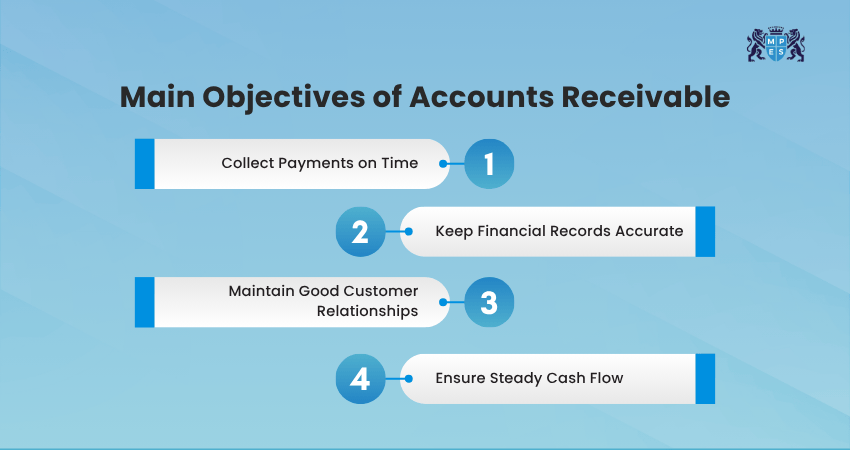
18) In your opinion, what are the main objectives of Accounts Receivable?
“The main goal of AR is to make sure the company receives its payments on time. It also helps maintain accurate records and positive relationships with customers. Keeping a healthy cash flow is always a key objective.”
19) Can you explain what 'bad debt' means in AR?
“Bad debt means money that cannot be collected from customers. This happens when a customer goes bankrupt or refuses to pay. It’s recorded as a loss in the company’s accounts.”
20) How do you collect payments while maintaining strong client relationships?
“I always stay polite and respectful when reminding customers about payments. I try to understand their situation and offer flexible solutions if needed. Good communication helps keep both payment collection and relationships strong.”
Unlock foundational accounting knowledge and record business transactions through our Recording Financial Transactions (FA1) Training – Join now!
21) What do you know about offering early payment discounts to customers?
“It means giving customers a small discount for paying before the due date. For example, a 2% discount if they pay within 10 days. This helps the company get money faster and encourages timely payments.”
22) Describe your process for closing the Accounts Receivable period.
“I start by making sure all invoices and payments are recorded. Then I reconcile the accounts and fix any unmatched entries. Finally, I prepare closing reports for management review.”
23) How do you train new team members in AR procedures?
“I explain the AR process step by step and show them how to use the software. I also share checklists and sample reports to help them learn faster. I encourage them to ask questions and support them until they’re confident.”
24) How do you handle high-stress situations, such as tight deadlines or difficult clients?
“I handle high-stress situations by staying organized, prioritizing tasks, and maintaining clear communication. I break work into manageable steps, remain calm under pressure, and focus on solutions, ensuring deadlines are met while preserving professionalism and positive client relationships.”
25) What is the difference between back-end collections and front-end collections?
“Front-end collections happen before payments are due, like reminders and gentle follow-ups. Back-end collections happen after payments are overdue. Both are important to keep payments coming in on time.”
26) How do you keep track of and manage overdue accounts?
“I use ageing reports to monitor overdue payments. I set reminders and follow up regularly until the payment is made. Keeping proper records helps me stay organised and effective.”
27) What KPIs or metrics do you use to evaluate AR performance?
“I track things like Days Sales Outstanding (DSO), total collection rate, and overdue percentage. These numbers show how quickly payments are collected. They help measure how well the AR process is working.”
28) How do you maintain compliance with internal policies and legal standards in AR?
“I always follow company policies and accounting rules. I make sure all transactions are recorded correctly and keep customer information private. Staying compliant builds trust and avoids legal issues.”
29) What AR systems or software have you worked with, and which are you most comfortable using?
“I’ve worked with systems like QuickBooks, SAP, and Tally. I’m most comfortable with QuickBooks because it’s easy to use and helps manage invoices and payments efficiently. It makes daily AR work much faster.”
30) Share your experience with credit risk assessments and evaluating client creditworthiness.
“I check the client’s past payment history and financial reports. If needed, I also review their credit rating before approving credit terms. This helps reduce bad debt and keeps cash flow safe.”
Conclusion
Preparing for an AR interview is easier when you know what to expect. Focus on accuracy, communication, and confidence while answering. By practising the Accounts Receivable Interview Questions, you can highlight your ability to manage payments, resolve client issues, and maintain smooth financial operations, showing employers you’re ready to excel in this important role.
Build your accounting future with our ACCA Foundations Training – Join now!
Frequently Asked Questions
FaQ's not available