Have Any Question?
 +44 7452 122728




 Back
Back




How to Register as a Sole Trader in the UK? Explained in Detail
To Register as a Sole Trader means setting up a business that you own and run yourself while being personally responsible for its profits, losses and taxes. It's one of the simplest business structures to set up, especially in the UK. They must register with HMRC for self-assessment tax returns and comply with industry regulations.
Table Of Contents


 44 7452 122728
 14-Mar-2026
Author-Veronica Davis
A Sole Trader sounds like a lone adventurer of the business world, and in many ways, it is. It’s the simplest business structure in the UK, where one person takes the reins, makes the decisions and enjoys the rewards of their own enterprise. Learning how to Register as a Sole Trader in the UK is one of the easiest ways to turn your skills or side hustle into a fully-fledged venture.
With minimal setup and full control over your work, it offers a flexible path into entrepreneurship. In this blog, you you will go through how to Register as a Sole Trader in the UK, the key steps involved, and what you need to stay compliant. So read on!
What is a Sole Trader?
A Sole Trader is a self-employed individual who owns and manages a business independently. They have complete control over how the business operates, including its finances and tax responsibilities. In this structure, the owner keeps all after-tax profits; however, the business and the owner are legally considered a single entity, meaning the owner is personally responsible for any financial risks or liabilities.
Who Needs to Register for Sole Trader with HMRC?
Registering as a Sole Trader essentially means registering for self assessment with HM Revenue & Customs (HMRC ). You are required to register if you earn more than £1,000 in a tax year and failing to register on time may result in penalties. This requirement applies regardless of the type of goods or services you offer, whether you run the business full-time or part-time, and whether you operate from home or a separate workplace.
Any income earned through self-employment is considered taxable income, meaning you must register. For example, you need to register for self assessment if you:
1) Carry out paid services such as plumbing for friends or neighbours.
2) Offer freelance graphic design or other digital services.
3) Sell handmade products at local markets or through online platforms such as Etsy.
4) Provide consultancy support to startups or small businesses.
Registering as a Sole Trader may also be necessary if:
1) You need to prove your self-employed status to access certain benefits, such as tax-free childcare.
2) You wish to qualify for benefits and the State Pension by making voluntary Class 2 National Insurance contributions.
How to Register as a Sole Trader?
Before starting the registration process, make sure you have your National Insurance (NI) number along with your personal and business details. You must Visit the GOV.UK Self Assessment registration page, select “Start now,” and follow the instructions.
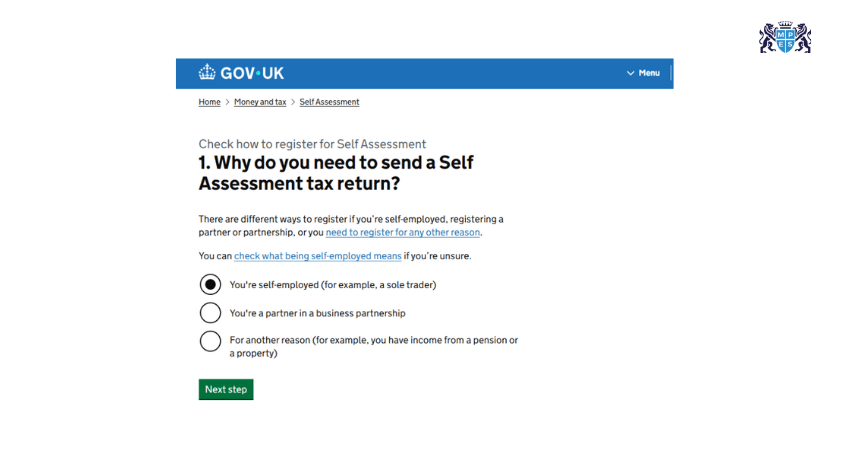
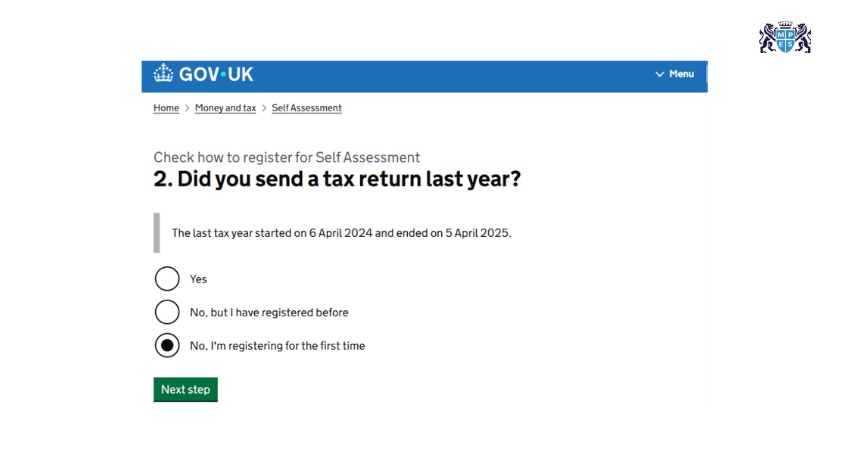
You will be asked why you need to submit a Self Assessment tax return, where you should choose the option indicating that you are self-employed. You will also need to confirm whether you submitted a tax return for the previous year. If not, select the option to register for the first time.
1) Create a Government Gateway Account
You must sign in to your business tax account through the Government Gateway service. If you are a new user, you can create an account by entering and confirming your email address. Once registered, you will receive a Government Gateway ID, which allows you to access HMRC services online.
2) Register for Self Assessment
After signing in, select the option to add a tax to your account to gain online access. Choose Self Assessment for individuals, Sole Traders, partnerships or trusts. If you do not already have a Unique Taxpayer Reference (UTR), confirm this and indicate that you are registering as an individual or Sole Trader.
3) Complete the Online Form
Finally, you will need to fill in the self assessment registration form with key details, including:
a) Your National Insurance number
b) Full name (including any previous names), date of birth, and gender
c) Current home address and the date you moved in
d) Contact details such as phone number and email address
e) Whether you have previously registered for self assessment
f) Your business name and the type of work you do
g) Your business address (if different from your home address)
h) The date you started working as self-employed
4) Receive Your UTR Number
Once this information is submitted, HMRC will process your registration and issue your Unique Taxpayer Reference (UTR). This will allow you to complete and submit your Self Assessment tax returns.
How Long Does Sole Trader Registration Take?
Setting up as a Sole Trader can be completed relatively quickly. The initial registration process itself can usually be finished within a few hours, especially if you register online. But it may take up to 15 days for HMRC to issue your Unique Taxpayer Reference (UTR) after your application is submitted.
That depends on whether you register online or by post. If you plan to operate under a business name rather than your personal name, it is advisable to spend some time deciding on and preparing this before starting the registration process.
Your journey to elite financial leadership is just a click away. Sign up for our Financial Management (FM) Course today!
What Taxes Do Sole Traders Pay?
As a Sole Trader, you are responsible for paying several types of taxes based on your business earnings. Here are the main categories of taxes you’ll have to pay:
1) Income tax
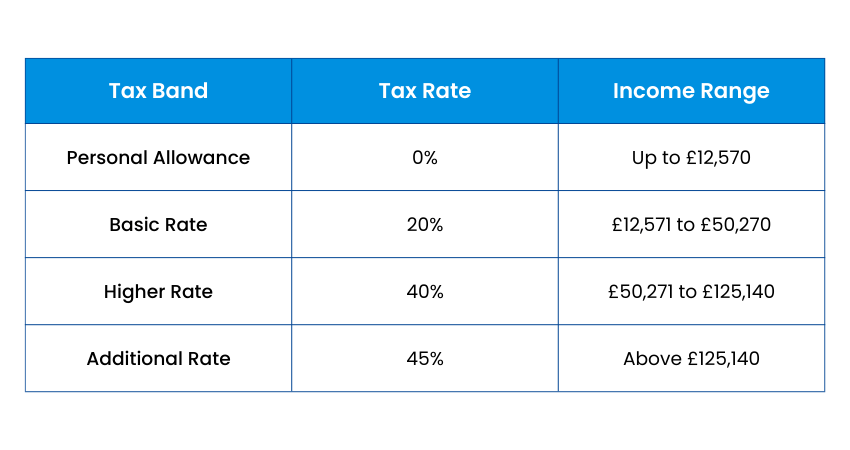
You must pay Income Tax on your profits after deducting allowable business expenses. The UK tax bands are as follows:
2) National Insurance
National Insurance contributions (NICs) are taxes on earnings and profits that help fund public services such as the State Pension, NHS and certain government benefits. Self-employed individuals can voluntarily pay Class 2 contributions (£3.50 per week) if their annual profits are £6,845 or less, helping them maintain their National Insurance record and remain eligible for certain benefits.
Once the profits exceed the personal allowance of £12,570, you must pay Class 4 contributions. For the 2025-2026 tax year, the rates are:
a) 6% on profits between £12,570 and £50,270
b) 2% on profits above £50,270
3) VAT
If your annual turnover exceeds £90,000 within any rolling 12-month period, you must register for VAT. After registration, you are required to charge the standard VAT rate of 20% on most goods and services and provide VAT invoices to your customers.
Every quarter, you must submit a VAT return to HMRC, reporting the VAT you have charged and paid. If the VAT you collected exceeds what you paid, you will pay the difference to HMRC; otherwise, you may receive a refund.
Responsibilities of a Sole Trader
After registering and beginning your business activities, it is important to understand and meet your responsibilities to remain compliant with tax regulations. As a Sole Trader, you are required to:
1) Submit an annual Self Assessment tax return to HMRC
2) Maintain accurate records of your income and expenses
3) Pay your Income Tax and National Insurance contributions
4) Register for VAT if your turnover exceeds the £90,000 mandatory registration threshold
5) If you are not already using accounting software, adopting it early can help you manage your finances more efficiently.
By keeping your financial records and tax obligations organised, you can avoid penalties and keep your business operating smoothly. It is also advisable to open a separate business bank account to distinguish between personal and business finances clearly.
Master Financial Reporting and see the bigger picture behind every number. Sign up for our Financial Reporting (FR) Training today!
Advantages and Disadvantages of Being a Sole Trader
Here are the key advantages of being a Sole Trader:
1) Registering as a Sole Trader is simple and quick, making it easy for individuals to start a business with minimal setup requirements.
2) As the sole owner, you have complete control over all business decisions, from daily operations to long-term strategy.
3) You keep all profits generated by the business after tax, giving you full ownership of your earnings.
4) The tax process is relatively straightforward, as you only need to pay Income Tax on your taxable business profits.
5) Administrative requirements are limited compared to other business structures, thus making management less complex.
6) Your main responsibilities typically involve maintaining accurate financial records and submitting an annual self assessment tax return.
But being a Sole Trader is not without its disadvantages, including the following:
1) As a Sole Trader, you are personally responsible for any debts or financial obligations incurred by the business.
2) Because the business and the owner are legally the same entity, your personal assets could be at risk if the business faces financial difficulties.
3) Unlike limited company owners, Sole Traders do not benefit from limited liability protection.
4) There are fewer opportunities for tax planning, which may result in paying higher taxes as your income increases.
5) As the business grows and generates more revenue, it may become more beneficial to consider incorporating the business structure.
6) Expanding the business or securing external funding can sometimes be more challenging for Sole Traders compared to other business structures.
Conclusion
To Register as a Sole Trader in the UK is a straightforward step toward turning your ideas into a working business. By understanding the registration process, your tax responsibilities and compliance requirements, you can start your journey with confidence. So plan ahead, and you’ll build a strong foundation for running a successful and sustainable business.
Assemble the toolkit every future finance leader needs through our
ACCA Applied Skills Courses
- Register now!
Frequently Asked Questions
Q. Does It Cost to Register for Sole Trader?
No, registering as a sole trader in the UK is free of charge. What you are actually doing is registering for Self Assessment with HM Revenue & Customs (HMRC) so that you can report your income and pay the appropriate taxes. But while registration is free, you'll still need to pay income tax and national insurance on your business profits.
Q. Do I Pay Myself a Salary as a Sole Trader?
No, Sole Traders don’t pay themselves a salary in the traditional sense. Instead, you take money from your business profits as personal drawings. The profits belong to you as the business owner, and you pay income tax and national insurance on the total business profit, rather than on a salary.
Q. What Can You Claim as a Sole Trader?
You can claim allowable business expenses to reduce your taxable profit. These may include costs such as:
a) Office supplies
b) Business travel
c) Equipment
d) Marketing
e) Professional services
f) A portion of home expenses if you work from home