Have Any Question?
 +44 7452 122728




 Back
Back




What is HMRC: His Majesty's Revenue and Customs in the UK Explained
HM Revenue and Customs (HMRC) is the UK government’s official tax authority, which is responsible for collecting taxes and enforcing customs regulations. It manages income tax, VAT, corporation tax and national insurance contributions. It helps businesses comply with financial regulations and ensures that tax laws are properly followed.
Table Of Contents


 44 7452 122728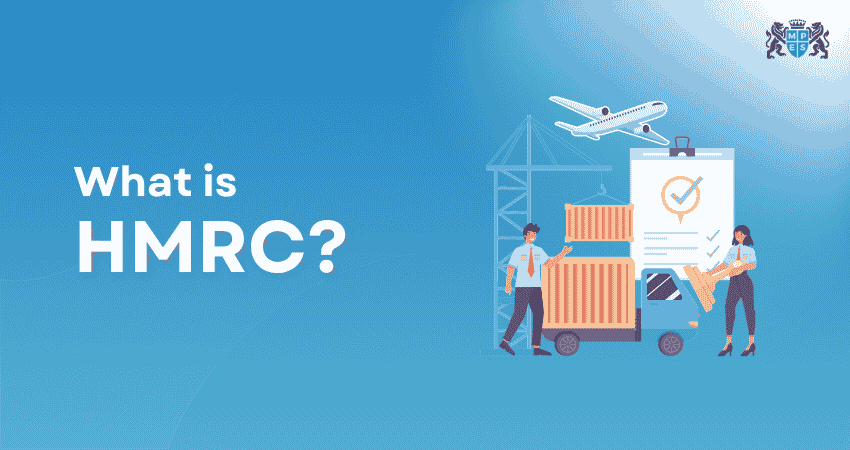
 11-Aug-2025
Author-Maria Thompson
Every tax system requires a financial powerhouse responsible for collecting taxes, paying benefits, enforcing customs rules, and ensuring businesses play by the book. In the case of the UK, it's the His Majesty’s Revenue and Customs (HMRC). Think of it as the unsung hero (or your villain, in case your tax bill is really high!) of Britain's economic engine.
Essentially, from income tax to VAT and pensions to payroll, HMRC is at the heart of Britain’s fiscal framework. This blog explores What is HM Revenue and Customs in detail, exploring what it does and why it matters to every UK taxpayer. So, read on!
What is HMRC?
His Majesty’s Revenue and Customs (HMRC) is the United Kingdom’s tax, payments and customs authority. It plays a prominent role in funding the UK’s public services by collecting taxes, including income tax, corporation tax, Value-Added Tax (VAT), and duties on goods and services. HMRC also administers National Insurance contributions and ensures compliance with tax laws.
Beyond tax collection, it provides financial support to families and individuals through schemes like Child Benefit and tax credits. As a non-ministerial department, HM Revenue and Customs (HMRC) operates independently of direct political control, ensuring impartiality in its operations.

Functional Structure of HMRC
The functional structure of HM Revenue and Customs refers to the way the organisation is divided into specialised departments based on specific functions and responsibilities. This structure helps HMRC manage its operations efficiently and maintain clear accountability across different services. Let's check the functional structure of HMRC:
1) Tax Collection and Revenue Management
The tax collection department is responsible for collecting income tax, VAT, corporation tax,The tax collection department is responsible for collecting income tax, VAT, corporation tax, and national insurance contributions. It ensures that individuals and businesses pay the correct amount of tax according to UK regulations.
2) Customs and Border Operations
The customs and border operations department manages customs duties and oversees import and export regulations. It also monitors goods entering and leaving the UK to prevent illegal trade activities.
3) Compliance and Enforcement Division
The compliance and enforcement division ensures that taxpayers follow tax laws and financial regulations. It conducts audits and investigations to identify tax fraud, evasion, and non-compliance.
4) Customer Services Department
The customer services department provides support and guidance to taxpayers and businesses. It handles queries related to tax payments, registrations, refunds, and online services.
5) Digital and Technology Services
The digital and technology services department manages HMRC’s digital systems and online platforms. It helps improve digital tax filing services and maintains a secure technology infrastructure.
6) Strategy and Tax Policy Group
The strategy and tax policy group develops tax policies and provides legal guidance on taxation matters. It ensures HMRC activities align with government policies and legal standards.
What Taxes Does HMRC Manage for the UK?
Let’s look at some of the main taxes that HMRC collects. If you’re an experienced Accountant, you’ll likely know these well. But if you’re new to Accounting or thinking about it as a career, this is a handy introduction:
1) Value Added Tax (VAT)
VAT is a 20% charge added to most goods and services in the UK. Businesses include this in their prices and pass it on to HMRC every three months.
2) Capital Gains Tax
Capital Gains Tax (CGT) applies when you sell assets like property or shares and make a profit. For the 2025/26 tax year, basic-rate taxpayers pay 18% on most gains, while higher-rate taxpayers pay 24%. These rates also apply to property gains. Individuals are required to report and pay CGT, often through an online submission, especially when disposing of residential property.
3) Income Tax
People pay tax on their earnings above a certain amount. If you're employed, it's usually taken automatically through Pay As You Earn (PAYE). If you're self-employed, you save and pay it yourself once a year through a self-assessment.
4) Stamp Duty Land Tax (SDLT)
In England and Northern Ireland, SDLT is charged on residential property purchases over £125,000. First-time buyers benefit from an exemption on homes costing up to £300,000 and pay 5% on the portion between £300,001 and £500,000.
For properties above that, standard SDLT rates apply. Typically, solicitors manage the payment process, ensuring the amount due is submitted to HMRC within 14 days of completion.
5) Corporation Tax
From April 2025, corporation tax rates vary based on profit levels. Companies earning up to £50,000 in profit will pay 19%. Those with profits exceeding £250,000 will be taxed at 25%. For companies with profits between £50,000 and £250,000, marginal relief applies, creating a gradual increase in the rate between the two thresholds.
6) Excise Duties
These are extra charges on things like alcohol, tobacco, and fuel. These duties help raise government revenue and may also support wider public policy aims. Companies pay these charges to HMRC, not the buyers directly.
7) Inheritance Tax
Inheritance Tax is applicable for estates worth more than £325,000. Any value above this nil-rate band is taxed at 40%. However, a reduced rate of 36% can apply if at least 10% of the estate is left to charity. While the tax can be paid in instalments, interest is applied to the outstanding balance, with HMRC’s late payment interest rate currently 7.75% from 9 January 2026.
Gain practical insights into UK taxation laws with the Advanced Taxation (ATX) Course – Register today!
HMRC Online Services
Anyone who wants to access HMRC’s online services may need to set up or sign in to a personal tax account, business tax account, self assessment account, or agent services account, depending on the services they need. Let's explore them further:
Individual Accounts
Individual taxpayers can create either of the following:
1) Personal Tax Account: This feature allows users to check income tax estimates, claim refunds, and update their personal details.
2) Self-assessment Account: It's used to submit a self-assessment tax return, if required.
Business Tax Accounts
These accounts are required for trusts and businesses that need to be registered with HMRC. When organisations set up their organisation account, they can utilise it for various registrations and services, such as:
1) Setting up PAYE once they start employing staff.
2) Registering for VAT if their taxable income exceeds £90,000.
3) Registering for self-assessment is essential when you Register as a Sole Trader , especially if it’s a one-person business.
4) Adding corporation tax services in case it’s a limited company.
Agent Accounts
Tax agents and professional Advisers can manage their clients’ tax affairs better by setting up an HMRC agent account. This online service enables them to act on behalf of individuals and businesses across a range of HMRC services.
Once registered, agents can request authorisation from clients, which allows them to access client-specific data and perform tasks such as filing tax returns, managing PAYE, VAT, and corporation Tax.
Through the HMRC Online Services for Agents portal, Advisors can:
1) View and update client records
2) Check for outstanding liabilities
3) Submit forms
4) Communicate securely with HMRC
How Does HMRC Handle Employee Tax Codes?
HMRC assigns a tax code to each employee, which indicates their personal allowance and helps determine how much income tax should be deducted from their wages. Employers are responsible for:
1) Using the correct tax code provided by HMRC to calculate tax deductions.
2) Updating the code promptly when notified of changes by HMRC.
3) Supplying accurate year-end tax summaries.
4) Issuing correct end-of-employment forms to both HMRC and the employee.
An employee’s tax code reflects their specific tax situation, such as whether it’s their main or secondary job, or if their income moves them into a higher tax band. Special codes may also apply for non-taxable income, benefits, or adjustments to personal allowances.
Develop a clear understanding of tax principles with the Principles of Taxation (PTX) Course – Sign up soon!
What are the Penalties for Non-compliance with HMRC?
Employers who fail to meet HMRC obligations can face penalties, including the following:
1) Late Filing Penalties: Missing tax return deadlines can result in immediate fixed penalties. For example, a £100 fine is applied for late self-assessment returns, even if no tax is owed. Further delays lead to increased fines and daily charges.
2) Late Payment Penalties: If you fail to pay tax on time, HMRC may charge interest on the outstanding amount, as well as additional penalties depending on how long the payment is overdue.
3) Inaccurate Returns: If your tax return contains errors, you could face penalties ranging from 0% to 100% of the tax owed, depending on whether the mistake was careless, deliberate, or concealed.
4) Failure to Notify: If you don’t inform HMRC about taxable income or chargeable gains, you could be penalised. This typically applies when you begin a new income source, such as self-employment, and fail to report it.
5) VAT and PAYE Offences:
Incorrect VAT submissions or late PAYE payments can also trigger financial penalties and possible investigations.
How does HMRC Enforce Employment Laws?
HMRC monitors and investigates employer practices to enforce employment laws. These include:
1) National Minimum Wage (NMW): Employers are legally required to pay employees at least the minimum wage, which varies based on age and job type. Failure to do so can result in penalties and public naming.
2) Anti-money Laundering (AML) Compliance: Businesses in regulated sectors must adhere to HMRC’s AML guidelines to prevent financial crime. Non-compliance may result in fines or prosecution.
3) Statutory Employment Benefits: Employers must provide mandatory benefits, including:
a) Statutory Sick Pay (SSP): This is eligible for employees who are off work due to illness.
b) Statutory Maternity Pay (SMP): This is for qualifying employees on maternity leave.
c)
Statutory Paternity Pay (SPP):
This is for eligible employees taking paternity leave.
Conclusion
Understanding What is HMRC is essential because, from collecting taxes to cracking down on fraud, it plays a vital role in keeping the UK's financial engine running smoothly. It’s about fairness, funding public services and supporting the citizens. Understanding how HM Revenue and Customs works helps you stay informed, compliant, in control of your finances and contribute to the nation's future.
Build in-demand accounting and business skills with the ACCA Applied Skills Training – Join now!
Frequently Asked Questions
Q. What are the Customer Segments of HMRC?
HMRC serves several customer segments, including individual taxpayers, self-employed professionals, businesses, employers, importers, exporters, and tax agents. It also supports organisations that require guidance on tax compliance, customs duties, and financial regulations to ensure proper tax administration across the UK.
Q. Can HMRC Check Your Bank Account?
Yes, HMRC can check bank accounts if it suspects tax fraud, evasion, or financial irregularities. Under UK law, it may request financial information from banks during investigations. However, HMRC usually follows legal procedures and conducts checks only when necessary for compliance purposes.
Q. How does HMRC Decide Who to Investigate?
HMRC decides who to investigate by analysing tax returns, financial records, suspicious transactions, and unusual reporting patterns. It may also use data from banks, employers, and third parties. Investigations are often triggered by inconsistencies, late filings, or suspected tax evasion activities.