Have Any Question?
 +44 7452 122728




 Back
Back




Cash Flow Analysis: Definition, Components, Methods & Techniques
Cash Flow Analysis reviews a business’s cash inflows and outflows over a period to evaluate its financial health, liquidity, and ability to manage expenses. It categorises Cash Flows into three main areas: operations, investments, and financing. This helps stakeholders understand how effectively a company generates and manages cash.
Table Of Contents


 44 7452 122728
 28-Mar-2026
Author-Hailey Davis
Understanding Cash Flow is like reading the heartbeat of a business. It reveals the rhythm, stability and hidden stress points. Cash Flow Analysis helps decode where money comes from, where it goes and how smoothly it moves through daily operations. So, it provides a clear picture of financial health, helping organisations make smarter decisions and stay resilient.
By exploring its key components and techniques, this blog will empower you to anticipate financial challenges, make smarter decisions and strengthen long‑term growth. So, dive in and discover the story your Cash Flow is waiting to tell!
What is Cash Flow Analysis?
Cash Flow Analysis is the process of reviewing and understanding the movement of cash into and out of a business over a defined period. It helps evaluate how effectively a company manages its cash. It allows stakeholders to assess its liquidity, financial stability and ability to meet obligations.
It also supports better financial planning by highlighting patterns in income and expenditure. Additionally, it helps identify potential cash shortages or surpluses, enabling timely and informed business decisions.
Here's the formula for Cash Flow:
Net Cash Flow = Total Cash Inflows – Total Cash Outflows
Why is Cash Flow Analysis Important?
Cash Flow Analysis is important because it helps provide a clear understanding of your financial position. Tracking how and when money enters and leaves your business enables you to make informed decisions related to budgeting and investments. It also supports the identification of growth opportunities and helps you prepare for fluctuations in Cash Flow.
A strong understanding of Cash Flow enables you to spot areas where costs can be reduced and resources can be better allocated. For instance, if expenses begin to increase, you can focus on improving operational efficiency to control the costs and optimise performance.
Types of Cash Flow
Now let’s explore the three major types of Cash Flow that fuels every type of organisation:
1) Cash Flow From Operating Activities
Cash Flow from operating activities shows the amount of cash a business generates or uses through its core operations over a period of time. These activities include revenue from sales, payment of day-to-day expenses, and changes in working capital.
2) Cash Flow From Investing Activities
This refers to the cash used for or generated from investments in long-term assets such as property, plant, and equipment, as well as financial instruments like securities. It also includes proceeds from the sale of assets or investments, helping businesses assess their investment strategies. Monitoring it helps determine how effectively a company is investing for future growth and expansion.
3) Cash Flow From Financing Activities
Cash Flow from financing activities reflects the movement of cash related to how a company funds its operations and growth. This includes activities such as taking loans, repaying debt, issuing or buying back shares and distributing dividends. It provides insight into how a business raises capital and manages its financial structure over time.
Audits keep organisations grounded in trust and ensure that accuracy meets accountability. Sign up for our Audit and Assurance (AA) Course now!
Cash Flow Analysis Methods
There are two primary methods for preparing a Cash Flow statement: the direct method and the indirect method. Each approach delivers different advantages depending on your accounting system and reporting needs:
1) Direct Method
The direct method is the simpler approach. It involves recording all actual cash transactions during a specific period to calculate net Cash Flow. This is done by subtracting total cash outflows, such as payments to suppliers and employees, from cash inflows like customer receipts, interest, or dividends.
Although easy to understand, this method can be time-consuming for businesses using Accrual Accounting. This is because it requires detailed tracking of all cash movements rather than just recorded revenues and expenses.
2) Indirect Method
The indirect method is slightly more complex but easier to prepare, especially for businesses using Accrual Accounting. Instead of tracking cash transactions directly, it starts with net income and adjusts it to reflect actual Cash Flow. Adjustments include adding back non-cash expenses including depreciation and amortisation and removing non-operating gains or losses.
It also accounts for all the changes in working capital, including accounts receivable, inventory, accounts payable and accrued expenses. Additional adjustments may include deferred taxes and other non-cash items.
Uncover the full story behind the numbers with the power of efficient Financial Reporting. Sign up for our
Financial Reporting (FR) Course
now!
Steps to Perform Cash Flow Analysis
These are the main steps to successfully perform Cash Flow Analysis:
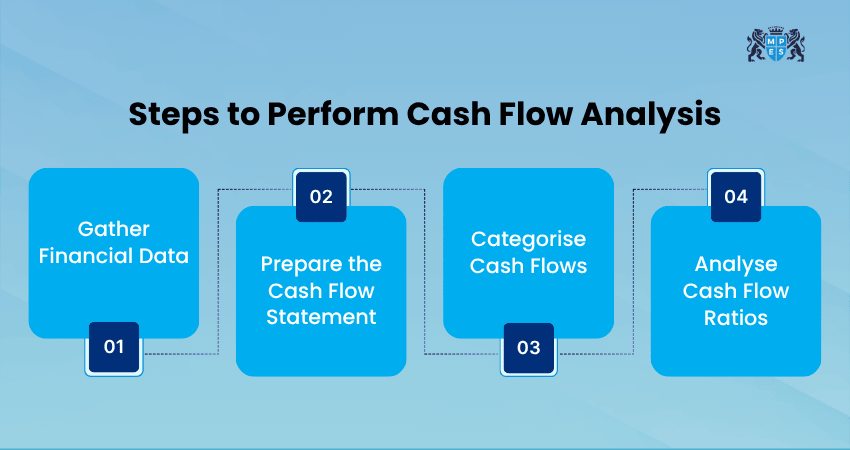
1) Gather Financial Data
Begin by identifying all cash inflows during your chosen accounting period, including sales revenue, investment returns, or proceeds from asset sales. Next, collect details of all cash outflows, such as operating expenses like rent, salaries, utilities and supplier payments. Be sure to include debt repayments and capital expenditures to get a complete picture.
2) Prepare the Cash Flow Statement
Use your financial records to compile the Cash Flow statement based on the collected data. Ensure that all the entries are accurate, complete and properly recorded to avoid errors uring analysis.
3) Categorise Cash Flows
Organise your cash movements into three main categories:
a) Operating Activities: Cash pertaining to core business operations, such as sales income and payments to suppliers or employees
b) Investing Activities: Cash used for or generated from buying and selling long-term assets or investments
c) Financing Activities:
Cash related to loans, debt repayments, issuing shares, or paying dividends
4) Analyse Cash Flow Ratios
Apply the main financial ratios to evaluate your Cash Flow performance. Metrics such as operating Cash Flow, liquidity ratios and Cash Flow coverage help assess your ability to meet obligations. You can also calculate Cash Flow margin and free Cash Flow to understand how much of cash is available for future investments.
Cash Flow Analysis Example
Here’s an example of Cash Flow Analysis:
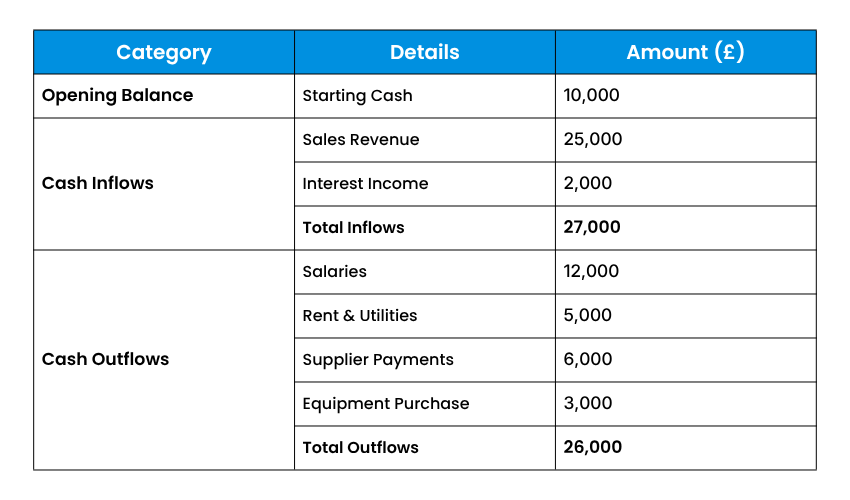
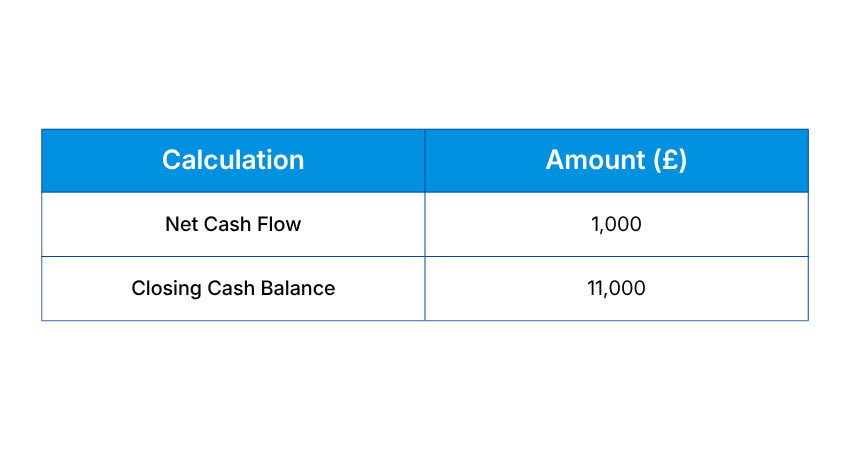
The business generated a positive Cash Flow of £1,000, increasing its total cash balance to £11,000. This indicates that the company is financially stable and able to manage its expenses effectively while continuing to grow.
Cash Flow Forecasting Techniques
Cash Flow forecasting helps you understand your business’s future financial position. Here are the key techniques used to forecast Cash Flow:
1) Forecasting Sales
This involves estimating future sales by analysing past Cash Flow performance and reviewing current opportunities in your sales pipeline. Market trends, industry conditions and economic factors also play an important role in shaping accurate sales projections.
2) Tracking Expenses
This involves monitoring past expenses such as operating costs, capital investments, debt repayments and cost of goods sold. These provide a strong foundation for predicting future cash outflows.
3) Managing Accounts Receivable and Payable
Considering customer payment timelines, supplier terms, and outstanding payments helps improve the accuracy of Cash Flow forecasts. It ensures you have a realistic view of when cash will be received and paid out.
4) Sensitivity Analysis and Scenario Planning
This approach involves testing different scenarios to understand how changes might impact your Cash Flow. For example, you can assess what happens if sales decline or if the business expands into new markets. By creating best-case and worst-case scenarios, businesses can identify potential risks, prepare for uncertainties and make more informed financial decisions.
Conclusion
More than numbers, Cash Flow Analysis is the heartbeat of your business. By understanding its components, methods and techniques, you gain the clarity to make confident financial decisions. With strong Cash Flow insights, you can reduce risks, seize opportunities and build a stable, future-ready business that thrives in any economic environment.
Do you feel like your Accounting skills need a boost? Our diverse range of ACCA Applied Skills Courses will help you out - Register now!
Frequently Asked Questions
Q. What are Five Rules of Cash Flow?
The five key rules of Cash Flow include:
a) Maintaining positive cash inflow
b) Monitoring expenses regularly
c) Forecasting future cash needs
d) Managing receivables and payables efficiently
e) Keeping a cash reserve for emergencies
Following these rules helps ensure financial stability and smooth business operations.
Q. How to Improve Your Cash Flow Management?
You can boost your Cash Flow Management by invoicing promptly, reducing unnecessary expenses, negotiating better payment terms with suppliers and encouraging faster customer payments. Regularly reviewing Cash Flow statements and using forecasting techniques also helps maintain better financial control.
Q. How to Calculate Annual Cash Flow?
Annual Cash Flow is calculated by subtracting total cash outflows from total cash inflows over a year. This includes all income sources and expenses during the period. The formula is:
Annual Cash Flow = Total Annual Inflows – Total Annual Outflows