Have Any Question?
 +44 7452 122728




 Back
Back




What is investment? Types, and Objectives Explained
Investment is the act of committing money or capital to an asset or project with the expectation of generating income or profit over a period of time. It helps people grow wealth, create regular income, achieve financial goals or prepare for retirement. Common Investment options include stocks, bonds, mutual funds, real estate and more.Table Of Contents


 44 7452 122728
 09-May-2026
Author-Veronica Davis
What if the money in your account is slowly losing value every day? While saving money is important, keeping all your money untouched may not help you build real financial security. This is why Investment has become an essential part of financial planning.
It helps your money grow over time and creates opportunities to build wealth, earn passive income and achieve long-term financial goals. In this blog, we will explore What is Investment, how it works, its objectives, types and simple ways to begin your Investment journey wisely. Let's dive in!
What is Investment?
Investment is the process of allocating money into assets, businesses or financial products with the aim of earning profit or increasing value in the future. Unlike simply saving money, investing gives your money the opportunity to grow through returns such as interest, dividends, rental income or market appreciation. Popular ways to invest money include stocks, mutual funds, bonds, real estate and commodities.
For example, when you purchase stocks, you invest in a company hoping its value will rise. Similarly, buying a property with the expectation that its price or rental income will increase is also an example of an Investment.

How Does Investment Work?
Investment works by allowing your money to grow over time through different financial opportunities. Understanding how it works also helps individuals make smarter and more confident financial decisions. So, let’s check it now:
1) Investing Money into Assets
Investment works by using your money to buy assets such as stocks, bonds, mutual funds, or real estate. These assets have the potential to increase in value or generate regular income in the future.
2) Generating Returns
When you invest, your money can earn returns in different ways, including:
1) Interest from bonds or savings instruments
2) Dividends from stocks
3) Rental income from property
4) Capital appreciation when asset prices increase
3) The Power of Compounding
Compounding helps Investments grow faster over time. It means you earn returns not only on your original Investment but also on the profits already earned, helping your money multiply gradually.
4) Risk and Reward
Every Investment carries some level of risk. Generally, Investments with higher return potential also involve higher risks. Investors choose their Investment options based on their financial goals and risk tolerance.
5) Long-term Wealth Growth
Investments usually perform better over the long term. Staying invested for several years helps reduce the impact of short-term market fluctuations and increases the chances of building wealth steadily.
What are the Objectives of Investment?
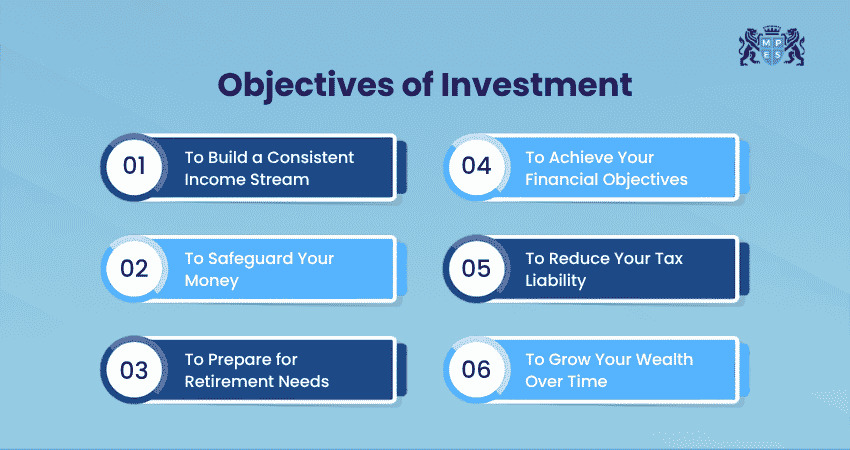
People invest for different reasons depending on their financial situation and life goals. Some seek regular income, while others focus on long-term growth or security. Here are some of the most common objectives of Investment:
1) To Build a Consistent Income Stream
One of the key objectives of Investment is generating regular income. Certain Investment options provide periodic earnings that can support everyday expenses or supplement salaries. This can also help individuals achieve greater financial stability and minimise dependence on a single source of earnings.
2) To Safeguard Your Money
One important objective of Investment is to protect your money from losing value. Inflation makes the prices of goods and services rise gradually. This means the same amount of money may buy fewer things in the future. Investing helps your savings grow through returns that can keep up with or exceed inflation.
3) To Prepare for Retirement Needs
Retirement planning is one of the most common reasons people invest. After retirement, regular salary income stops, but living expenses continue. Investments help build a financial cushion that supports your lifestyle during retirement years.
4) To Achieve Your Financial Objectives
Investments help people achieve both short-term and long-term financial goals. These goals may include buying a house or starting a business. By investing with clear plans, individuals can create a financial roadmap to achieve important milestones without relying heavily on loans or debt.
5) To Reduce Your Tax Liability
Many governments encourage Investments by offering tax benefits. Certain Investment instruments provide deductions, exemptions or reduced tax liabilities. This helps investors maximise their overall returns while legally reducing the amount of tax they pay.
6) To Grow Your Wealth Over Time
Wealth creation is perhaps the most important objective of Investment. Long-term Investments can generate significant returns and increase overall net worth. Although markets may fluctuate in the short term, disciplined investing over many years often leads to substantial financial growth.
Improve your understanding of financial reporting frameworks with the Financial Accounting and Reporting (FARI) Course – Register today!
What are the Different Types of Investment?
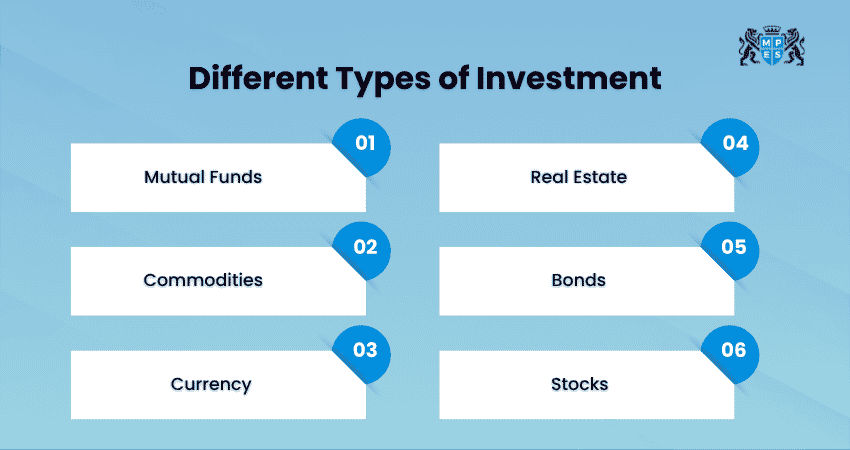
There are many Investment options available, and each serves different financial needs and risk preferences. Below are some of those types:
1) Mutual Funds
Mutual funds gather money from multiple investors and invest it in diversified assets such as stocks, bonds or other securities. You can have professional Fund Managers handle the Investment decisions. Mutual funds also allow small Investments through Systematic Investment Plans (SIPs).
For example, you can invest £100 every month in an equity mutual fund using an SIP to build savings for any of your goals like a future home purchase or an international trip.
2) Commodities
Commodities include physical assets like gold, silver, minerals, agricultural products and metals. Investors buy commodities expecting prices to rise in the future. This type of Investment is often used to diversify portfolios and protect wealth during periods of economic uncertainty.
For example, you may invest in copper because the growing electric vehicle industry will increase demand for metals.
3) Currency
Currency Investment involves trading foreign currencies in the Foreign Exchange Market (Forex). Investors profit from fluctuations in exchange rates between currencies. This type of Investment is generally more suitable for experienced investors.
For example, you can exchange British Pounds for US Dollars after predicting that the value of the Dollar will rise against the Pound.
4) Real Estate
Real estate involves investing in residential, commercial or industrial properties. Investors may earn returns through property appreciation or rental income. This type is considered a tangible asset and can provide long-term stability.
For example, you can buy an apartment and rent it out monthly to generate regular rental income while the value of the property increases over time.
5) Bonds
Bonds are fixed-income Investments where Investors lend money to governments or companies for a specific period. In return, investors get regular interest payments and repayment of the principal amount at maturity.
For example, imagine buying a UK Treasury Bond and receiving fixed interest payments every year until the bond matures.
6) Stocks
Stocks refer to ownership in a company. When you buy shares, you become a partial owner of that business. Stock Investments offer the chance of high returns through price appreciation and dividends. However, stock prices can fluctuate significantly based on company performance and market conditions.
For example, you may consider buying shares in a technology company expecting the company’s growth to increase the value of your Investment in the future.
How Can You Start Investing?
Now that you have a proper idea of What is Investment, let’s check how you can start investing:
1) Research-focused Investment
Research-focused investing involves detailed analysis before investing money. Investors study financial statements, market trends, company performance, economic conditions and industry growth. This approach aids investors with informed decision-making and helps them manage risks effectively.
2) Casual Investment
Casual investing is suitable for individuals who prefer a simpler Investment approach. Instead of deep market analysis, casual investors choose easy-to-manage options without spending significant time studying markets.
3) A Mix of Research-focused and Casual Investment
This approach combines detailed research with simple investing methods. Investors may carefully research certain Investment options while also investing in easier and lower-maintenance options. This balanced strategy helps reduce risk, save time and create better opportunities for long-term financial growth.
Learn how to manage tax responsibilities accurately with the Taxation Compliance (TC) Course – Sign up soon!
How to Calculate Return on Investment (ROI)?
Return on Investment (ROI) is used to measure the profitability of an Investment. It helps investors understand how much profit or loss they have earned relative to the amount invested. The formula for ROI is:

For example, if you invest £2,000 in stocks and later sell them for £2,500, your profit will be £500. Using the ROI formula:
ROI = (2500 − 2000) / 2000 × 100
ROI = 25%
This means you earned a 25% return on your Investment.
Saving vs Investing vs Speculation
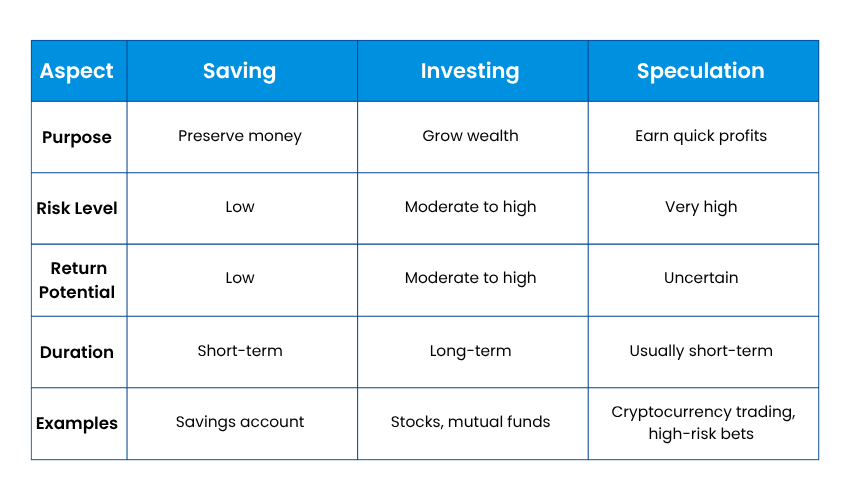
Saving, investing and speculation all involve handling money, but they work in very different ways. Saving focuses on keeping money safe for short-term needs with very low risk and modest returns. Investing involves putting money into assets to achieve long-term growth and build wealth over time.
On the other hand, speculation involves taking high financial risks in hopes of earning quick and large profits from market changes. Exploring the difference between them can help individuals manage money wisely, make better financial decisions and choose a suitable strategy based on their financial goals.
Let's check their difference in detail with the table below:
Conclusion
Investment is an important step towards building a secure and financially stable future. It not only helps your money grow over time but also supports major life goals. Understanding What is Investment and the balance between risk and return can help individuals make smarter financial decisions. Starting early and staying consistent are often the keys to successful investing and long-term wealth creation.
Enhance your financial reporting and auditing with the ACA Professional Level Courses – Join now!
Frequently Asked Questions
Q. What are the 5 Best Investments?
The best Investment depends on your financial goals, risk tolerance and Investment timeline. However, some of the most popular Investment options include stocks, mutual funds, bonds, real estate, and retirement funds. Each of these Investments offers different benefits depending on the investor’s financial needs and risk levels.
Q. What is the 3-5-7 Rule in Investing?
The 3-5-7 rule is a general Investment guideline suggesting investors should expect around 3% returns from safer Investments, 5% from balanced portfolios and 7% or more from higher-risk Investments such as equities over the long term. This rule helps investors understand the relationship between risk and potential returns.
Q. How do I Invest Money Wisely?
To invest your money wisely, you can:
1) Set clear financial goals
2) Understand your risk tolerance
3) Diversify your Investments
4) Research before investing
5) Invest consistently
6) Avoid emotional decisions
7) Focus on long-term growth