Have Any Question?
 +44 7452 122728




 Back
Back




What is Income Tax, and How is it Calculated: Explained
Income Tax is the tax you pay to the government based on your taxable income. It helps fund essential public services and supports national development. Learn how Income Tax works, the different tax rates, and how it is calculated. Understanding these basics can help you manage your finances and meet your tax obligations confidently.
Table Of Contents


 44 7452 122728
 28-Jul-2025
Author-Maria Thompson
Whether you earn a salary, run a business, or receive income from investments, paying tax is an important part of managing your finances. However, many people are still unsure about What is Income Tax, how it is calculated, and why it matters. Understanding the basics can help you make better financial decisions and stay compliant with tax regulations.Income Tax plays an important role in funding public services and supporting economic development.
Having a clear understanding of What is Income Tax can help individuals and businesses plan their finances effectively. This blog explains what Income Tax is, how it works, the different types, how it is calculated, and everything else you need to know. Let's get started!
What is Income Tax?
Income Tax is paid by individuals and businesses on the income they earn. This includes your salary, business profits, and even income from savings or rental properties. This tax revenue is utilised by the government to fund essential public services, such as schools, hospitals, public transport, and roads.
If you are working as an employee, your Income Tax is deducted automatically through the Pay As You Earn (PAYE) system. Also, it is crucial to know that if you are self-employed or run a business, you must calculate your own tax liability and pay it directly to the government through a tax return.
How do You Pay Income Tax?
Income Tax is a tax paid on taxable income, including earnings from employment, self-employment, savings, investments, and other sources. It helps fund public services like healthcare, education, and infrastructure. Here's how it works
1) Personal Allowance
Personal Allowance is the tax-free amount you can earn each year. For 2025/26, it is £12,570. This means you do not pay Income Tax on this part of your earnings.
2) Tax Bands
After your Personal Allowance of £12,570, your income is taxed in bands.
1) Basic Rate (20%): Applies to income between £12,571 and £50,270.
2) Higher Rate (40%): Applies to income between £50,271 and £125,140.
3) Additional Rate (45%): Applies to income above £125,140.
Only the portion of your income within each tax band is taxed at that rate. If your income exceeds £100,000, your Personal Allowance may be reduced.
3) PAYE System
If you're employed, your employer deducts tax from your salary automatically through Pay As You Earn (PAYE). This ensures tax is collected automatically instead of you needing to calculate or submit taxes yourself.
4) Self-Assessment
If you're self-employed or have other income (like rent or investments), you must complete a self-assessment tax return and pay the tax directly to the government.
5) Other Considerations
You may also pay National Insurance, which is separate from Income Tax. Tax reliefs and deductions (like pension contributions or charitable donations) can reduce your taxable income.
Learn the basics of auditing and boost your career with the
Foundations in Audit (FAU) Course
– Join now!
Types of Income Tax
The type of Income Tax paid depends on whether the income is earned by an individual, a sole trader, a partnership, or a company. Let’s look at the main types below:
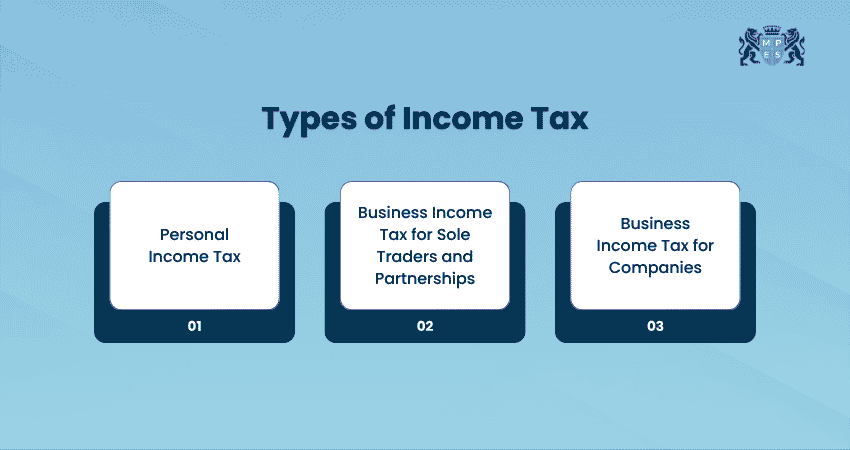
1) Personal Income Tax
Personal Income Tax is paid by individuals on income earned from sources such as employment, self-employment, investments, and savings. In many countries, Income Tax follows a progressive system, where people with higher incomes pay higher tax rates.
2) Business Income Tax for Sole Traders and Partnerships
Sole traders and partners report business profits or losses as part of their personal income. The combined income is then taxed based on the personal Income Tax rules. Also, partnerships may be required to submit a separate business tax return.
3) Business Income Tax for Companies
Companies pay Corporation Tax on their taxable profits. In the UK, the rate is not always fixed. Depending on profit levels, companies may pay the small profits rate, the main rate, or marginal relief may apply. Any salaries or dividends paid to company owners are usually taxed separately as part of their personal income.
How Much Income Tax do I Need to Pay?
The amount of Income Tax you pay depends on your taxable income and the tax band it falls into. In the UK, Income Tax is charged at different rates as your income increases, ensuring that higher earners contribute a larger share of tax. Let’s look at it more below:
Current Income Tax Slabs in the UK
The amount of Income Tax you pay depends on your taxable income and the tax band it falls into. In the UK, Income Tax is calculated using a progressive system, where different portions of your income are taxed at different rates. The current Income Tax bands are:
1) The Basic Rate: 20%
The Basic Rate applies to taxable income between £12,571 and £50,270. Income within this band is taxed at 20%, making it the most common rate paid by many employees and self-employed individuals.
2) The Higher Rate: 40%
The Higher Rate applies to taxable income between £50,271 and £125,140. Any income that falls within this range is taxed at 40%, while income in lower bands continues to be taxed at the applicable lower rates.
3) The Additional Rate: 45%
The Additional Rate applies to taxable income above £125,140. Also, individuals earning more than £100,000 begin to lose their Personal Allowance, which is fully withdrawn once income reaches £125,140, increasing their overall tax liability.
Keep every financial detail accounted for by signing up for the
Maintaining Financial Records (FA2) Course
now!
Types of Taxable Income
Taxable Income is any money you receive that His Majesty’s Revenue and Customs (HMRC) require you to pay tax on. Earnings that fall under this category are governed by
Taxation
, and below, we have provided the list of different types of income that qualify as taxable income.
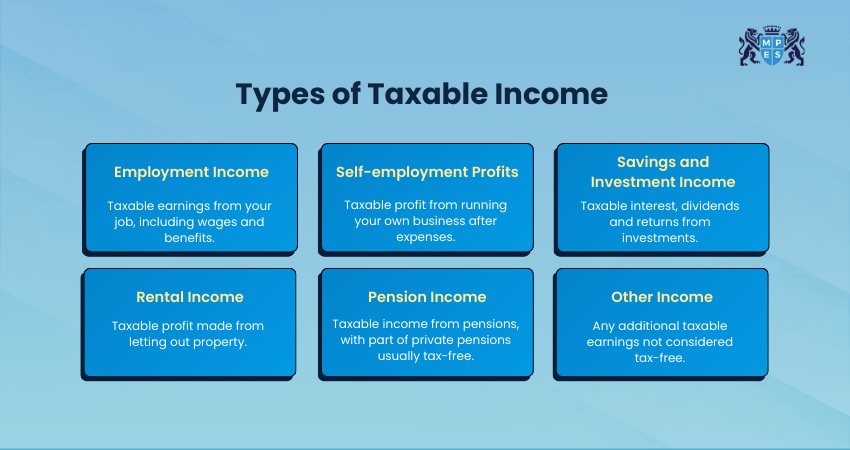
1) Employment Income
Under this type, it refers to the money you earn working for an employer. It includes your job, such as wages, salaries, commissions or bonuses. These earnings are taxable since they add value to your overall pay.
2) Self-employment Profits
If you are self-employed or run your own small business, the profits you earn after subtracting allowable expenses come under Taxable Income. This applies to freelancers, sole traders, and contractors who earn income through selling products or services.
3) Savings and Investment Income
This refers to the interest earned on your savings accounts, dividends from shares, and income from investments. It is important to note that allowances might reduce the total amount you pay, but these earnings need to be declared to the HMRC.
4) Rental Income
This refers to income earned from renting out a house, room or flat. Here, usually expenses such as repairs, insurance, or agent fees are deducted. The profit you earn from letting the property is taxable after allowable expenses have been deducted.
5)Pension Income
Under this type, your state pension, workplace pensions, or private pension is taxed. While most pension income is taxable, normally only 25% of private pension income is tax-free, while the State Pension is fully taxable.
6) Other Income
Some additional earnings, such as income from trusts, benefits, or occasional jobs, are also taxable. If the payment is not listed as tax-free by the HMRC, it falls under taxable income.
Start your accounting journey and master transaction records. Join our
Recording Financial Transactions (FA1) Course
now!
How is Income Tax Calculated?
Understanding What is Income Tax and how tax bands work can make the calculation process easier to follow. While the process may seem complex, it follows a straightforward approach based on your income level and the tax bands that apply to you. The basic formula for calculating Income Tax is:

However, in the UK, Income Tax is calculated using progressive tax bands. This means different parts of your income are taxed at different rates, rather than your entire income being taxed at the same rate. For example:
If someone earns £60,000 in the UK, the calculation would be:
1) First £12,570: Tax-free Personal Allowance
2) Next £37,700: Taxed at 20% = £7,540
3) Remaining £9,730: Taxed at 40% = £3,892
4) Total Income Tax: £7,540 + £3,892 = £11,432
This example shows that only the income within each tax band is taxed at the corresponding rate.
What is the Difference Between Income Tax and National Insurance?
Income Tax is a tax paid on your taxable income and is utilised to fund a variety of public services, including education, healthcare, transport, and social security programmes. Knowing What is Income Tax can help you understand why it is deducted separately from National Insurance contributions. The amount you pay depends on your income level and the tax bands that apply to you.
In contrast, National Insurance is a separate contribution deducted from earnings to help fund state benefits and public services, including the NHS and the State Pension. It has its own rates and thresholds, which differ from those used for Income Tax.
Conclusion
Understanding What is Income Tax is essential for managing your finances and meeting your legal obligations. By learning how Income Tax works, the different tax bands, and the factors that affect your tax liability, you can make more informed financial decisions and approach tax responsibilities with greater confidence.
Build strong foundations in finance with the ACCA Foundations Training Courses – Sign up now!
Frequently Asked Questions
Q. Who Pays Income Tax?
People who earn above the tax-free allowance are required to pay Income Tax, such as:
1) Employees working for a company
2) Self-employed individuals and sole traders
3) Company directors and business owners
4) Pensioners whose total income exceeds the personal allowancePeople earning income from savings or investments
Q. What are the Tax-free State Benefits?
The tax-free state benefits are:
1) Attendance Allowance
2) Personal Independence Payment (PIP)
3) Housing Benefit
4) Pension Credit
5) Maternity Allowance
6) Bereavement Support Payment
7) Guardian’s Allowance
8) Winter Fuel Payments and Christmas Bonus
Q. How to Pay Less Tax by Saving and Investing?
There are several ways to reduce your tax liability. Increasing pension contributions can lower your taxable income. Also, you may qualify for tax relief by investing in Venture Capital Trusts (VCTs) or Enterprise Investment Scheme (EIS) companies.