Have Any Question?
 +44 7452 122728




 Back
Back




NS&I Savings in the UK: Rates, Bonds and Benefits Explained
NS&I (National Savings and Investments) is a UK government-owned savings bank that offers Premium Bonds along with various savings and investment products. Its savings are backed by HM Treasury, ensuring 100% security for deposits while offering fixed and variable returns to support effective savings decisions.
Table Of Contents


 44 7452 122728
 27-Mar-2026
Author-Maria Thompson
Have you ever wondered where to keep your savings safe while still earning returns? Many people rely on traditional banks, but there is another option backed directly by the UK government. From guaranteed bonds to prize-based savings, NSandI offers a unique mix of security and flexibility.
In this blog, you will explore What is NS&I, its different savings products, interest rate changes, advantages, and comparisons. This will help you make informed and confident financial decisions. Let’s explore this further!
What is NS&I (National Savings and Investments)?
NS&I (National Savings and Investments) is a UK-based savings organisation owned by the government, which offers secure and reliable savings and investment products to the public. It is the only bank in the country backed by a government department, HM Treasury, which means all deposits are fully protected without any upper limit, making it one of the safest savings options available.
Unlike commercial banks, which are profit-driven, NS&I focuses on offering secure savings while helping the UK government to raise funds. This dual purpose makes it unique in the financial system. NSandI products are designed to meet a wide range of needs, from easy-access savings to long-term investments. These include savings accounts, fixed-term bonds, ISAs, and prize-based options such as Premium Bonds.
Types of National Savings and Investments (NS&I)
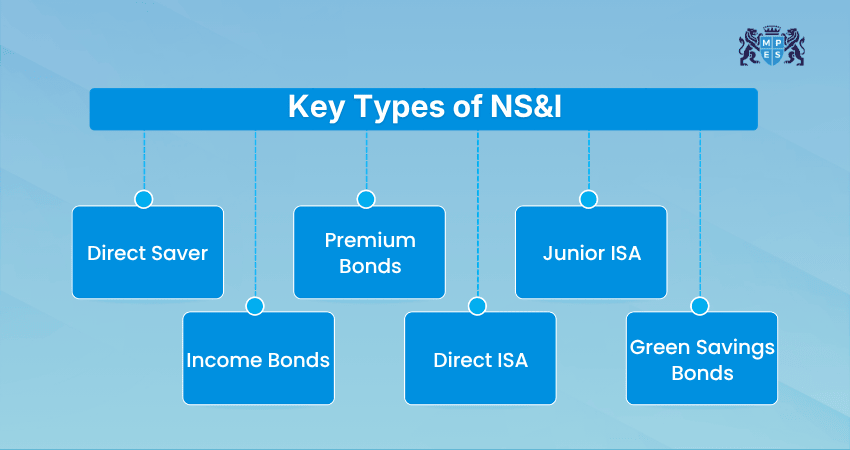
NS&I has a range of savings products according to the various financial objectives such as flexibility, regular income, tax efficiency and long-term growth. Some of the key types of National Savings & Investments are:
1) Direct Saver
Direct Saver is an easy-access savings account that pays interest annually. It is very flexible because you can take out money at any given time without giving notice or incurring any charges.
The key advantage of such an account is the ease of accessing your money when you need it, combined with complete government protection, although interest rates can be lower than those offered by fixed-term accounts.
2) Income Bonds
Income Bonds offer a safe, stable monthly income on your savings with the added benefit of being 100 per cent flexible, not requiring any notice or penalty at all. For investing, you must be at least 16 years old.
You can save between £500 and £1 million per person. The key benefit is receiving regular monthly interest payments, making it suitable for individuals looking for a steady income stream.
3) Premium Bonds
The Premium Bonds NS&I provide an unusual savings method, in which you do not receive interest on your investment, but you could win a monthly prize draw where your prizes are tax-free. The odds of winning £25 are around 22,000 to 1 for each £1 bond.
The minimum amount that you can invest in Premium Bonds is from £25 to £50,000. The key benefit is the chance to win tax-free prizes up to £1 million, which makes saving more interesting, but not guaranteed.
4) Direct ISA
Direct ISA is a cash ISA where your savings are an outright tax-free investment that earns you interest without any advance warning or withdrawal charges. It is a viable alternative to those wishing to maximise their tax efficiency.
You will be able to save between £1 and £20,000 during the current tax year. The best thing is that you can earn interest and you can save more money without even paying tax.
5) Junior ISA
Junior ISA is a savings account that is tax-free and meant for children under the age of 18. It assists them in developing long-term savings to cater to their financial requirements in future.
You will be able to invest £1 and £9,000 in the current tax year. The major advantage is interest growth, which is tax-free, and the funds remain locked until the age of 18 to promote self-disciplined saving by the child.
6) Green Savings Bonds
Green Savings Bonds give you a fixed rate of interest on your savings as long as you lock up your money over a specified period of time, usually three years. These bonds support environmentally sustainable projects in the UK.
You can invest between £100 and £100,000. The advantage is primarily the combination of assured returns with the possibility of investing in green projects.
Build strong accounting fundamentals and gain practical skills with our
Accounting (AC) Course
– Join today!
Why Does NS&I Change Interest Rates?
NS&I varies its interest rates based on a number of key factors that are economic and strategic in nature. One of the most significant influences is the Bank of England base rate, which affects savings rates across the UK. When there are changes in the base rate, NS&I tends to adjust accordingly in order to keep pace with the general financial market.
Another key factor is the government’s financing target. NSandI is required to raise a specific amount of money each year to support public spending. By adjusting interest rates, it can control how attractive its products are to savers and manage inflows accordingly.
Additionally, there is competition in the market. Although the stability and security are of the foremost concern to NS&I, it has to compete with banks and other financial institutions to attract savers.
Moreover, interest rate decisions are affected by inflation and economic conditions. When inflation levels are high, savers expect higher returns so that they can retain their purchasing power, and rate adjustments may occur.
Comparison of Previous vs Current Rates of NS&I
NS&I interest rates have changed over time in response to economic trends and financial policies. The table below highlights the difference between previous and current rates for key savings and investment products:
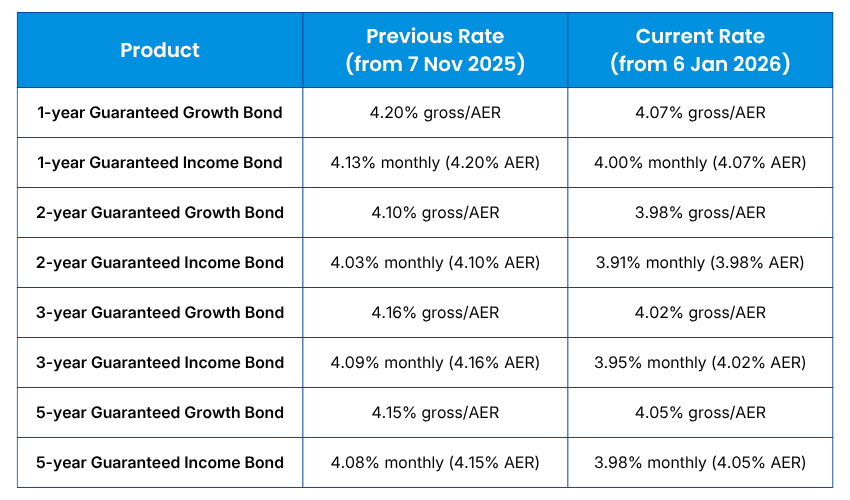
For savers, this highlights the importance of reviewing savings options regularly and choosing products that align with their financial goals and risk tolerance.
Struggling to understand audit and assurance concepts? Gain clarity with our
Assurance (AS) Course
– Join now!
Advantages and Disadvantages of NS&I
NS&I is highly secure with great advantages, but it has some limitations compared to other savings providers. Let's look into the advantages and disadvantages in detail to understand What is NS&I with more clarity.
Advantage of NS&I
The key distinction of NS&I is its governmental support and stability. It is made to accommodate those who would like to have high stability and safety rather than high returns.
Key advantages include:
1) 100% Government Protection: All deposits are backed by HM Treasury, ensuring complete security with no upper limit.
2) No FSCS Limit Restrictions: Unlike banks, which only protect up to £85,000, NS&I protects your entire savings amount.
3) Secure Access to Funds: You can deposit large amounts without worrying about financial institution failure.
4) Unique Premium Bonds Offering: Opportunity to win tax-free prizes up to £1 million through monthly draws.
5) Safe Long-term Saving Option: Ideal for risk-averse savers seeking capital protection.
6) Peace of Mind:
Eliminates concerns about delays or claims processes associated with the Financial Services Compensation Scheme (FSCS).
Disadvantages of NS&I
Though NS&I can be a secure choice, it is not necessarily a farsighted source when it comes to returns. It is sometimes more appropriate for safety-focused savers rather than those seeking maximum growth.
Key disadvantages include:
1) Lower Interest Rates: NS&I products are often not market-leading compared to banks and savings platforms.
2) Less Competitive Products: Other providers may offer better rates or more flexible options.
3) Delayed Product Launch Impact: New products are often announced early, giving competitors time to introduce better alternatives.
4) Uncertain Returns (Premium Bonds): No guaranteed returns, as winnings depend on chance.
5) Extremely Low Jackpot Odds:
Chances of winning £1 million are very small (around 1 in 49.48 billion per bond).
Conclusion
Understanding What is NS&I is crucial as it remains one of the most secure and reliable savings providers in the UK, offering a range of products designed to suit different financial needs. While its interest rates may not always be the highest, the combination of safety, tax efficiency and diverse savings options makes NS&I a strong choice for long-term financial planning.
Looking to build a solid base in accounting and finance? Our ACA Certificate Level Courses will help you get started –Register now!
Frequently Asked Questions
Q. Is NS&I Better Than Banks?
NS&I is safer than banks because it offers 100% government-backed protection on savings. However, banks may provide higher interest rates, making them more suitable for maximising returns. The better option depends on whether you prioritise security or higher earnings.
Q. What is the Minimum Investment in NS&I?
The minimum investment depends on the product. Premium Bonds require at least £25, while Income Bonds typically require £500. Some accounts allow smaller starting amounts, making NS&I accessible to a wide range of savers.
Q. Are NS&I Bonds Tax-free?
Some NS&I products, such as Premium Bonds and ISAs, offer tax-free returns. However, interest earned on products like Direct Saver and Income Bonds is taxable. It is important to review each product’s tax rules before investing.