Have Any Question?
 +44 7452 122728




 Back
Back




What is AI in Accounting: Benefits, Trends, and Tools in 2026
AI in Accounting automates tasks, improves accuracy, enhances fraud detection, and delivers real-time financial insights for better decision-making. It analyses financial data quickly to identify patterns and reduce manual work. As a result, Accountants can focus more on planning, strategy, and improving financial performance.
Table Of Contents


 44 7452 122728
 22-Sep-2025
Author-Maria Thompson
Ever feel like accounting work is filled with endless receipts, invoices, and spreadsheets? Many Accountants and business owners spend hours on tasks such as data entry, reconciliation, and checking transactions. This is why many organisations are now turning to AI in Accounting to handle routine work more efficiently.
AI in Accounting helps automate repetitive tasks, analyse financial data quickly, and identify useful insights. From scanning invoices to forecasting cash flow, AI is helping accounting teams work faster and smarter. In this blog, we will explore how AI is used in accounting, its benefits, examples, and the tools shaping modern accounting.
What is AI in Accounting?
AI in Accounting involves using technologies like Machine Learning (ML) and Natural Language Processing (NLP) to make accounting tasks more efficient and intelligent. It can handle jobs such as financial reporting, audits, compliance checks, fraud detection, and Data Analysis. Today, many tax professionals and Accounting firms are turning to AI to offer stronger support to their clients.
AI is also changing the way Accountants work by taking over the repetitive tasks, thus allowing them to direct their focus more on strategy and client advice. Instead of spending hours on data entry or reconciliations, professionals can use AI-powered tools to get real-time insights, spot risks earlier and make smarter business recommendations.

Benefits of AI in Accounting
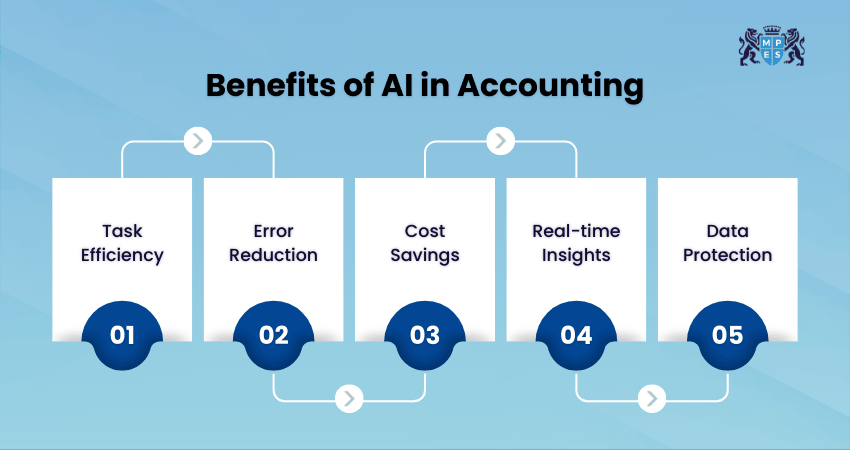
AI in Accounting makes work faster, smarter and more reliable while freeing up time for higher-value tasks. Here are some of the key benefits:
1) Task Efficiency
AI automates repetitive tasks such as data entry, reconciliations, and invoicing, which saves hours of manual work. By reducing time spent on routine administration, Accountants can shift their focus to strategic tasks, client support, and improving overall business outcomes.
2) Error Reduction
AI processes large volumes of data quickly and with high precision, significantly reducing the risk of human error. It can detect unusual activity, highlight inconsistencies and ensure accurate reporting. This improves reliability and lowers the risk of fraud or compliance issues.
3) Cost Savings
Automating labour-intensive jobs means firms can save on resource costs and improve productivity. With more time freed up, Accountants can take on extra clients, provide more value-added services and increase profitability without significantly raising overheads.
4) Real-time Insights
AI gives instant access to up-to-date financial data, helping Accountants provide better advice to clients. Real-time reporting supports smarter business decisions, long-term planning, and quick responses to changing financial situations, making firms more agile and client-focused.
5) Data Protection
AI strengthens security by identifying suspicious patterns and potential fraud much faster than manual methods. It also helps safeguard sensitive financial information through advanced monitoring, giving both firms and clients greater peace of mind when handling important data.
Equip yourself with the financial tools to thrive in a tech-driven world. Sign up for our Business, Technology & Finance (BTF) Training now!
Latest AI Trends in Accounting
From data summarisation to practice integration, the following trends are reshaping how Accountants and firms deliver performance:
Trend 1: Data Summarisation
AI tools are increasingly helping accounting teams digest large datasets with speed and clarity. They can sift through complex financial records, extract vital insights and present them in easy-to-understand summaries. This capability saves time and turns dense reports into actionable information.
Trend 2: Predictive Analytics
AI-powered Predictive Analytics is transforming how accounting firms forecast financial trends and assess risk. By analysing both the historical and real-time data, these tools can anticipate future outcomes and flag potential issues before they arise. This helps Accountants move from reactive reporting to decision-making.
Trend 3: Practice Integration
A growing trend in Accounting is embedding AI directly into end-to-end Practice Management systems. Rather than standalone tools, AI capabilities such as automated workflows, smart insights, and real-time data synchronisation are becoming core parts of unified platforms. This is helping firms work more efficiently and deliver smoother services.
Develop practical skills in recording transactions and preparing financial statements by signing in Maintaining Financial Records (FA2) Training.
Can AI Replace Accountants in the Future?
AI will change the role of Accountants, not remove it. AI can already do many accounting tasks like Data Entry, reconciliations, and report generation, but it cannot fully replace Accountants. What AI lacks are human skills such as judgement, problem-solving and communication.
Accountants remain essential for interpreting results, providing tailored advice, and ensuring compliance and accuracy. Rather than replacing the profession, AI serves as a powerful assistant, automating repetitive work so Accountants can focus on higher-value services like business consulting, financial planning, and strategic decision-making.
How is AI Used in Accounting?
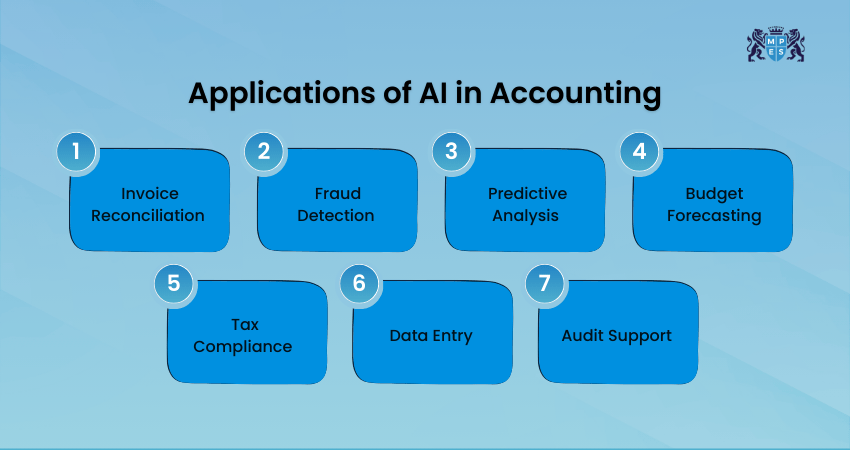
From invoice reconciliation and fraud detection to tax compliance and audit support, these are the most exciting applications of Artificial Intelligence in Accounting:
1) Invoice Reconciliation
AI streamlines invoice reconciliation by scanning documents, extracting data, and automatically matching it against financial records. This significantly reduces manual effort, minimises errors, and ensures smoother financial workflows. By handling repetitive tasks, AI allows accountants to focus on more complex responsibilities that require human judgement.
2) Fraud Detection
AI can analyse vast volumes of financial data to detect unusual patterns or irregularities. Spotting these patterns early on helps reduce the risk of fraud and ensures greater accuracy in reporting. This proactive approach improves trust and strengthens overall financial security.
3) Predictive Analysis
AI uses historical and real-time financial data to identify trends and forecast future outcomes. This enables firms to anticipate risks, prepare for challenges, and make informed business decisions. Predictive insights give businesses a competitive edge and improve adaptability in dynamic markets.
4) Budget Forecasting
With AI, budget forecasting becomes more reliable. It analyses spending patterns and financial behaviour to create accurate forecasts, supporting better planning and long-term financial stability. This accuracy gives decision-makers confidence when allocating resources and setting priorities.
5) Tax Compliance
AI streamlines tax compliance by reviewing financial records for deductions, credits, and errors. This helps ensure tax filings are accurate, timely, and aligned with regulations. It also reduces the risk of penalties by catching issues before submissions are made.
6) Data Entry
AI reduces the burden of manual bookkeeping by automatically processing and categorising transactions. This speeds up routine tasks and minimises the chances of mistakes in financial records. By automating these processes, Accountants can deliver results faster and with greater consistency.
7) Audit Support
AI improves audits by quickly validating records, cross-checking data, and highlighting inconsistencies. This makes the auditing process more efficient, accurate, and less time-consuming. It also increases transparency, making it easier to meet compliance requirements.
Lay the groundwork for every great Accountant with our Financial Accounting (FA) Training - Register now!
How is AI Used in Accounting Firms?
AI in Accounting is widely used in firms to automate routine tasks, analyse financial data, and improve decision-making. It helps reduce errors and increase efficiency. Below are some key ways AI supports different activities within accounting firms:
1) Compliance Work and Routine Accounting Tasks
AI in Accounting helps firms automate tasks such as data entry, invoice processing, transaction categorisation, and tax calculations. It also supports compliance monitoring, reducing errors and saving time so Accountants can focus on higher-value financial and advisory work.
2) On-demand Advisory for Clients
AI tools analyse financial data and business records to provide quick insights that support advisory services. With AI in Accounting, firms can guide clients on tax planning, cash flow management, cost control, and financial strategies for better decision-making.
3) Improving Client Communications
AI in Accounting improves communication between firms and clients through chatbots, automated emails, and messaging tools. These technologies answer queries quickly, schedule meetings, and share updates, helping firms deliver faster and more reliable client support.
4) Creating Standard Operating Procedures
AI can analyse workflows and past accounting activities to help firms develop clear Standard Operating Procedures (SOPs). In AI in Accounting environments, these procedures improve consistency, reduce confusion, and ensure accounting tasks are completed efficiently.
5) Support in Budgeting and Forecasting
AI in Accounting helps firms analyse historical financial data to identify patterns and trends. These insights support accurate budgeting and forecasting, allowing businesses to predict revenue, manage expenses effectively, and plan financial strategies with greater confidence.
6) HR and Hiring Support
AI also supports accounting firms in managing recruitment and HR tasks. Within AI in Accounting processes, tools can screen resumes, assess candidate skills, and identify suitable applicants, helping firms speed up hiring and choose qualified professionals efficiently.
7) Fraud Detection
AI in Accounting systems monitors financial transactions and identifies unusual patterns that may indicate fraud. By analysing large volumes of financial data quickly, AI helps firms detect suspicious activities early and strengthen financial security and regulatory compliance.
8) Data Cleanup and Analysis
AI tools organise and clean financial data by removing duplicate records, correcting errors, and structuring information properly. Through AI in Accounting, clean data improves the accuracy of financial reports and supports more reliable analysis and decision-making.
9) Marketing and Sales Support
AI supports marketing and sales activities by analysing customer data and identifying potential clients for accounting services. As part of AI in Accounting practices, firms can automate campaigns, track market trends, and personalise communication to attract clients.
How to Implement AI in Your Accounting Firm?
Implementing AI in Accounting requires a clear strategy and gradual adoption. Firms should focus on tools that improve efficiency and support everyday tasks. The following practices can help accounting firms integrate AI successfully:
1) Make AI Use Part of Your Daily Workflow
To successfully adopt AI in Accounting, firms should integrate AI tools into everyday accounting tasks rather than using them occasionally. AI can analyse financial data, review documents, and automate repetitive work, helping teams save time and work more efficiently.
2) Avoid Shiny Objects
Accounting firms should avoid adopting every new AI tool simply because it is trending. Instead, focus on solutions that address real business needs. Selecting practical and reliable tools ensures that AI in Accounting delivers meaningful improvements in daily operations.
3) Stick with What Works (And Drop What Doesn't)
When implementing AI in Accounting, firms should regularly review the performance of their AI tools. If a system improves efficiency and accuracy, continue using it. If it does not provide clear value, it is better to replace it with a more suitable solution.
4) Provide Support for Your Team
The successful adoption of AI in Accounting depends on how well employees understand and use the technology. Firms should provide proper training and guidance so accounting professionals can confidently use AI tools and apply their insights effectively.
5) Don't Overlook Data Security and Privacy
Data protection is essential when implementing AI in Accounting. Accounting firms must ensure that financial data is stored securely and handled according to regulatory requirements. Strong security practices help protect sensitive client information and maintain trust.
Develop expertise in cost analysis, budgeting, and financial performance evaluation through the Management Accounting (FMA) Training – Join today!
Use AI to Expand Your Accounting Firm
AI in Accounting helps firms grow by automating tasks such as data entry, invoicing, and expense tracking. It reduces manual work and allows firms to manage more clients. The following strategies show how AI can support firm expansion:
1) Automate Bookkeeping and Invoicing:
AI tools can automatically extract data from invoices, receipts, and financial documents. This reduces manual data entry, improves accuracy, and speeds up accounting processes.
2) Enhance Advisory Services:
AI-driven analytics helps Accountants analyse financial data quickly and identify trends. This allows firms to offer faster financial insights, predictive forecasting, and better strategic advice to clients.
3) Scale Without Extra Hiring:
AI enables accounting firms to manage increased workloads, especially during busy periods such as tax season. By automating routine tasks, existing staff can handle more clients without increasing operational costs.
4) Streamline Marketing:
AI can analyse customer data, manage CRM systems, and automate marketing campaigns. This helps firms identify potential clients, personalise communication, and attract new business opportunities.
5) Improve Overall Efficiency:
AI supports document management, workflow automation, and data processing. These capabilities reduce repetitive work, save time, and allow accounting professionals to focus on more valuable tasks that support firm growth.
The 10 Best AI Tools to Know in 2026
AI tools are quickly changing how Accountants work. Just like Artificial Intelligence itself, these tools are developing fast. Here's a list of the best AI tools in Accounting:
1) Karbon AI
Karbon AI is part of Karbon's Practice Management software. It uses AI and GPT technology with an accounting context. It can do the following tasks:
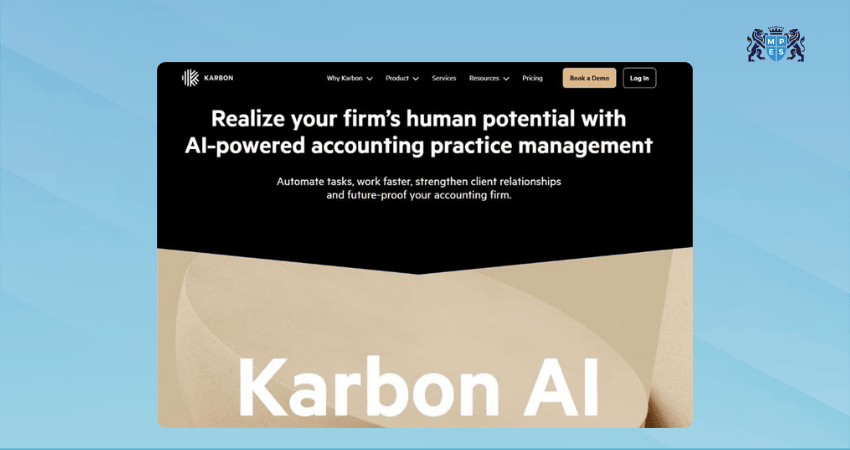
1) Summarise long email threads and internal discussions into clear, short updates.
2) Create quick summaries of client information like emails, notes, and billing data.
3) Give highlights of ongoing work items.
4) Draft email responses from short prompts.
5) Suggest quick replies for faster email responses.
6) Recommend which team member should be assigned tasks.
7) Provide personalised client updates as work progresses.
Pros:
1) Built into Karbon, a top-rated accounting platform.
2) Uses Microsoft Azure OpenAI Service for secure data.
3) Frequently updated with new features.
4) Created by accounting experts who know industry needs.
5) Offers a free trial.
Cons:
1) The current version mainly focuses on summarisation.
2) Vic.ai
Vic.ai helps automate processes like invoices and payments to save time. It can perform the following tasks:
1) Automatically process invoices and approval workflows.
2) Improve accuracy in financial reporting.
3) Check expenses against company policies for compliance.
4) Maintain audit-ready records and trails.
5) Analyse expenses for financial planning.
6) Spot errors or possible fraud in financial data.
Pros:
1) Strong focus on data accuracy and compliance.
2) Can be customised to fit business needs.
3) Handles large volumes of expenses easily.
4) Works with multi-entity and multi-currency operations.
Cons:
1) Limited tools for team collaboration.
2) Pricing is only available via sales calls.
3) Docyt
Docyt is an Accounting Automation Software with two AI systems: Precision AI and Generative AI. This tool can accomplish the following:
1) Automate bookkeeping tasks like accounts payable and reconciliation.
2) Read and extract data from receipts and invoices.
3) Generate custom financial reports.
4) Summarise conversations into accounting actions.
5) Categorise most transactions automatically.
6) Match transactions with bank feeds for revenue reconciliation.
Pros:
1) Learns about your business as you use it.
2) Simple and easy to use for small to medium businesses.
3) Provides secure document storage.
Cons:
1) Not designed only for accounting firms.
2) Pricing not available online.
3) Some reports of slow customer support.
4) Blue Dot
Blue Dot is an AI platform focused on employee-driven transactions, mainly in European markets. It can do the following:
1) Manage VAT processes and refund requests.
2) Detect taxable employee benefits.
3) Analyse vendor performance and spending trends.
4) Ensure compliance with a strong audit mechanism.
5) Display tax regulations across multiple countries.
Pros:
1) Pulls data from multiple sources.
2) Easy for IT teams to set up.
3) Secure audit-trail functionality.
Cons:
1) No free trial.
2) Limited integrations compared to others.
3) Pricing not public.
5) Botkeeper
Botkeeper combines AI and human Accountants to handle bookkeeping tasks. It can perform the following tasks:
1) Provide automated dashboards and reporting.
2) Have human Accountants review AI work for accuracy.
3) Manage payroll, bills, invoices, and reconciliations.
Pros:
1) Unlimited reporting.
2) Accountants oversee AI work for better accuracy.
3) Can work alongside your team or fully automate tasks.
Cons:
1) No free trial.
2) Complex initial setup.
3) Steep learning curve.
6) Rows AI
Rows AI is a modern spreadsheet tool with AI integration. Here's what it can do:
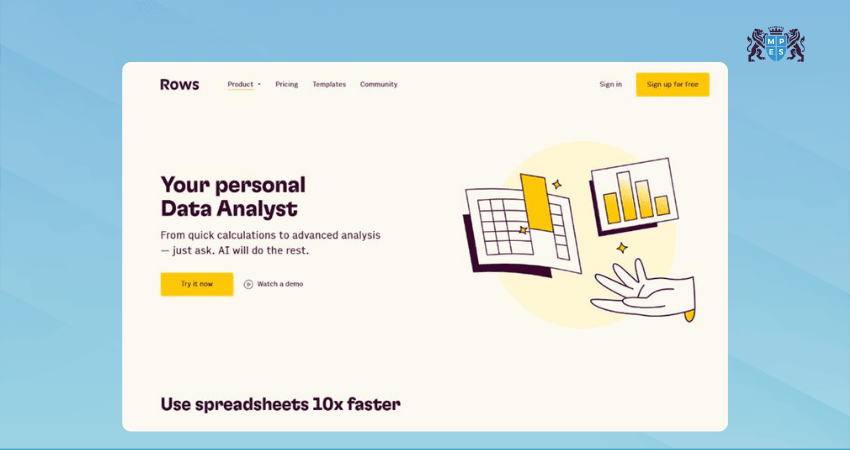
1) Summarise key points from your data.
2) Analyse trends and patterns.
3) Categorise and structure text automatically.
4) Clean and format data.
5) Enrich data with extra details like company info.
Pros:
1) Helpful setup guides and resources.
2) Free plan available.
3) Good range of templates and integrations.
Cons:
1) Not designed specifically for accounting.
2) Data sent to OpenAI, raising privacy concerns.
3) Lacks some advanced features compared to Excel.
7) Receipt-AI
1) Receipt-AI helps manage receipts using AI. Here are its key functions:
2) Upload receipts via photo, email, or text.
3) Connect directly with QuickBooks and Xero.
4) Automatically categorise receipts.
Pros:
1) Much faster than manual entry.
2) Machine learning adds context automatically.
3) Supports bulk uploads.
Cons:
1) Text uploads only work in the US and Canada.
2) Pricing is not clear.
3) Few reviews available.
8) Chat Thing
Chat Thing lets you build custom AI chatbots using your data. Here are its main functions:
1) Summarise complex documents like tax code updates.
2) Create client-facing bots for FAQs.
3) Build internal bots for team policies and processes.
Pros:
1) Password protection available.
2) Customisable tone and style.
3) More accurate than generic chatbots.
Cons:
1) Limited file upload formats.
2) Notion is the only workspace integration.
3) Not designed specifically for accounting.
9) QuickBooks
QuickBooks is a cloud-based accounting software by Intuit for small and medium-sized businesses. It helps manage finances, automate tasks, and generate reports. Key functions include:
1) Automate bank reconciliation and transaction categorisation
2) Create customised invoices and track expenses
3) Generate real-time financial reports and cash flow projections
4) Integrate with many third-party tools such as payroll and inventory systems
Pros:
1) Strong automation features for bookkeeping tasks
2) Scalable platform suitable for growing businesses
3) Integrates with many business applications
Cons:
1) Advanced features may require higher subscription plans
2) Can be complex for beginners without accounting knowledge
4) Some integrations may require additional costs
10) Zoho Books
Zoho Books is a cloud-based accounting software designed for small businesses and freelancers. It helps manage finances, track expenses, and handle invoicing efficiently. Key functions include:
1) Automate bank feeds and reconciliation
2) Create customised invoices and payment reminders
3) Track expenses with receipt scanning
4) Manage inventory across multiple warehouses
5) Use a client portal for real-time collaboration
Pros:
1) User-friendly interface for small businesses
2) Affordable pricing compared to many accounting tools
3) Integrates well with other Zoho applications
Cons:
1) Limited features for larger enterprises
2) Some advanced tools require higher plans
3) Fewer integrations outside the Zoho ecosystem
The gateway to global reporting standards awaits. Sign up for our Financial Accounting and Reporting (FARI) Course now!
Challenges of AI in Accounting
AI has many advantages, but it also brings some challenges that you need to consider. Here are the big challenges:
1) Skill and Knowledge Gaps: Many Accountants are still figuring out how to use AI effectively. A lack of proper training makes this harder. Firms that invest in AI education save more time, so leaders should focus on training their teams.
2) Outdated Workflows: Most current systems weren't built with AI in mind. Updating them takes effort, and with technology changing so fast, these workflows need frequent adjustments to stay efficient.
3) Errors in AI Processing: AI isn't flawless. It can make mistakes or give misleading answers. That's why Accountants should always review AI's output, especially when dealing with financial data.
4) Adoption Resistance: Firm leaders are excited about AI, but some staff worry about job security. To ease these concerns, strong leadership and involving employees early in the process are key.
5) ROI Uncertainty: AI is still fairly new, and its exact benefits are sometimes hard to measure. This uncertainty can make some firm leaders hesitant to fully adopt it, even though it's already saving time in many cases.
Examples of AI in Accounting
Examples of AI in Accounting show how technology automates financial tasks and improves accuracy. The following examples highlight common ways AI is used in accounting:
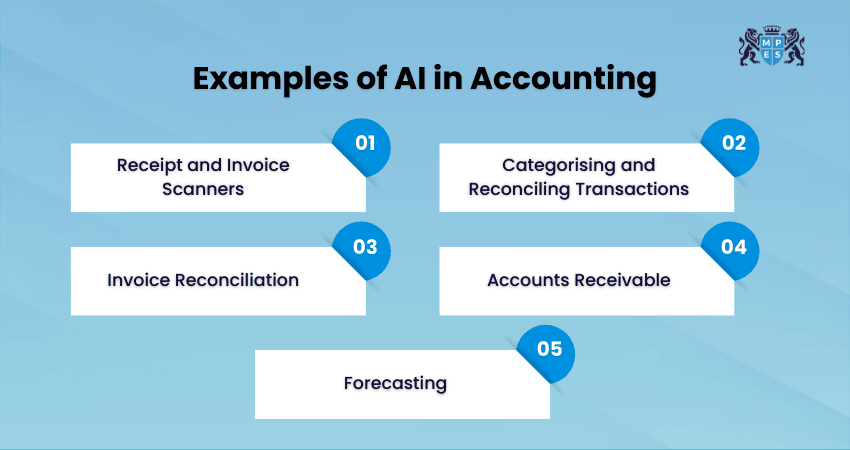
1) Receipt and Invoice Scanners
AI-powered scanners read digital or paper receipts and invoices to capture key information such as dates, amounts, and vendor details. The extracted data is automatically entered into the accounting system, reducing manual data entry and improving record accuracy.
2) Categorising and Reconciling Transactions
AI helps match transactions from bank statements with entries in the accounting ledger. The software suggests transaction categories and possible matches based on amounts and vendor names, allowing Accountants to review, confirm, or adjust the recommendations.
3) Invoice Reconciliation
AI-enabled accounting systems can identify payments that match outstanding invoices by scanning business bank accounts. Once matched, the system updates the records automatically, while unpaid invoices remain listed in the receivables report for follow-up.
4) Accounts Receivable
AI helps manage accounts receivable by tracking outstanding invoices and sending automated reminders to customers before or after payment due dates. It can also highlight overdue payments in ageing reports to support better cash flow management.
5) Forecasting
AI analyses patterns in accounts receivable and accounts payable to estimate future cash balances. By studying historical financial data, it helps businesses predict cash flow trends and plan budgets, expenses, and financial decisions more effectively.
Conclusion
More than a mere technological upgrade, AI in Accounting is a powerful shift for the future of finance. By embracing smart applications, keeping up with emerging trends and adopting the right tools, businesses can unlock greater efficiency and innovation than before. The firms that adapt now will lead tomorrow's financial landscape with confidence.
Begin your accounting journey with practical skills in bookkeeping and finance through the ACCA Foundations Training – Join today!
Frequently Asked Questions
Q. What is the Future of AI Accountants?
The future of AI in accounting indicates faster and more automated Financial Management. AI Accountants will take over repetitive tasks like Data Entry and reconciliations so that Accountants can purely focus on decision-making.
Q. Which Software do Accountants Use?
Accountants commonly use software like QuickBooks, Xero, Sage, Zoho Books, and FreshBooks. These tools help with bookkeeping, invoicing, payroll, financial reporting etc. Larger firms may also use advanced platforms like Oracle NetSuite or SAP for complex Accounting.
Q. Which is the Best Free Accounting Software?
That depends on your Accounting needs. Wave Accounting is one of the most popular free accounting tools. It offers invoicing, expense tracking and basic reporting. On the other hand, Zoho Books provides a free plan for businesses with limited turnover. These free solutions are perfect for freelancers and small businesses.