Have Any Question?
 +44 7452 122728




 Back
Back




The Big 4 Accounting Firms: Who They are and What They Offer
The Big Four Accounting Firms are Deloitte, PwC, EY, and KPMG. They are global leaders offering audit, tax, and consulting services worldwide. They work with major companies and governments across many countries worldwide. Their strong reputation, global reach, and expert teams make them leaders in the finance industry.
Table Of Contents


 44 7452 122728
 27-Jun-2026
Author-James Smith
Have you ever imagined working with global companies, learning from top experts, and building a career that opens doors worldwide? For many aspiring professionals, that dream leads to Deloitte, PwC, EY, and KPMG: the world’s Big 4 Accounting Firms.
In this blog, you’ll discover who the Big 4 Accounting Firms are, what they do, how they hire, their salaries, and their future growth, guiding you towards a successful Accounting career. Let’s explore what makes these firms the top choice for finance professionals worldwide.
What are the Big 4 Accounting Firms?
The Big 4 Accounting Firms are the biggest and most recognised Accounting companies in the world: Deloitte, PricewaterhouseCoopers (PwC), Ernst & Young (EY) and Klynveld Peat Marwick Goerdeler (KPMG). They work across many countries, generate billions each year, and offer services like auditing, tax support, and financial advice. They also audit the financial statements of many major publicly listed companies.
Even though each firm is independent, they use global brand names and follow similar working styles everywhere. They are much bigger than other firms in size and clients, including many Fortune 500 companies. Because of this strong reputation, many people aim to build their careers with the Big Four Accounting Firms. Let’s explore each firm and discover what makes them unique.
1) Deloitte
Deloitte is one of the world’s leading professional services firms, providing Accounting, consulting, and advisory solutions to organisations across industries. It was founded in London in 1845 by William Welch Deloitte and has grown through global mergers and partnerships to become a trusted name in finance and business. As of 2025, Deloitte employs over 470,000 professionals worldwide, making it the largest of the Big Four.
Deloitte supports organisations through business transformation, technology integration, and workforce development. It values continuous learning, offering employees structured training, mentorship, and leadership initiatives that foster long-term career growth.
Key Focus & Work Culture:
a) Business strategy, operations, and financial support
b) Technology-driven solutions and innovation
c) People and workplace development services
d) Encourages learning and personal development
e) Strong training and leadership programmes
f) Opportunities to mentor and be mentored
g) Focus on building long-term career skills and confidence

2) PricewaterhouseCoopers (PwC)
PwC is a multinational network offering Accounting, consulting, and assurance services across industries. It was formed in 1998 through the merger of Price Waterhouse and Coopers & Lybrand.
PwC is recognised for helping organisations improve performance, manage risk, and adapt to changing market conditions. It places a strong emphasis on collaboration, innovation, and professional development. Employees are encouraged to build technical expertise while developing leadership and communication skills through practical experience and continuous learning opportunities.
Key Focus & Work Culture:
a) Audit, tax, and business advisory services
b) Risk management and regulatory compliance support
c) Digital transformation and technology consulting
d) Collaborative and inclusive working environment
e) Strong focus on professional development and learning
f) Opportunities to work with global clients and projects
g) Encourages innovation and problem-solving skills
3) Ernst & Young (EY)
Ernst & Young (EY) is a global professional services organisation specialising in consulting, assurance, and advisory solutions. It was established in 1989 following the merger of Ernst & Whinney and Arthur Young. EY is known for its purpose-driven approach of helping businesses build long-term value.
EY supports clients in improving performance, managing risk, and ensuring compliance. It is known for its focus on innovation, technology, and continuous learning, creating a workplace that encourages adaptability and career development.
Key Focus & Work Culture:
a) Assurance, consulting, and tax services
b) Business strategy and transformation support
c) Focus on sustainability and long-term value creation
d) Encourages innovation and digital adoption
e) Inclusive and diverse workplace culture
f) Strong leadership development programmes
g) Opportunities to work on complex global projects
4) KPMG
KPMG is a global network providing audit, tax, and advisory services to businesses and governments. It was founded in 1987 through the merger of Klynveld Main Goerdeler (KMG) and Peat Marwick. KPMG is recognised for its commitment to integrity, quality, and professional excellence.
KPMG helps organisations with business improvement, risk management, and digital transformation. It promotes a culture of sustainability, innovation, and accountability, offering structured training and detailed recruitment processes to attract high-performing professionals.
Key Focus & Work Culture:
a) Audit, tax, and advisory services
b) Support for digital transformation
c) Business performance and risk management
d) Focus on environmental and social responsibility
e) Structured hiring with skill assessments
f) Encourages strong communication and problem-solving skills
g) Exposure to diverse industries and international projects
Advance your career with business, tech, and finance knowledge with our Business, Technology & Finance (BTF) Training – Join today!
Why are These Accounting Firms Called the Big 4?
The term “Big 4” refers to the Big 4 Accounting Firms in the world: Deloitte, PwC, EY, and KPMG. These firms dominate the global Accounting, audit, tax, consulting, and advisory industries due to their large international presence, workforce size, and influence across businesses worldwide.
The industry was originally known as the “Big 8,” but mergers between major Accounting Firms gradually reduced the number. The final change happened after the collapse of Arthur Andersen in 2002, following the Enron scandal, one of the biggest corporate fraud cases in history. Since then, only four major firms have remained dominant globally, leading to the term “Big 4.”
The History of the Big 4 Accounting Firms
The Big 4 Accounting Firms were once part of a group called the Big Eight, which operated mainly in the US and UK. In the late 1980s and 1990s, several firms merged to strengthen their global presence.
1) 1987: Peat Marwick merged with Klynveld Main Goerdeler (KMG) to form KPMG
2) 1989: Ernst & Whinney merged with Arthur Young to form EY
3) 1989: Deloitte Haskins & Sells merged with Touche Ross to form Deloitte
4) 1998: Price Waterhouse merged with Coopers & Lybrand to form PwC
These mergers reduced the Big Eight to five firms. Later, Arthur Andersen collapsed in 2002 following its involvement in the Enron scandal, leaving four major firms. Today, Deloitte, PwC, EY, and KPMG are known as the Big Four and remain the most influential Accounting Firms in the world.
What Services do the Big Four Accounting Companies Provide?
The Big 4 Accounting Firms offer many services to help businesses manage their money, follow rules, and grow. While they are well known for checking company accounts, they now also support organisations in many other areas. The key services provided by these firms include:
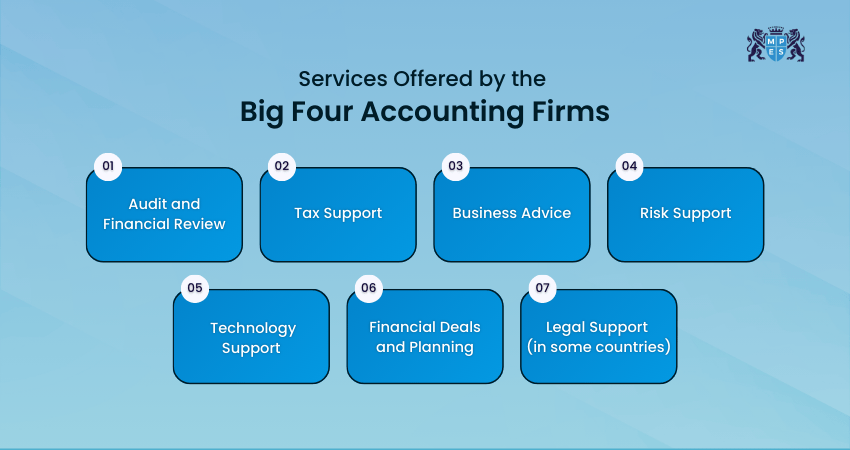
1) Audit and Financial Review: These firms help check the company’s financial statements to make sure everything is correct and honest. This helps build trust with shareholders, banks, and the public.
2) Tax Support: They help businesses and individuals prepare taxes, follow tax laws and plan their taxes in a smart and legal way.
3) Business Advice: They guide companies on how to work better, improve processes, reduce costs, and grow successfully.
4) Risk Management and Compliance: They help organisations identify problems, avoid fraud, manage risks, and follow important rules.
5) Technology and Digital Transformation: They assist companies in using modern technology, improving systems, protecting data, and using digital tools to work faster and smarter.
6) Financial Deals and Planning: They support companies when they buy or sell businesses, need valuation help or require financial planning and restructuring.
7) Legal Support (in Some Countries): They offer legal advice related to business, tax, and workplace matters.
How Can I Work for the Big 4 Accounting Firms?
Working for the Big 4 Accounting Firms can provide valuable experience, professional development, and exposure to some of the world's leading organisations. While competition is high, the right qualifications and skills can improve your chances of securing a role. Here are some key steps to get started:
1) Earn Relevant Qualifications: Degrees in accounting, finance, business, or economics are commonly preferred. Professional certifications such as ACCA, ACA, or CIMA can strengthen your profile.
2) Build Technical Skills: Develop knowledge of accounting, auditing, financial reporting, and data analysis to meet industry expectations.
3) Gain Practical Experience: Internships, graduate programmes, and entry-level positions can help you with hands-on experience and industry exposure.
4) Improve Soft Skills: Strong communication, teamwork, and problem-solving abilities are essential when working with clients and colleagues.
5) Prepare for Recruitment: Research the firm, practise aptitude tests, and prepare for interviews to increase your chances of success.
The Big 4 recruit through graduate programmes, internships, work placements, and insight events. These opportunities provide practical experience and help candidates understand company expectations. Following their careers pages, attending campus recruitment events, and preparing well for interviews and assessments can significantly increase your chances of joining the Big 4.
Explore the fundamentals of accounting and finance with ACCA Foundations Training – Sign up soon!
The Sources of Revenue for the Big Four Accounting Firms
The Big 4 Accounting Firms earn money by offering different services to businesses and organisations. Their main income comes from:
1) Audits: Checking the company’s financial records
2) Tax Services: Helping with tax filing and planning
3) Consulting: Advising on business improvement and growth
4) Technology Services: Supporting digital systems and cyber security
5) Financial Advisory: Helping with mergers, valuations and major deals
6) Risk and Compliance: Guiding companies to follow rules and manage risks
Learn principles of Taxation Certification now and elevate your understanding of tax. Join our Principles of Taxation (PTX) Training now!
How to Become a Big 4 Accountant?
Working at a Big 4 Accounting Firms requires planning, learning and gaining the right skills. The steps below will help you build a strong career path. Let’s go through them one by one.
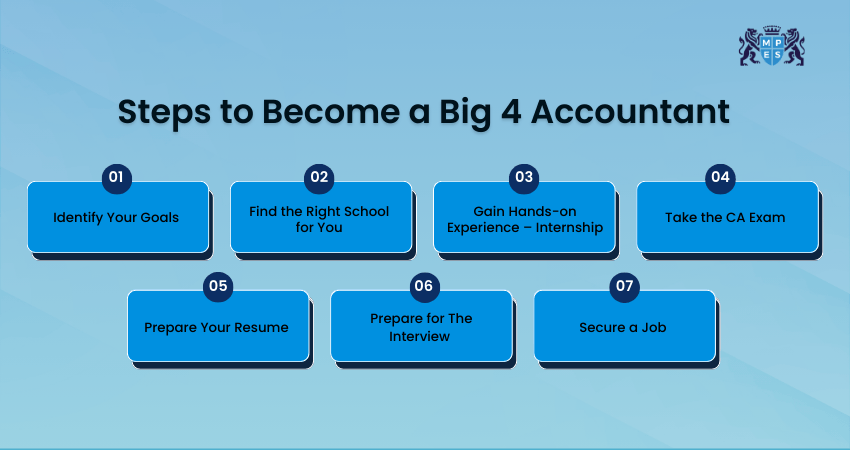
1) Identify Your Goals
Begin by deciding which area you want to work in, such as audit, tax, consulting or technology. Knowing your path early helps you choose the right subjects, skills and experience, and stay focused on your goals.
Example:
If you want to work in audit, study financial reporting and join your university’s audit or finance club.
2) Find the Right School for You
Choose a university or college that offers strong courses in Accounting, finance or business. Look for a course that provides good teaching, career support and openings for internships or work placements.
Example:
Look for universities that have campus hiring partnerships with Deloitte, PwC, EY or KPMG.
3) Gain Hands-on Experience – Internship
Secure internships or industrial placements while studying. This gives you real workplace experience, allows you to work with professionals and helps you understand how Accounting Firms operate. Internships also make your CV stronger.
Example:
Apply for summer internships at Big 4 firms or join a local Accounting firm to gain experience.
4) Take the CA Exam
Gain a recognised professional Accounting qualification to strengthen your credibility and open global career opportunities. Depending on your region, this could include CA, ACCA, ACA or CIMA. These credentials enhance your technical knowledge, demonstrate professional competence, and are often essential for advanced roles in major Accounting Firms.
Example:
Start preparing for the ACA qualification during your final year of university.
5) Prepare Your Resume
Create a clear, professional CV that highlights your education, skills, internships, achievements and any relevant certifications. Keep it neat, focused and tailored to the role you are applying for.
Example:
Include university Accounting projects, Excel skills and any volunteer finance work in your CV.
6) Prepare for the Interview
Practise general interview questions and be ready to talk about your experience, strengths and career goals. Work on communicating confidently, speaking clearly and demonstrating your interest in the firm and the role.
Example:
Practice explaining a time you solved a problem or worked on a team project.
7) Secure a Job
Once you have completed your studies, gained experience and earned your qualification, apply for graduate roles or trainee positions at Big Four firms. Stay motivated, consistent and open to learning, as these companies value dedication and growth.
Example: After an internship in these companies, apply for their graduate programme to secure a full-time role.
Develop your management information expertise and thrive professionally with our Management Information (MI) Course – Join today!
Salaries in Big 4 Accounting Firms
Salaries depend on country, role, and experience. Entry-level salaries are good and grow fast. Here is what professionals in Big Four Accounting Firms generally earn in the UK:
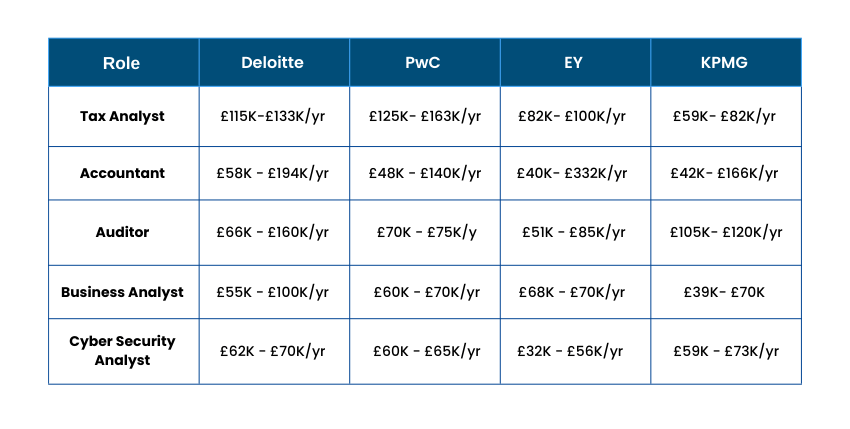
Source: Glassdoor
The Future of the Big Four Accounting Firms
The Big Four Accounting Firms: Deloitte, PwC, EY, and KPMG are transforming through technology and changing business needs. Beyond traditional auditing and tax services, they now focus on digital transformation, advisory, and consulting. Using Artificial Intelligence, data analytics, and automation, they deliver faster and smarter results. They’re also expanding in cyber security, sustainability and Environmental, Social, and Governance (ESG) consulting to support global business goals.
In the future, these firms will be increasingly technology-driven, blending finance expertise with innovation. Aspiring accountants will need strong digital, analytical, and problem-solving skills, along with solid Accounting knowledge, to thrive in this evolving professional landscape.
Conclusion
The Big 4 Accounting Firms continue to lead the world in finance, technology and business support. They offer powerful learning opportunities, global exposure and strong career growth for future professionals. Whether you dream of working in audit, tax or consulting, building the right skills and experience can open doors to a rewarding future with the Big Four Accounting Firms.
Gain the skills needed to succeed in the Accounting profession. Join the ACA Certificate Level now!
Frequently Asked Questions
Q. Which Firms do the Big 4 Companies Audit?
The Big 4 companies audit many of the world’s largest organisations, including Fortune 500 and publicly traded companies. Their clients operate across industries, such as technology, banking, healthcare, energy, and manufacturing.
Q. What Skills do Big 4 Firms Look for in Candidates?
The Big 4 Accounting Firms look for candidates with strong technical knowledge, communication, teamwork, adaptability, and problem-solving skills. Also, they value leadership potential, professionalism, commercial awareness, and the ability to perform well in fast-paced client environments.
Q. What is the Difference Between Big 4 and Mid-tier Accounting Firms?
The Big 4 Accounting Firms mainly serve large multinational organisations. Mid-tier accounting firms focus more on small and medium-sized businesses, often providing personalised services, flexible work environments, and faster decision-making processes.