Have Any Question?
 +44 7452 122728




 Back
Back




What are Liabilities: Importance and Key Differences From Assets
Liabilities are financial obligations a business owes to others, including debts, loans and unpaid expenses, that must be paid over time using cash or assets. They are typically classified as current or long-term depending on their due date. Managing them properly helps maintain financial stability and strengthen business credibility.
Table Of Contents


 44 7452 122728
 15-Apr-2025
Author-Maria Thompson
Have you ever wondered what those “amounts owed” on a company’s balance sheet really mean? In accounting, these amounts are known as Liabilities. But What are Liabilities? They represent what a business or person needs to pay back, whether it’s loans, bills, or other dues. Knowing about Liabilities helps you stay in control of your money and avoid unwanted surprises.
Whether you’re managing a business or just learning about finance, understanding Liabilities is a big step toward smarter money decisions. In this blog, we will discuss What are Liabilities, how they work, and why they matter. Let's get started!
What are Liabilities?
Liabilities are financial obligations or debts that a business owes to others. These can be bills, loans, or any other debts that must be paid in the future. Liabilities are a normal part of running a business and are listed on the balance sheet. They show what the company is responsible for paying.
For example, if a bakery buys flour and sugar from a supplier and agrees to pay later. That unpaid amount becomes a liability. Or, if the bakery takes a loan to buy a new oven, the loan is a liability until it’s fully paid. Knowing your Liabilities helps you plan your money and avoid problems.

The Importance of Liabilities
Liabilities play an important role in understanding a company’s financial position and how it operates on a daily basis. Some of the reasons why knowing about Liabilities is important for any business include
1) Financial Health
1) Helps you understand how much your business owes
2) Shows the balance between assets and debts
3) Makes it easier to track business growth
4) Keeps your finances clear and organised
2) Managing Cash Flow
1) Helps plan when to pay bills and loans
2) Avoids running out of money unexpectedly
3) Supports better budgeting and spending
4) Makes daily operations smoother
3) Tax Considerations
1) Some Liabilities may be tax-deductible
2) Helps prepare accurate tax returns
3) Reduces the risk of tax penalties
4) Keeps records ready for audits
4) Risk Mitigation
1) Shows how much risk your business carries
2) Helps avoid taking on too much debt
3) Makes it easier to plan for tough times
4) Encourages smarter financial decisions
How Liabilities Work?
Here are the main ways Liabilities work in a business and affect everyday operations:

1) Recording Liabilities in Financial Statements
Liabilities are listed on the balance sheet to show what the business owes. They are usually grouped into short-term and long-term based on when they are due. Recording them properly helps give a clear view of financial health.
1) Show what the business owes to others
2) Help track payment deadlines and due dates
3) Important for accurate financial reporting
2) Impact on Business Operations
Liabilities affect daily decisions like spending, borrowing, and investing. If Liabilities are too high, the business may face financial stress. Managing them well helps keep the business running smoothly.
1) Guide decisions on loans and expenses
2) Help maintain good relationships with lenders
3) Affect the ability to grow and expand
3) Settling Liabilities Over Time
Businesses must pay off Liabilities using cash or other assets. Some are paid quickly, like bills, while others, like loans, take years. A good plan ensures that payments are made on time.
1) Plan ahead for regular payments
2) Avoid penalties or interest charges
3) Maintain trust with suppliers and creditors
Types of Liabilities
Liabilities can be classified into different types based on when they are due and the certainty of payment. This classification helps businesses organise their financial obligations and better understand their short-term and long-term commitments. Here are the main types of Liabilities businesses often deal with:
1) Current Liabilities
Current liabilities are obligations a business must settle within one year or within its normal operating cycle. They usually arise from everyday business activities and directly affect short-term cash flow. Effective management of current liabilities helps maintain smooth daily operations and a healthy cash position. Its examples include:
1) Accounts Payable: Money a business owes to suppliers for goods or services purchased on credit that must be paid soon.
2) Wages Payable: Salaries earned by employees but not yet paid at the end of the accounting period.
3) Taxes Payable: Taxes the business owes to the government, such as sales tax or income tax, which are due shortly.
4) Short-term Loans: Borrowed funds that must be repaid within one year, often used for working capital needs.
5) Accrued Expenses:
Expenses already incurred, like rent or utilities, but not yet paid.
2) Non-current Liabilities
Non-current liabilities, also known as long-term liabilities, are debts that are not due within the next twelve months. These obligations are typically linked to long-term financing and expansion activities. They allow businesses to invest in growth without immediate repayment pressure. However, they often involve interest payments that increase the total cost over time. Common examples are:
1) Bank Loan (Long-term Loan): Borrowed money from a bank that is repayable over several years through instalments.
2) Bonds Payable: Funds raised by issuing bonds to investors, which the company must repay at a future maturity date with interest.
3) Debentures: Unsecured long-term borrowing where repayment is promised based on the company’s creditworthiness.
4) Lease Obligations: Long-term payments a company must make for using property or equipment under a lease agreement.
5) Deferred Tax Liability:
Taxes owed in the future due to timing differences between accounting income and taxable income.
3) Contingent Liabilities
Contingent liabilities are possible debts that may arise based on the outcome of a future event. They are not certain, but are disclosed in financial statements because they could affect the company’s finances later. These are recorded only when the obligation becomes probable and can be reasonably estimated. Its examples are listed below:
1) Pending Lawsuit: A possible payment the company may have to make if it loses a legal case.
2) Product Warranty: Future repair or replacement costs the business may incur if sold products fail within the warranty period.
3) Guarantees: An obligation that arises if the business promises to repay another party’s debt in case of default.
4) Environmental Penalties: Potential fines or cleanup costs that may occur if regulations are violated.
5) Insurance Claims:
Possible payments the company might need to make if a claim against it is approved.
Take control of your finances with our Business Planning Tax (BPT) Course - Join today!
Difference Between Liabilities and Assets
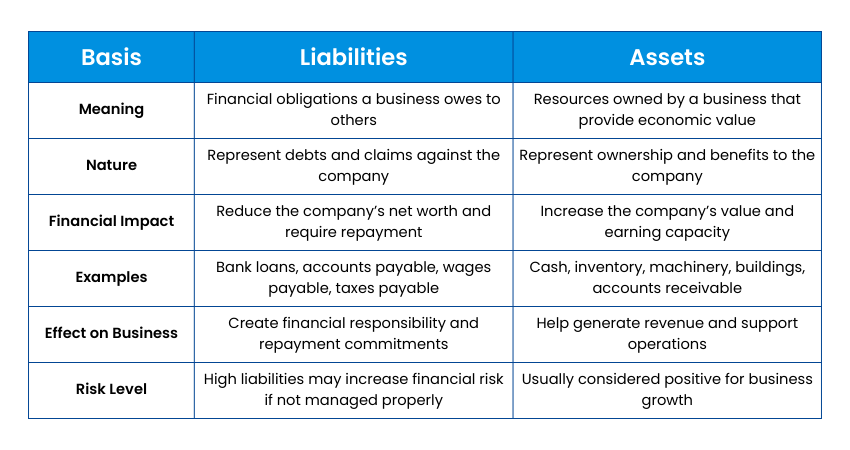
Assets and Liabilities are two main components of a balance sheet and together show the financial condition of a business. While assets represent what a company owns and can use to generate value, liabilities represent what the company owes to others.
Understanding the difference helps business owners, investors, and managers evaluate financial strength and make better decisions. Now that you know What are Liabilities, here’s how Liabilities differ from assets in a business:
1) What They Represent
Assets are resources owned by a business that provide future economic benefit. They can be used to produce goods, deliver services, or generate income. Liabilities, on the other hand, are obligations the business must settle in the future using cash, goods, or services. In simple terms, assets bring value into the business, while liabilities represent claims against that value.
2) Financial Position
Assets generally improve the financial position of a company because they increase its value and earning capacity. Liabilities reduce the company’s net worth since they represent amounts that must be paid out. The difference between total assets and total Liabilities is known as owner’s equity, which shows the true financial standing of the business. However, having more assets than Liabilities is a sign of good financial health.
3) Examples
Common examples of assets include cash, inventory, machinery, equipment, buildings, and accounts receivable. Examples of Liabilities include bank loans, accounts payable, wages payable, and taxes payable. Comparing these items helps stakeholders understand how a company finances its operations and manages its obligations.
Difference Between Liabilities and Expenses
When you know What are Liabilities, it is generally noted that Liabilities and expenses are often confused because both involve money that a business must pay. However, they represent different financial concepts and appear differently in accounting records.
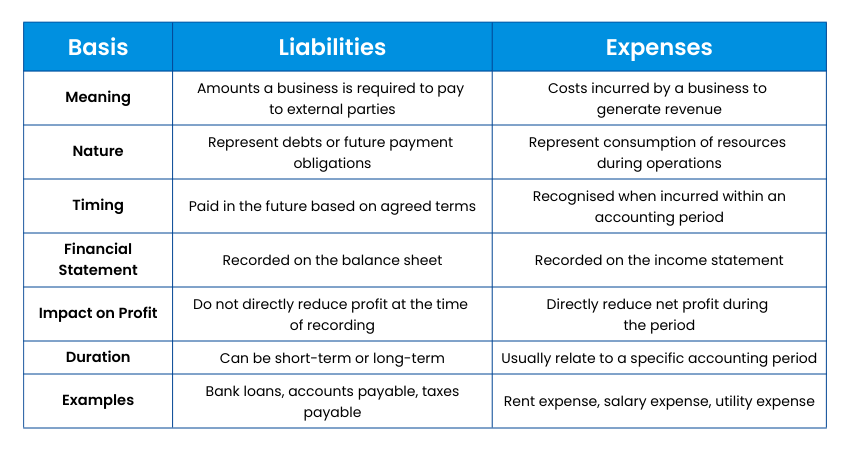
Liabilities are obligations owed to others, while expenses are costs incurred while earning revenue during a specific accounting period. Let’s look at how Liabilities are different from expenses:
1) Timing and Nature
Liabilities represent amounts the business owes that will be paid in the future. Expenses, on the other hand, represent the cost of using resources to operate the business, such as rent, salaries, and utilities, and are recognised when they are incurred. Therefore, liabilities show future obligations, while expenses show the cost of day-to-day operations.
2) Financial Reporting
Liabilities are recorded on the balance sheet because they show the company’s financial obligations at a given date. Expenses are recorded on the income statement because they measure the cost of generating revenue during a period. While liabilities affect the financial position, expenses directly affect profit or loss.
3) Examples
General examples of Liabilities include accounts payable, loans payable, and taxes payable. Examples of expenses include rent, salary, electricity, and advertising expenses. Some items can begin as Liabilities and later become expenses when they are recognised in accounting records.
Gain clarity in financial management with our ACA Professional Level Course - Join today!
Examples of Liabilities
Here are the examples of common Liabilities found in business and daily life:
1) Bank Loans: Money borrowed from a bank that must be repaid with interest.
2) Accounts Payable: Bills or invoices owed to suppliers for goods or services.
3) Credit Card Debt: Outstanding balances owed on business or personal credit cards.
4) Wages Payable: Salaries that are owed to employees but not yet paid.
5) Taxes Payable: Tax amounts due to the government that haven’t been paid yet.
6) Mortgage Loans: Long-term loans taken out to buy property or buildings.
7) Customer Deposits: Money received in advance for goods or services yet to be delivered.
8) Utility Bills: A common household liability where payments are due for services like water, electricity, or gas.
Conclusion
We hope this blog helped you understand What are Liabilities and why they matter in business. Knowing your Liabilities helps you manage money better, avoid risks, and keep your business stable. Whether it's loans, bills, or taxes, keeping track of what you owe is a key part of staying financially healthy. Always stay informed and organised to make smart and safe financial decisions.
Strengthen your financial decisions with our Financial Accounting and Reporting (FARI) Course - Join today!
Frequently Asked Questions
Q. What are My Personal Liabilities?
Personal Liabilities are financial obligations you owe as an individual, such as credit card balances, personal loans, mortgages, car loans, unpaid bills, taxes due, outstanding utility payments, etc. They represent money you’re responsible for repaying from your personal finances.
Q. What are the 10 Liabilities?
Ten common Liabilities include accounts payable, bank loans, bonds payable, wages payable, taxes payable, mortgages, debentures, accrued expenses, lease obligations, and credit card balances owed to lenders.
Q. What are Your Household Liabilities?
Household Liabilities include any debts your home owes, such as mortgage payments, home loans, utility bill arrears, credit card balances, car loans, personal loans, and unpaid taxes. They need to be managed carefully to maintain a stable personal financial position.