Have Any Question?
 +44 7452 122728




 Back
Back




What is a Growth Mindset? 10 Tips to Develop a Strong Mindset
A Growth Mindset is the belief that skills and intelligence can develop through effort, learning, and persistence, leading to continuous personal improvement. It encourages people to face challenges, learn from feedback, and turn failures into lessons. This mindset builds stronger resilience, creativity, and confidence in everyday life.
Table Of Contents


 44 7452 122728
 21-Mar-2025
Author-Maria Thompson
What if challenges felt exciting rather than scary, and every mistake was turned into a stepping stone to success? This is how successful people approach life, and the secret behind their progress lies in their mindset. Understanding What is a Growth Mindset transforms the way individuals learn, work, and handle challenges in life.
It means that your abilities can improve with consistent effort and learning. Instead of thinking, “I cannot do this,” you start asking, “How can I get better at this?” In this blog, you will explore What is a Growth Mindset, its characteristics, key tips, benefits and more. So, if you are ready to reach your potential, keep reading to learn more!
What is a Growth Mindset?
A Growth Mindset is the belief that intelligence, skills, and talents are not fixed but can be developed with dedication and effort. The term was popularised by psychologist Dr Carol Dweck, who contrasted it with a fixed mindset.
People with a fixed and rigid mindset tend to avoid challenges, fear failure, and believe their intelligence or talent is static. On the other hand, those with a Growth Mindset embrace difficulties, view failures as learning opportunities, and see effort as the key to mastery.
Here’s an example:
A fixed mindset says, “I’m not good at maths, so I won’t even try.”
A Growth Mindset says, “I may struggle with maths now, but with practice, I can improve.”
This simple shift in thinking can transform how we approach learning, relationships, and personal development.

Characteristics of a Growth Mindset
An individual's mindset keeps shifting based on the comfort level and experiences. For example, you might initiate bold decisions at the workplace but prefer an easy and routine life in your personal life. Let’s look at the clear signs of a Growth Mindset.
1) You Believe Effort Leads to Success: You are not reliant on your natural talent as the driving factor of achievements. You believe in working hard and practicing consistently to improve.
2) You Learn From Mistakes and Feedback: You do not feel defeated by failures or criticism. Rather than feeling down, you turn them into valuable lessons to help you become better.
3) You Believe Skills can be Developed: You do not view intelligence and abilities as fixed parts of yourself. You see them as things that can be nurtured and developed over time with practice and dedication.
4) You Ask Questions and Seek Knowledge: You are comfortable admitting things you do not know about. When you do not know something, you are eager to learn about it on your own and from others.
5) You Take on Challenges and Embrace Risks: You are not afraid of difficult tasks. You understand growth is possible when you step outside your comfort zone and are ready to step into it.
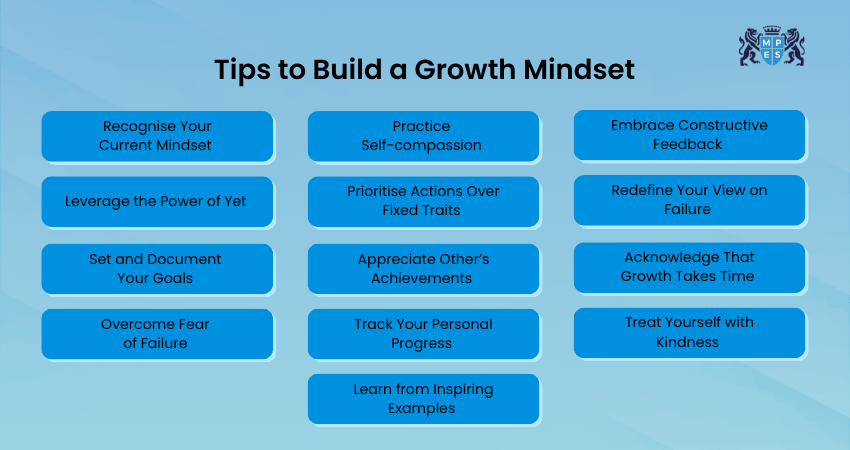
10+ Tips to Build a Growth Mindset
Developing a Growth Mindset is a long process, not an overnight transformation. Here are 10+ powerful ways to cultivate a mindset that embraces learning, resilience, and success.
1) Recognise Your Current Mindset
Before making any changes, take a step back and assess your existing mindset. How do you react to challenges? Do you see effort as a path to success or as a sign of weakness? Understanding these negative thoughts is the first step towards changing them.
Example:
Instead of saying, “I am terrible at maths,” try saying, “I find maths tough right now, but I can get better with consistent practice.”
2) Practice Self-compassion
Self-growth doesn’t happen in a straight line. Some days, you’ll make great progress; other days, you’ll feel stuck. That’s completely normal. Rather than being hard on yourself for not being perfect, treat yourself with kindness and patience.
Example:
After making an error at work, instead of thinking, “I always mess up,” shift to “Everyone makes mistakes. I will learn and do better next time.”
Enhance your focus today and master Attention Management Training for better productivity and success!
3) Embrace Constructive Feedback
Feedback is a gift, but only if you’re open to receiving it. Many people fear criticism because they see it as a reflection of their self-worth. However, those with a Growth Mindset understand that feedback is essential for improvement.
Example:
If a teacher says your presentation lacked structure, ask yourself, “What can I add to make it clearer?’ and apply that feedback next time.
4) Leverage the Power of Yet
One of the easiest ways to build a Growth Mindset is to add the word “yet” to your vocabulary. This small change rewires your brain to see learning as a process rather than a fixed outcome.
Example:
Let’s say you are having difficulty solving a puzzle. Instead of saying, I cannot solve this,” trying to say, “I cannot solve this puzzle yet.”
5) Prioritise Actions Over Fixed Traits
People often say, “She’s a natural leader,” or “He’s just born with talent.” While some people may have inherent strengths, success is mostly about effort and consistency. Instead of focusing on how talented or smart you are, shift your focus to what actions you can take to grow.
Example:
If you want to speak confidently, set a practice routine rather than assuming others are “born good speakers.”
6) Redefine Your View on Failure
Many people avoid taking risks because they fear failure. But failure isn’t something to be ashamed of - it’s a stepping stone to success. Successful people fail more than others; not because they’re less capable, but because they keep trying and improving.
Example:
A student who fails a test reviews the mistakes. This enables the student to take a different approach and score higher on the next attempt.
7) Set and Document Your Goals
Having goals keeps you motivated and focused. However, instead of setting vague goals like “I want to be successful,” make them specific and actionable. Writing down your goals reinforces your commitment and makes it easier to track your progress.
Example:
Instead of, “I want to get fit,” write “I will exercise three times a week and track my progress in a diary or a fitness app.”
Build empathy and communicate with impact with Emotional Intelligence Training – Register now!
8) Appreciate Other’s Achievements
Jealousy and comparison can be toxic to a Growth Mindset. Instead of feeling envious of someone else’s success, view it as inspiration. By celebrating others’ success, you create a mindset that is open, collaborative, and growth-focused.
Example:
Instead of being envious or jealous, ask the top performer at work, “How did you develop that skill?” Then, learn and apply what they share.
9) Acknowledge That Growth Takes Time
Personal growth isn’t instant - it’s a long-term process. There will be moments of frustration, but that’s part of the journey. Change doesn’t happen overnight. Keeping a positive attitude during tough days helps to stay committed to your goals.
Example:
A beginner drum player who practices daily might learn only a few chords each week, but after months, they can play songs confidently.

10) Overcome Fear of Failure
Fear of failure often stops people from exploring new things. However, failure isn’t a sign that you’re incapable; it’s a sign that you’re learning. When you take risks, you gain experience and courage.
Example:
Even when you are unsure about joining a new class or picking up a new hobby, understand that it will help you discover your strengths.
11) Track Your Personal Progress
Reflecting on how far you’ve come reinforces your Growth Mindset. Instead of comparing yourself to others, compare yourself to your past self. Keep a journal or list your achievements to see the progress you’re making. This builds confidence and keeps you motivated.
Example:
Rather than saying, “I’m still not great at coding,” reframe it as “A month ago, I struggled with basic functions; now I can debug my own code!”
Invest in Yourself and gear up for the best ROI you’ll ever get. Sign up for our Personal Development Courses now!
12) Treat Yourself with Kindness
Perfectionism can be a significant block to growth. When you make mistakes, don’t be too hard on yourself. Treat yourself with the same kindness and encouragement you’d offer a close friend.
Example:
If a presentation goes poorly, don’t think, “I’m terrible at this.” Instead, remind yourself, “It was a tough day, but I’ve learned how to improve next time.”
13) Learn from Inspiring Examples
Look at individuals who embody a Growth Mindset - whether they are athletes, entrepreneurs, or artists. Read about their struggles, failures, and how they overcame them. Such stories will remind you that success comes from perseverance, not just talent.
Example:
J.K. Rowling faced multiple rejections before “Harry Potter” was finally published. Instead of giving up, she refined her work and kept pushing forward; eventually becoming one of the most successful authors in the world.
The Benefits of Growth Mindset
Whether you are at school, work, or in daily life, adopting a Growth Mindset brings valuable benefits that last a lifetime. Let’s look at some important benefits.
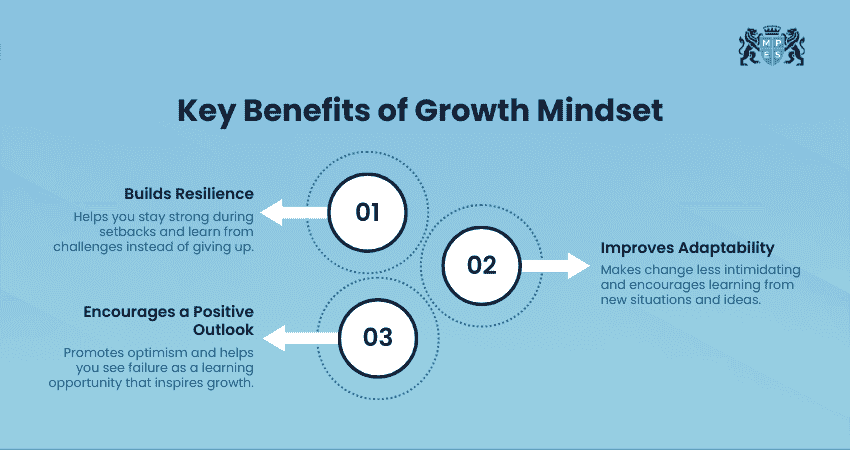
1) Builds Resilience:
A Growth Mindset helps to keep you strong during setbacks. Instead of giving up when things get difficult, you turn challenges into means to overcome and learn from. This mindset supports persistence and keeps you focused even when progress is slow.
2) Improves Adaptability:
When you trust in your ability to grow, change becomes less intimidating. Developing a Growth Mindset helps you learn to embrace new situations, technologies in the workplace, and different ideas. This allows you to learn from opportunities and evolve.
3) Encourages a Positive Outlook:
The belief that improvement is always possible leads to an attitude of optimism and growth. This lets you see failure as the ultimate teacher. A Growth Mindset keeps you a learner at heart and inspires others around you during challenging moments.
Learn to listen, understand, and respond effectively – join our Active Listening Training now!
Examples of Growth-mindset Thinking
Here are some valuable examples that will help you learn more about What is a Growth Mindset.
1) Taking Small Steps Every Day:
You understand that progress comes from consistent effort. Adding incremental positive actions to your routine is essential for turning actions into daily habits. This leads to sustained long-term success.
Example:
Meditating for two minutes after brushing your teeth builds a calming habit that strengthens over time.
2) Stepping Out of Your Comfort Zone:
You are willing to try out new things, even if they seem unfamiliar or challenging. Whether it is about learning a new sport or taking up a new project, you choose growth over comfort.
Example:
Volunteering to present at a meeting, even when you are nervous, helps you become more confident and trust in your abilities.
3) Staying Consistent Through Setbacks:
Instead of expecting instant results, you know valuable achievements take time. When progress is slow, you keep going ahead and trust that it will lead to a meaningful improvement.
Example:
Practicing the guitar daily for weeks without major success until you steadily learn how to play songs.
4) Seeking New Perspectives:
You know that there is always more to learn. You seek knowledge and fresh ideas through books, courses or conversations. Exploring different perspectives will help solve problems in a creative way.
Example:
Reading a book on creativity inspires you to approach work differently and bring out-of-the-box solutions to a recurring problem.
Growth Mindset vs Fixed Mindset
A Growth Mindset is the proven belief that our skills and abilities can improve with consistent effort andlearning. Individuals with this mindset embrace challenges, learn from criticism and stay open-minded to new opportunities. This outlook is the key to resilience, nurturing creativity and personal development in work and everyday life.
A Fixed Mindset assumes that aspects like talents and intelligence are permanent and fixed. It gives a limiting mindset, where you think you are naturally good at something or you are not. Although it focuses on what individuals can excel at, it keeps you afraid of taking more risks. This prevents people from evolving and exploring new possibilities.
Conclusion
Understanding What is a Growth Mindset can transform the way you learn, approach challenges and view success. When you believe skills can grow through effort and smart strategies, every setback turns into a lesson. With small positive actions, curiosity and courage to step away from the comfort zone, you can build the Growth Mindset. This helps you thrive in every sphere of life and turn goals into reality.
Learn, improve, and upgrade your mindset with
Personal Development Courses
today!
Frequently Asked Questions
Q. What is a Growth Mindset in a Nutshell?
It refers to the belief that your abilities, intelligence and skills can be developed over time. With consistent practice, daily efforts and continuous learning, people can get better and turn goals into reality.
Q. What are the Seven Mindsets for Success?
The Seven Mindsets for Success include:
1) Positive Thinking
2) Taking Responsibility
3) Inspiration
4) Purity of Intention
5) Cultivating Knowledge
6) Discipline
7) Growing Through Adversity
Q. What is the Strongest Mindset?
The most powerful mindset is a mixture of growth, resilience and pure intent. It means to believe in improvement, learning from failure and being focused during challenges, even when it feels tough.