Have Any Question?
 +44 7452 122728




 Back
Back




What is a Stakeholder: Definition, Types and Examples Explained
A Stakeholder is any individual, group, or organisation that has an interest or is affected by a business’s actions, decisions, or outcomes. Understanding What is a Stakeholder will help manage projects effectively. Identifying and managing Stakeholders ensures smooth communication, reduces conflicts and informs decisions.
Table Of Contents


 44 7452 122728
 13-Jan-2025
Author-Maria Thompson
Have you ever worked on a project or planned an event that involved several people with different expectations? If yes, you were already dealing with Stakeholders even if you were not aware of it. So, here comes the main question: What is a Stakeholder? They are individuals or groups who influence your work or are affected by it. They support goals, provide resources, raise issues and anticipate results.
In this blog, you will explore What is a Stakeholder, their different types and how to manage them effectively. Keep reading for more insight!
What is a Stakeholder?
A Stakeholder is any individual, group, or organisation with a vested interest in the success of a project, business or organisation. They may be internal or external and can influence activities directly or indirectly. Primary Stakeholders include Investors, Employees, Customers, and Suppliers.
With a constantly growing emphasis on Corporate Social Responsibility (CSR), Stakeholders now cover communities, governments, and trade associations. Their support is crucial for achieving business and project success, making Stakeholder engagement a key aspect of any modern organisational strategy.

Types of Stakeholders
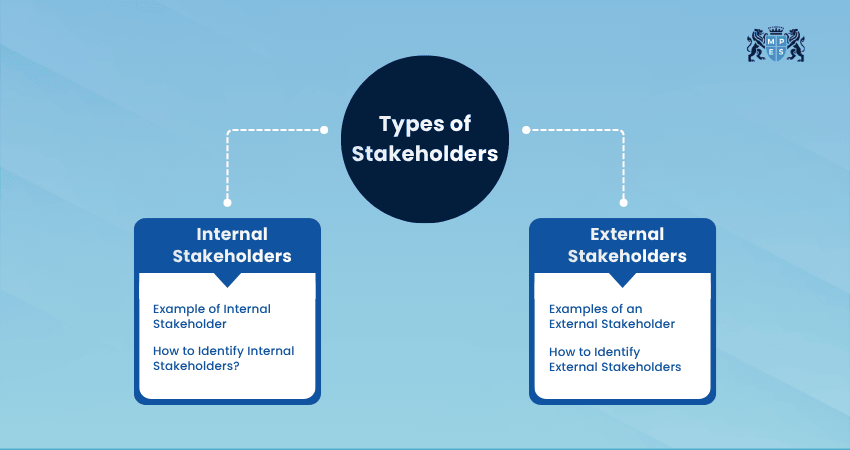
Usually, Stakeholders are of two different types, with each having their own set of roles and responsibilities. Below, we have mentioned the two types of Stakeholders that businesses connect with for their contributions.
1) Internal Stakeholders
Internal Stakeholders are people who work within the organisation. They have a direct role in daily operations and decisions, influencing goals, performance and internal culture. Generally, their priority is about job security, fair pay, career growth and a healthy work culture. It is essential to keep them engaged and well-informed to foster a smooth functioning environment and collaboration.
Example of Internal Stakeholder
Below are common stakeholder example categories that represent Internal Stakeholders:
1) Employees: They carry out daily tasks, and their contributions help to achieve business goals.
2) Managers & Team Leaders: They are responsible for overseeing the daily organisational operations and guiding teams for driving favourable outcomes.
3) Owners & Active Shareholders: These people's main aim is to provide sufficient capital and hold power in making important decisions for the company.
Such groups are primarily connected to the success of the organisation. They are usually involved in the procedure of planning tasks, making decisions and overseeing day-to-day operations.
How to Identify Internal Stakeholders?
For clear identification of Internal Stakeholders, you can look at people:
1) Who works directly within the organisation
2) Who participate in planning, decision-making, and daily operations
3) Who holds responsibilities linked to overall performance and success
4) Who relies on the organisation for income and career development
Hone your skills at creating insightful and impactful business reports in our
Strategic Business Reporting (SBR) Course
- Register now!
2) External Stakeholders
External Stakeholders refer to groups or individuals who work outside the organisation. They are affected by the actions and outcomes of the organisation and can influence its performance through support or decisions. Their concerns are tied to fair practices, quality products, reliable services and compliance. It is essential for organisations to uphold positive relationships with them for company growth and reputation.
Examples of an External Stakeholder
Below are common stakeholders example categories that represent External Stakeholders:
1) Customers: They are affected by the product quality offered by the organisation and the services as well.
2) Suppliers: They provide goods and services depending on the ongoing business phase.
3) Investors and Shareholders: Their primary responsibility includes funding the company and, in return, expecting financial gains.
4. Banks and Creditors: They help fund the company when it requires it, but expect timely repayment.
5. Government and Regulators: They are responsible for setting rules and compliance standards for companies to adhere to.
How to Identify External Stakeholders
For identifying External Stakeholders, you must observe people who:
1) Who are not employed by the organisation
2) Who are impacted by the organisation's decisions, products, or performance
3) Who holds the power to influence the organisation's success or reputation
4) Who can provide resources, funds, or support from outside
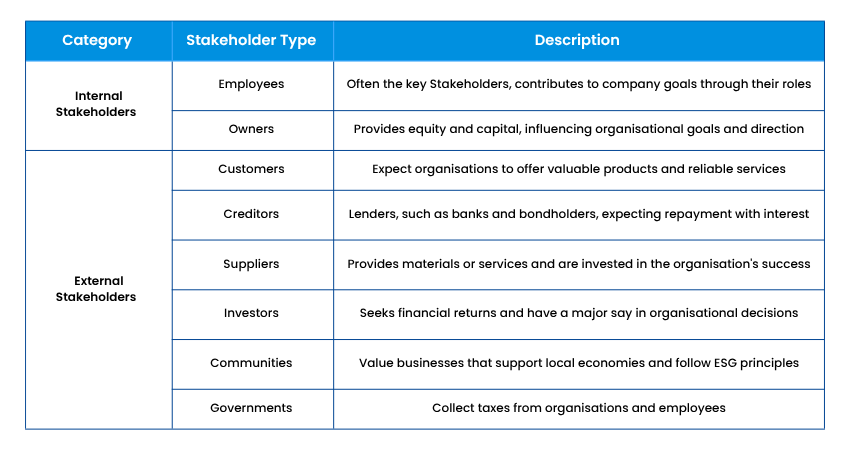
Understanding the above Stakeholder groups makes it simple to identify who is involved, what their role is and how they affect or influence businesses. In a nutshell, internal Stakeholders shape the overall environment while external Stakeholders shape the environment around the organisation.
How to Manage Stakeholders?
Effectively managing Stakeholders becomes straightforward when you adopt the right strategies. Below are essential steps every Project Manager should follow to build strong, productive Stakeholder relationships and ensure project success.
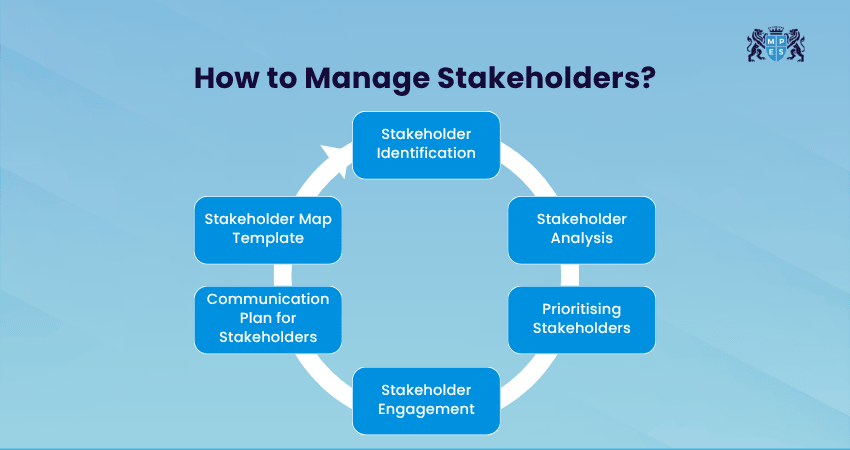
1) Stakeholder Identification
Identifying Stakeholders is crucial for project success, as misaligned expectations can affect outcomes. Remember the following points:
1) Identify the suitable Stakeholders during the project charter phase. This helps to ensure communication remains smooth and conflicts do not arise midway.
2) Review the project charter for details on objectives, budget, schedule, sponsors, and management.
3) Examine contracts to identify potential Stakeholders mentioned within the documents.
4) Assess environmental factors and other organisational ties to uncover additional Stakeholders.
5) Consider regulatory bodies, such as the government, as Stakeholders if they influence environmental factors or compliance standards.
6) Understand Stakeholder interests and ensure adherence to regulations to build strong relationships.
Prioritise this step early to align Stakeholder expectations with project goals and foster long-term success.
2) Stakeholder Analysis
After identifying your project Stakeholders, the next move is Stakeholder analysis. This helps to understand the requirements of each Stakeholder and their expectations. It involves collecting important details, such as their goals, concerns and interests related to the project.
By having clear information, assess the influence and involvement of each Stakeholder. This clarity of understanding aids in effective communication, helps manage expectations and prioritise Stakeholders based on their impact. By setting the right approach, stronger relationships are built with them.
Are you envisioning a senior-level role in Business and Finance? Our
Strategic Business Leader (SBL) Course
will guide you - Sign up now!
3) Prioritising Stakeholders
One of the major challenges in Project Management is determining how to manage Stakeholders effectively. Adding to this already complex situation, there may be numerous Stakeholders, each needing different levels of attention. Prioritising them is essential, much like other tasks on your to-do list.
Some Stakeholders will have a greater influence on project objectives or require more attention during specific phases. As you develop your project schedule, identify these key individuals and plan when to engage with them more closely during the project lifecycle.
4) Stakeholder Engagement
Stakeholder Management involves cementing positive relationships with Stakeholders by meeting their expectations and delivering agreed-upon objectives. However, trust and strong relationships aren't given; they must be earned. You can achieve this through proactive communication and actively listening to Stakeholders' needs.
A practical approach is interviewing key Stakeholders, focusing on the most important ones. Additionally, consulting experts for background knowledge on specific fields or groups can help you ensure productive discussions during one-on-one conversations with Stakeholders.
5) Communication Plan for Stakeholders
Like everything else in Project Management, there's a process for this:
1) Document Stakeholder Communications: Note their names and roles in the organisation they represent. Documenting every conversation you have with these key project partners is of utmost importance.
2) Enforce Process: This lets Stakeholders know that their requests are subject to review and that you have a process to follow for formal requests.
3) Provide Frequent Status Reports: Delivering regular and timely status reports for Stakeholders is crucial, but tailoring the reports to the audience is also important. Don't forget to follow up with Stakeholders and pose questions to see if they have any feedback.
Master critical areas such as Advanced Financial Management and Strategic Business Leadership in our comprehensive
ACCA Strategic Professional Training
- Sign up now!
6) Stakeholder Map Template
The following map template will help you keep track of the number of Stakeholders based on priority.

This Stakeholder Map shows how different groups should be managed based on their level of influence and interest. Stakeholder 3, positioned as high-influence and high-interest, requires close management, while Stakeholder 2 should be kept satisfied due to strong influence but lower involvement.
Stakeholder 1 needs regular updates because of high interest, whereas Stakeholder 4 only requires monitoring due to lower influence. The colour coding highlights Advocates, Neutrals, and potential Blockers, helping prioritise engagement effectively.
Stakeholder vs Shareholder
The key differences between a Stakeholder and a Shareholder are summarised below:

1) Definition
A Stakeholder is any person or group affected by a company's actions or who has an interest in its activities, such as employees, customers, or suppliers. They do not need to invest financially. A Shareholder, by contrast, is someone who owns shares in the company and is invested in its financial performance.
2) Interest in the Company
Stakeholders focus on how the company operates, treats employees, delivers quality, and impacts society and the environment, making their interest long-term. Shareholders are primarily concerned with profits, dividends, and stock value, as these directly influence their Return On Investment (ROI).
3) Type of Involvement
Stakeholders might be part of daily organisational operations or affected by them. Their involvement is consistent and wide in nature. But Shareholders do not handle daily operations; instead, they participate through voting rights and financial decisions.
4) Goals and Expectations
Depending on the position of the Stakeholders, they look forward to having job security, fair pay, ethical practices and reliable services. Shareholders look forward to the company's financial growth for securing higher ROI and enjoying increased shared value.
5) Impact on Business Decisions
Stakeholders influence decisions toward sustaining long-term success, employee welfare and ethical practices in daily operations. Shareholders push for actions that maximise profits and strengthen the company's financial position.
Conclusion
Stakeholders play an important role in shaping an organisation. From employees and customers to investors, they influence decisions, impact results and help to sustain the long-term success of the company. By insightfully understanding What is a Stakeholder and their needs and responsibilities, you can enhance relationships, shape goals and maintain trust.
Get equipped with the essential skills to engage Stakeholders in our ITIL® 4 Specialist: Drive Stakeholder Value Course - Sign up now!
Frequently Asked Questions
Q. Why Managing Stakeholders is Crucial
Managing Stakeholders is important because it ensures that the interests and concerns of all the parties involved in a project or organisation are addressed.
Q. Benefits of Effective Stakeholder Management
Benefits of Stakeholder Management include:
a) Building positive relationships that keep projects running smoothly
b) Securing support and buy-in from key Stakeholders
c) Improved business reputation
d) Better project outcomes
e) Increased advantage over competitors
f) Improved corporate governance
Q. Is a Stakeholder a Boss?
A Stakeholder is not necessarily a boss. Stakeholders include Bosses or Executives, Employees, Customers, Suppliers, Investors, and the community.