Have Any Question?
 +44 7452 122728




 Back
Back




What is Business Management, and Why is it Important?
Business Management is the process of planning organising leading and controlling resources to achieve organisation goals efficiently and effectively. It helps companies use time, money and people wisely while staying competitive in the market. Good management builds strong teams, smooth processes, and steady business growth.
Table Of Contents


 44 7452 122728
 30-Jun-2025
Author-Maria Thompson
Ever wondered how some companies grow fast, build strong teams, and stay ahead? The answer is smart Business Management. It is not just about giving orders but inspiring people, planning for success and turning ideas into solid results. Strong management keeps work organised, boosts performance, and helps businesses face challenges with confidence.
In this blog, you will learn What is Business Management, its key functions, major types and styles, and why it matters. You will also explore what Business Managers do, their core responsibilities, essential skills, how to become one, and key salary trends. So read on and take the next step in your business career!
What is Business Management?
Business Management is the process of planning, organising leading and controlling tasks to help a business reach its goals. It focuses on using people's time money and tools in the best way to keep the business running well and a make profit.
It includes different areas like strategy, marketing, operations, finance and Human Resources. Business Managers guide teams, make decisions, fix problems and make sure everything stays on track. In simple words, Business Management helps a company work, better grow faster and succeed.

What are the Functions of Business Management?
To manage a business successfully, Managers must handle a few key responsibilities. These are known as the core functions of Business Management and form the foundation of What is Business Management. Let’s explore them in detail:
1) Planning and Strategy
Planning and strategy are the starting point of good Business Management. They include setting clear goals, making step-by-step plans, studying market trends, and finding ways to grow. When a business plans well and uses smart strategies, it can handle problems better, avoid surprises, and focus on long-term success.
Example:
Netflix moved from DVD rentals to online streaming by carefully studying the market and planning a long-term strategy for content and technology before its competitors.
2) Organising and Structuring
Organising and structuring means setting up the company in a way that helps everyone work better together. It includes deciding who reports to whom, giving clear roles, and creating simple steps for tasks. A good structure makes communication easier, improves teamwork, and helps everyone understand what they need to do to reach common goals.
Example:
Unilever lets its regional teams manage local work. This helps them respond faster to local customer needs while still following the organisation’s global plans.
3) Leading and Motivating
Leading and motivating means helping and encouraging employees to do their best and support the company’s goals. A good leader explains the vision clearly, sets goals, and offers support when needed. They create a friendly and open work environment where teamwork, ideas, and learning are valued. This makes employees feel confident, motivated, and ready to give their best.
Example:
Satya Nadella, the CEO of Microsoft, improved the company by promoting teamwork, learning, and a positive mindset. This helped boost innovation and employee satisfaction.
4) Controlling and Evaluating Performance
Controlling and evaluating performance means checking if the business is meeting its goals and making changes if needed. This includes setting clear goals, looking at results often, and solving any problems that come up. By doing this, businesses can improve their work, use their strengths well, and grow steadily over time.
Example:
Coca-Cola uses simple tools like dashboards and KPIs to check progress in all departments. This helps them improve daily work and maintain brand and service quality consistently worldwide.
Types of Business Management
Now that you’ve learned What is Business Management, let’s take a look into the different areas of business that need managing. These are the main types of Business Management:
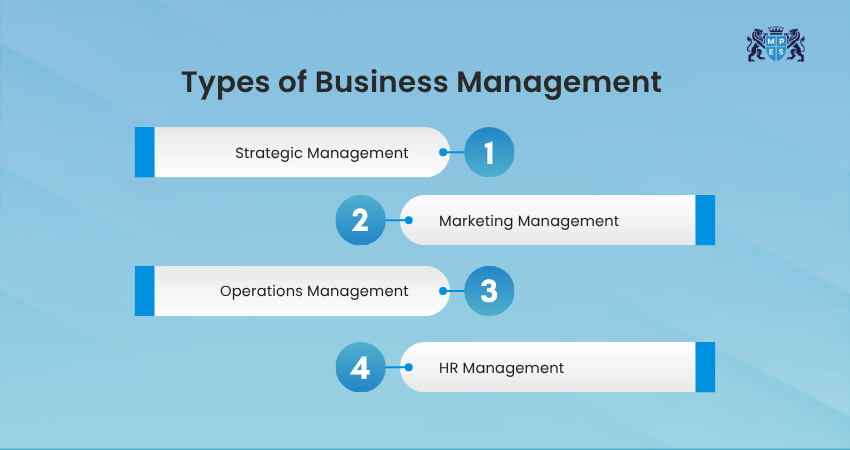
1) Strategic Management
Every business needs strong marketing, financial, and operational plans to succeed. This is where Strategic Management plays a key role. It means using smart planning to guide the business in the right direction. It focuses on questions like where does the business want to go? And how can it get there? To succeed, Business Managers should understand and apply the important practices mentioned above.
Example:
Apple’s long-term success is built on Strategic Management, focusing on innovation and user experience to guide Product Development and market positioning.
2) Marketing Management
Marketing Management is about using a company’s marketing tools in the best way. It focuses on four main areas: the company itself, its partners (collaborators), customers, and competitors. The key parts of good Marketing Management include managing the brand, creating strong marketing strategies, and setting the right prices.
Example:
Nike uses powerful storytelling and influencer partnerships in its marketing strategy to connect emotionally with its target audience and stay ahead of competitors.
3) Operations Management
Operations Management means making sure all parts of a business run smoothly and efficiently. Managers work with different departments to create the best strategies and processes. The operations team also handles important tasks like getting the right resources, developing systems, and managing the supply chain to keep everything running well.
Example:
Amazon is a global leader in Operations Management, using automation and advanced logistics systems to ensure fast and accurate order fulfilment worldwide.
4) HR Management
Human Resource (HR) Management focuses on hiring, training, and keeping employees in the company. It's not just the HR department’s job; Managers from all departments also support hiring and retention because it directly impacts the company’s growth.
Example:
Google is known for its HR practices that focus on employee well-being, innovation, and growth, which have helped it consistently rank amongst the best places to work.
What are the Benefits of Proper Business Management?
When a business is well-managed, it leads to many benefits. Here are the most important ones:
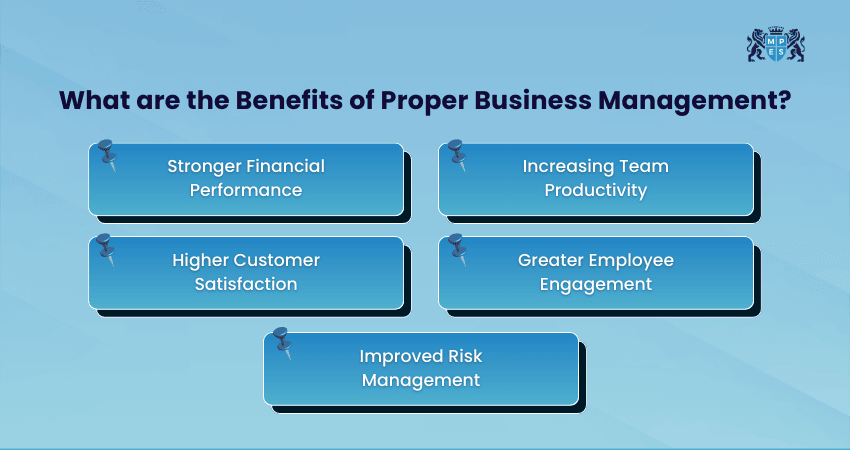
1) Stronger Financial Performance
Good management helps a business use time, money and people wisely. It leads to better decisions and fewer mistakes. This increases profit and keeps the business strong. It also helps with planning, saving money and managing budgets for long-term growth.
2) Increasing Team Productivity
Clear roles, good planning and teamwork help people work better and faster. A productive team finishes more work in less time and improves results. Managers who give direction and remove problems help employees stay focused, motivated and do their jobs well every day.
3) Higher Customer Satisfaction
Happy customers are important for every business. Good management helps give quality products, fast service and clear communication. This brings back customers and builds loyalty. When teams work well together, businesses can give a better and more reliable experience each time.
4) Greater Employee Engagement
When employees feel respected and supported, they care more about their work. A good manager builds a positive place to work, listens to their ideas and helps them improve. This makes employees stay longer, work harder and help the business do well.
5) Improved Risk Management
Business always involves risks. But good Managers plan, spot problems early, and find solutions quickly. This reduces unexpected losses and delays. They also build contingency plans, ensure compliance, and create a proactive culture that helps the organisation stay strong in uncertain times.
Unlock expert corporate reporting training through the
Corporate Reporting (CR) Course
– Join now!
What are the Different Styles of Business Management?
Understanding different management styles is essential for any Business Manager, whether leading a small team or an entire organisation. These styles shape how leaders guide employees, solve problems, and achieve goals.
Here are eight common Business Management styles:
1) Democratic Management Style
In this style, Managers involve employees in decision-making. They ask for ideas, listen to feedback, and encourage open discussion. It builds trust, improves teamwork, and helps create new solutions.
2) Transformational Management Style
Transformational Managers focus on big goals and change. They motivate employees during important shifts in the organisation, encourage innovation, and inspire everyone to move forward with confidence.
3) Bureaucratic Management Style
This style depends on rules, procedures, and a clear chain of command. Managers follow fixed guidelines and expect employees to do the same. It works well in industries with strict regulations but may reduce creativity.
4) Autocratic Management Style
Here, the Manager makes decisions alone and expects employees to follow instructions strictly. This style is useful when employees are new or a task needs quick and clear direction, but it limits creativity.
5) Coach Management Style
Managers who follow this style guide employees like a coach guides a team. They focus on every employee’s strengths, help them overcome weaknesses, and support their growth. This style helps employees learn and improve constantly.
6) Laissez-faire Management Style
Managers give employees full freedom to plan and complete their work. They do not watch closely or give many instructions. This style works well when the team is skilled, experienced, and self-motivated.
7) Collaborative Management Style
In this style, people from different teams and departments work together toward a shared goal. Managers encourage teamwork, coordination, and idea-sharing across the organisation to achieve results.
8) Transactional Management Style
Managers set clear tasks and goals and offer rewards when employees perform well. They also give instructions and monitor progress. This approach improves performance for routine tasks and short-term goals.
What are Business Manager Job Responsibilities?
A Business Manager plays an important role in ensuring smooth operations and supporting business growth. Their responsibilities can vary by organisation, but here are some key tasks they handle daily:
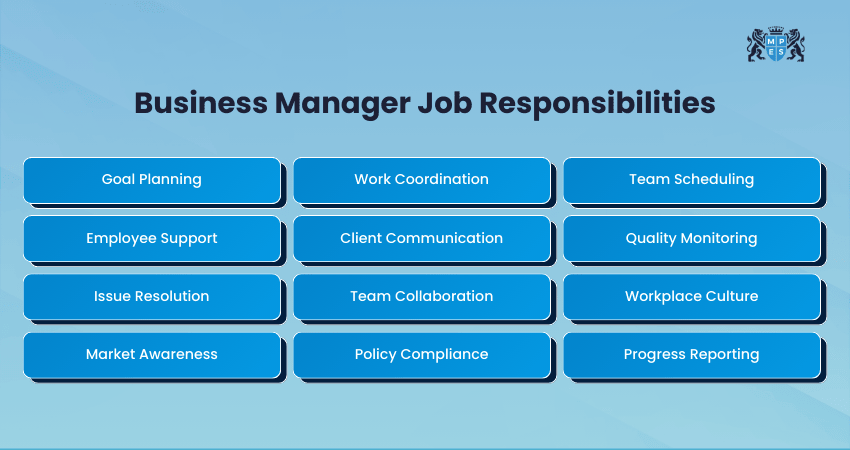
a) Goal Planning: Assist in setting clear business goals and long-term priorities
b) Work Coordination: Organise daily tasks and align team efforts
c) Team Scheduling: Oversee staff schedules and assign responsibilities
d) Employee Support: Ensure teams have the right tools and support to work well
e) Client Communication: Maintain strong relationships with clients and partners
f) Quality Monitoring: Check work quality and ensure standards are met
g) Issue Resolution: Address problems quickly to avoid delays in work
h) Team Collaboration: Encourage cooperation and smooth communication across teams
i) Workplace Culture: Help build a positive, motivating, and productive environment
j) Market Awareness: Keep updated on industry trends and business needs
k) Policy Compliance: Make sure all work follows company rules and legal guidelines
l) Progress Reporting: Share key updates and challenges with senior leadership
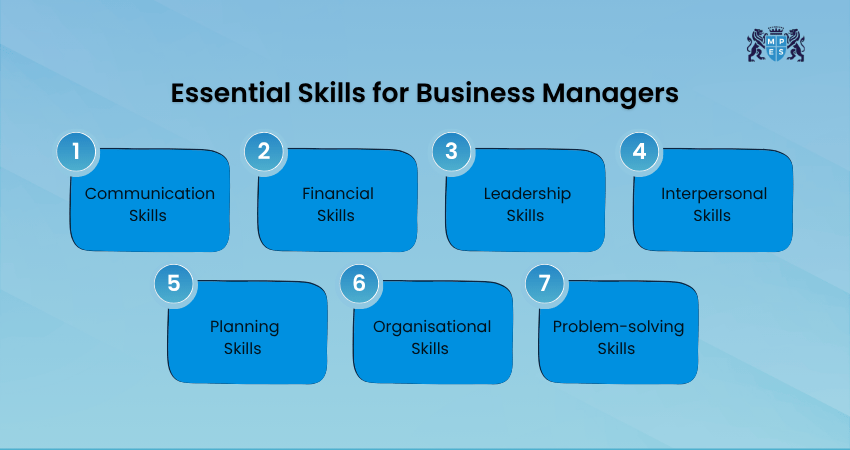
Essential Skills for Business Managers
Business Managers need a mix of hard and soft skills to do their job well. Let’s break them down:
1) Communication Skills
Managers need to share ideas, instructions and feedback clearly. Good communication builds trust, a clear understanding and strong teamwork. It also means listening carefully, changing your message for different people and speaking confidently in meetings, emails and presentations.
2) Financial Skills
Understanding numbers is important. Managers should know how to read budgets, balance sheets and Financial Reports to make smart money choices. They should also be able to plan future expenses, control costs and keep the business financially strong.
3) Leadership Skills
A great manager knows how to guide and inspire the team. Leadership means making decisions, solving problems and setting a good example. Strong leaders encourage others to share tasks well and create a clear goal that everyone can support.
4) Interpersonal Skills
These skills help Managers connect with people and work well with others. Listening, understanding and staying calm are important. Managers with good people skills can handle team, issues solve, problems and keep a friendly and helpful work environment.
5) Planning Skills
Managers should know how to plan well. They need to set clear goals, make schedules and get ready for future challenges. Good planning also means breaking big goals into smaller steps, choosing what to do first and using time and tools wisely.
6) Organisational Skills
From managing files to coordinating teams, Managers must stay organised and in control. This helps avoid mistakes and keeps work flowing smoothly. It also includes Time Management, task delegation, and keeping operations running without confusion or delay.
7) Problem-solving Skills
Business can bring unexpected problems. Managers need to stay calm, think clearly and find smart solutions quickly. Solving problems also means finding the main cause, making good decisions and being ready to change plans when needed.
Turn case study challenges into success with our Case Study (CS) Training – Register today!
How to Become a Business Manager?
Becoming a Business Manager takes learning, experience, and growth over time. There are different education paths that can help you reach this role, and each one opens the door to different job opportunities.
1) Associate Degree
An Associate Degree usually takes two years to complete and teaches basic business concepts. It’s a good starting point if you want to enter the workforce quickly or plan to study further later.
Possible jobs after this level:
a) Administrative Assistant
b) Sales Associate
c) Customer Service Representative
d) Office Manager
e) Marketing Coordinator
2) Bachelor's Degree
A Bachelor’s Degree in Business Management typically takes four years. You can study on campus or choose online programmes for flexibility. This degree helps you gain deeper knowledge and prepares you for more responsible roles.
Possible jobs after this level:
a) Business Analyst
b) Human Resources Specialist
c) Marketing Manager
d) Financial Analyst
e) Project Coordinator
3) Master's Degree
A Master’s Degree, such as an MBA, usually takes one to two years. It is ideal for people who want advanced knowledge and plan to take on senior roles in an organisation.
Possible jobs after this level:
a) Senior Project Manager
b) Business Development Manager
c) Operations Director
d) Management Consultant
4) Doctorate Degree
A Doctorate in business can take three to six years. This level is suitable for those interested in research, teaching, or top-level leadership roles.
Possible jobs after this level:
a) University Professor
b) Research Analyst
c) Senior Consultant
d) CEO
e) Director of Business Development
Salaries in Business Management
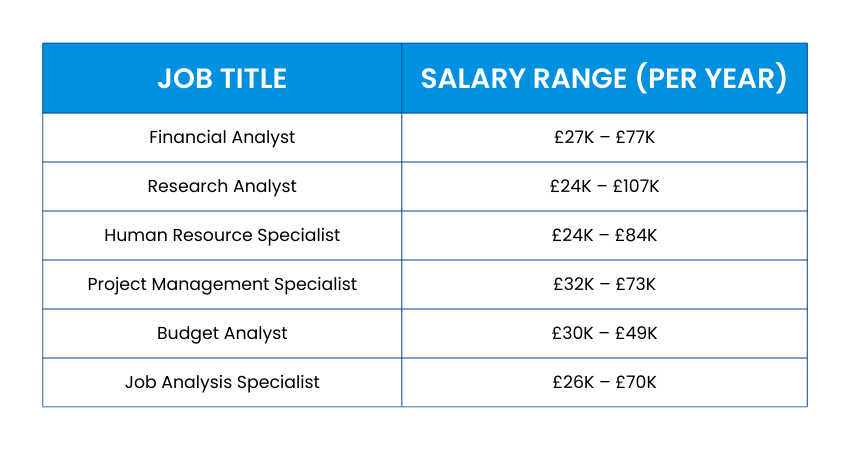
Salaries in Business Management vary based on experience, role, and industry. Many roles offer high earning potential as you build skills and move up. Below are common Business Management careers and their typical UK salary ranges:
Conclusion
In essence, understanding What is Business Management gives you the foundation to lead teams, solve problems, and drive business success. With the right skills, education, and experience, you can build a strong career in this field. Business Management opens doors to exciting roles, growth opportunities, and the chance to create a real impact. Stay curious, keep learning, and lead with confidence.
Gain confidence and expertise for senior finance roles through ACA Advanced Level Training – Join now!
Frequently Asked Questions
Q. What is the Highest Paid Job in Business Management?
One of the highest-paid roles is Chief Executive Officer (CEO). Other high-paying jobs include Chief Financial Officer (CFO), Marketing Director and Operations Manager. Salaries vary based on the industry, location and experience.
Q. How Useful is a Business Management Degree?
A Business Management degree is very useful. It opens doors to many career paths like HR, marketing, finance and operations. It teaches leadership, strategy and real-world business skills that are valuable across industries.
Q. Is Business Management a Hard Degree?
It depends on your interest and effort. Business Management involves subjects like economics, finance, and communication, but it is usually considered easier than engineering or medicine. With good time management, most students find it manageable and enjoyable.