Have Any Question?
 +44 7452 122728




 Back
Back




Statement of Account: Meaning, How to Prepare, and Example
A Statement of Account is a financial document that summarises all transactions and balances between a business and a customer over a specific period. It includes invoices, payments, credits, and outstanding amounts. Businesses use it to track payments, improve financial transparency, and maintain accurate accounting records.Table Of Contents


 44 7452 122728
 30-May-2026
Author-Maria Thompson
Have you ever struggled to track customer payments or identify outstanding balances quickly? Managing multiple invoices and credit transactions without proper records can easily create confusion for businesses. In many cases, unclear financial tracking may lead to delayed payments, disputes and cash flow problems. This is where a Statement of Account comes in.
It provides a complete summary of all transactions in one place. This helps businesses maintain transparency and improve financial management. In this blog, we will explore what is a Statement of Account, why it matters and how it differs from a balance sheet. Let's dive in!
What is a Statement of Account?
A Statement of Account (SOA) is a financial document that gives a complete summary of all transactions between a business and a customer during a specific period. It shows important details such as invoices issued, payments received, credit notes, debit entries and any outstanding balance that still needs to be paid.
Unlike a single invoice, which only requests payment for one transaction, a Statement of Account combines multiple transactions into one organised document. For example, if a company supplies products or services to the same customer several times in a month, the SOA will include all those invoices together with payments made by the customer.

Importance of Statement of Account in Accounting
A Statement of Account is more than just a record of transactions. It supports several accounting and business functions that help organisations operate efficiently. Here are some key reasons why it is important:
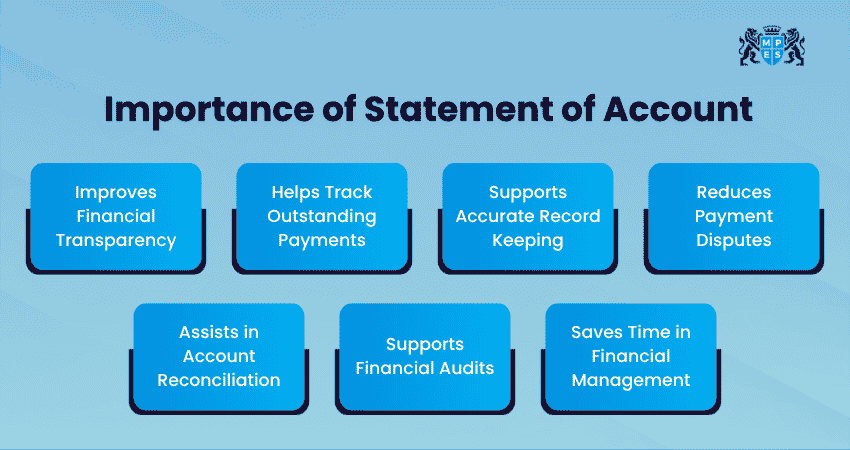
1) Improves Financial Transparency
SOA gives a clear summary of all transactions and this helps both parties understand invoices, payments, credits and outstanding balances without confusion.
2) Helps Track Outstanding Payments
Businesses can quickly identify unpaid invoices and overdue amounts through account statements. This makes payment tracking easier and supports faster collection of pending dues.
3) Supports Accurate Record Keeping
The statement acts as an organised financial record that stores complete transaction details. It helps businesses maintain proper accounting records for future reference.
4) Reduces Payment Disputes
Since all transactions are listed clearly, customers can easily verify charges and payments. This reduces misunderstandings and helps avoid disputes related to balances or invoices.
5) Assists in Account Reconciliation
Businesses and customers can compare the Statement of Accounts with their own records to ensure all transactions match correctly. This helps identify missing payments or accounting errors quickly.
6) Supports Financial Audits
Businesses can use Statements of Account as supporting documents during audits and financial reviews. They provide evidence of transactions and account activity over a specific period.
7) Saves Time in Financial Management
Instead of checking multiple invoices separately, businesses can review all transactions in one document. This saves time and makes account management more efficient.
What Should a Statement of Account Include?
A well-prepared Statement of Account should contain all relevant financial details required for accurate tracking and reconciliation. It provides a clear summary of transactions between a business and its customer, helping both parties monitor payments and outstanding balances effectively. Below are the main elements typically included:
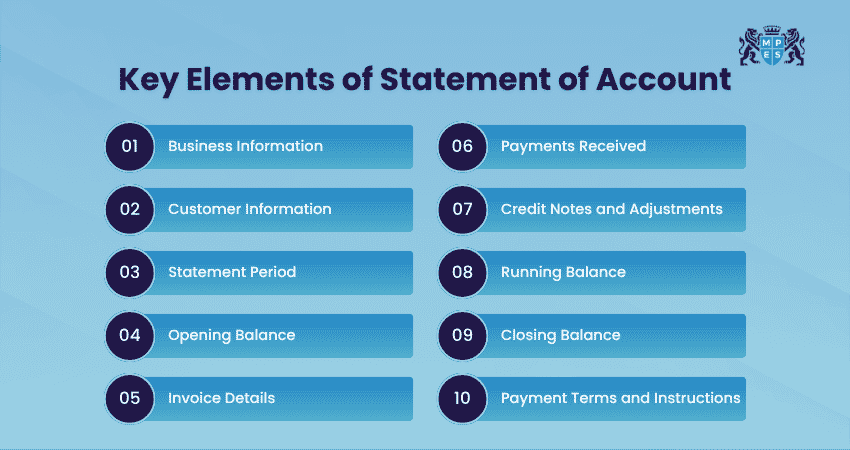
1) Business Information
The statement should include the business name, address, contact number, email address, and company logo. These details help customers identify the company issuing the statement. Including accurate business information also improves professionalism and builds trust with customers.
2) Customer Information
Customer details such as name, address, account number, or customer ID should also be included. This ensures that the statement is linked to the correct account. Clear identification helps avoid confusion and ensures that records are matched correctly.
3) Statement Period
Every Statement of Account should clearly mention the period it covers, such as monthly or quarterly dates. This helps customers understand which transactions are included. It also allows businesses to maintain organised financial records for each reporting cycle.
4) Opening Balance
The opening balance shows any unpaid amount carried forward from the previous statement period. It acts as the starting point for the current account summary. This provides context for the current balance and ensures continuity between statements.
5) Invoice Details
All invoices issued during the statement period should be listed clearly. This section usually includes invoice numbers, invoice dates, descriptions, and invoice amounts. Detailed invoice information helps customers verify charges and maintain accurate records.
6) Payments Received
The statement should show all payments received from the customer during the selected period. Payment dates, methods, and reference details may also be included. This ensures transparency and helps both parties track payment history accurately.
7) Credit Notes and Adjustments
Any refunds, discounts, or credit adjustments applied to the account should appear in the statement. This helps maintain accurate balance calculations. Including these adjustments ensures fairness and prevents discrepancies in financial reporting.
8) Running Balance
A running balance displays how each transaction affects the account balance. It helps customers follow account activity more easily. This ongoing calculation improves clarity and makes it easier to identify outstanding amounts.
9) Closing Balance
The closing balance shows the final amount due at the end of the statement period. This tells the customer whether any payment is still outstanding. It acts as a summary figure that highlights the current financial position of the account.
10) Payment Terms and Instructions
The statement may also include payment due dates, accepted payment methods, and bank details. This helps customers make payments correctly and on time. Clear payment instructions reduce delays and improve overall cash flow management.
Gain industry-relevant financial recording skills with the Maintaining Financial Records (FA2) Course – Register today!
How to Prepare a Statement of Account?
Preparing a Statement of Account requires accurate financial records and a clear understanding of customer transactions. Below are the key steps involved in preparing a SOA:
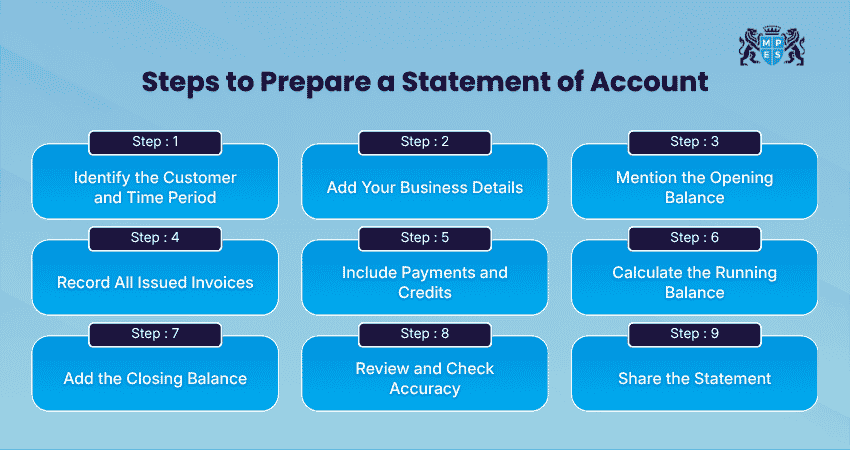
1) Identify the Customer and Time Period
The first step in preparing a Statement of Account is to identify the customer for whom the statement is being created. Businesses should make sure the correct customer's name, account number, address, and contact details are included to avoid confusion or sending the statement to the wrong person.
Also, businesses commonly prepare statements monthly, but weekly or quarterly statements may also be used depending on transaction volume. For example, a statement may cover transactions from 1 January to 31 January.
2) Add Your Business Details
Now, at the top of the statement, include your business details such as business name, address, phone number, email address, and company logo. You can also add tax registration numbers or account reference numbers if needed. This helps identify the issuer and gives the statement a professional appearance.
Adding accurate business information also helps customers contact the company easily if they have questions. It also helps maintain consistency in your financial documents.
3) Mention the Opening Balance
The opening balance is the unpaid amount carried forward from the previous statement. If the customer had unpaid invoices from earlier months, this amount should appear at the beginning of the statement. If there is no outstanding amount, the opening balance will be zero. Adding this balance helps customers understand how the final total is calculated.
For example, if a customer still owed £500 from last month, that amount becomes the opening balance for the current statement.
4) Record All Issued Invoices
Now, you can list all invoices issued during the statement period in chronological order. Each invoice entry should include an invoice number, invoice date, description of goods or services and invoice amount. This section forms the core of the Statement of Accounts because it shows what the customer has been charged for.
Recording invoices in the correct order helps customers review their purchases or services easily. It also ensures transparency because every charge added to the account is clearly visible.
5) Include Payments and Credits
After listing invoices, record all payments received from the customer during the same period. Here, you can add details such as payment date, payment amount, payment method, reference number and amount received. You should also mention any credit notes, refunds, or discounts applied to the account.
This section provides a complete picture of account activity and helps calculate the remaining balance correctly. Properly recording payments and credits also makes account reconciliation easier for both the business and the customer.
6) Calculate the Running Balance
The running balance shows how each transaction affects the customer’s account balance throughout the statement period. After recording every invoice, payment, credit note, or adjustment, the balance should be updated accordingly. It also helps customers quickly identify pending amounts.
For example:
Opening Balance: £500
New Invoice: +£300
Payment Received: -£200
Current Balance: £600
7) Add the Closing Balance
The closing balance represents the final amount owed at the end of the statement period. This is one of the most important sections because it tells the customer exactly how much is due. If the account is fully paid, then the closing balance will show zero. If payments are pending, the outstanding amount should be clearly highlighted.
Some businesses also highlight overdue balances or payment deadlines in this section to encourage faster payments. This improves financial transparency and supports better cash flow management for the business.
8) Review and Check Accuracy
Before sending the Statement of Accounts, it is important to review all the information carefully to ensure everything is correct. Businesses should check invoice numbers, payment details, credit entries, dates, and balance calculations to avoid mistakes. Even small errors can create confusion, delay payments, or lead to disputes with customers.
The statement should also be checked for missing transactions, duplicate entries, or incorrect customer information. Ensuring accuracy helps maintain professional financial records and builds trust with customers.
9) Share the Statement
Once the Statement of Account has been reviewed and verified, the next step is to share it with the customer. Businesses can send the statement through different methods such as email, printed copies, customer portals, or accounting software platforms. Many companies prefer sending statements at the end of each month along with payment reminders.
Sharing the statement on time helps customers stay informed about their outstanding balances and payment due dates. It also improves communication between the business and the customer and encourages timely payments.
Learn how organisations control costs and manage finances with the Managing Costs and Finance (MA2) Course – Sign up soon!
When Should You Send a Statement of Account?
Sending a Statement of Account at the right time helps maintain financial clarity and improves payment collection. Here are the common situations where businesses typically issue account statements:
1) At the End of Each Month: Many businesses send monthly statements to provide customers with a regular summary of transactions and outstanding balances.
2) Before Payment Due Dates: Sending statements before invoice due dates acts as a reminder and encourages timely payments.
3) When Accounts Become Overdue: If a customer misses a payment, a Statement of Account can highlight overdue balances and prompt action.
4) During Account Reconciliation: Businesses and customers may exchange statements when verifying records or resolving discrepancies.
5) Before Financial Audits: Statements help organise financial records and support auditing processes.
6) Upon Customer Request: Customers may request a Statement of Account to review transactions, confirm balances or support their own bookkeeping activities.
Tips for Issuing a Statement of Account
A professionally prepared Statement of Account improves communication and reduces misunderstandings between businesses and customers. Here are some useful tips to follow:
1) Use a Clear and Simple Format:
A Statement of Account should be easy to read and understand. Using a clean layout with properly organised sections helps customers review transactions quickly without confusion.
2) Send Statements Regularly:
Businesses should issue Statements of Account consistently, such as monthly or quarterly. Regular statements help customers stay informed about their balances and payment due dates.
3) Double-check All Information:
Before sending the statement, carefully review invoice details, payment entries, balances, and customer information. This helps avoid calculation mistakes and payment disputes.
4) Include Complete Contact Details:
Always provide business contact information such as phone number, email address, and office address. Customers can use these details if they need clarification regarding account balances or payments.
5) Mention Payment Terms Clearly:
Include payment instructions, due dates, and accepted payment methods in the statement. Clear payment terms reduce confusion and improve payment processing.
6) Use Accounting Software:
Accounting software can help generate accurate Statements of Account automatically. It reduces manual errors, saves time, and improves record management.
7) Maintain Professional Language:
The statement should use polite and professional wording, especially when mentioning overdue payments. Professional communication helps maintain good customer relationships.
8) Send Statements Through Reliable Channels:
Businesses should use secure and reliable methods such as email, customer portals, or accounting platforms to send statements. This ensures customers receive the documents on time.
Statement of Account Examples
Below is a simple example of a Statement of Account:
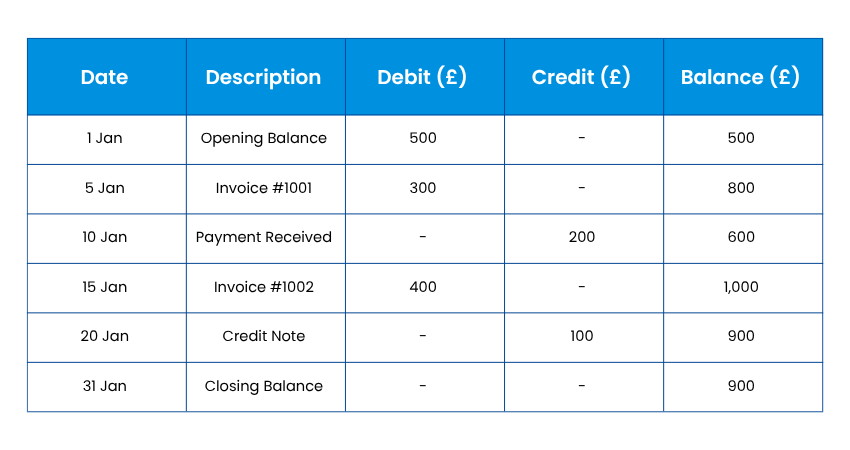
In this example:
1) The customer started with an opening balance of £500
2) Two invoices were issued during the month
3) One payment and one credit note reduced the balance
4) The final outstanding amount became £900
Below is another example of a Statement of Account used by a consulting company providing services to a client:
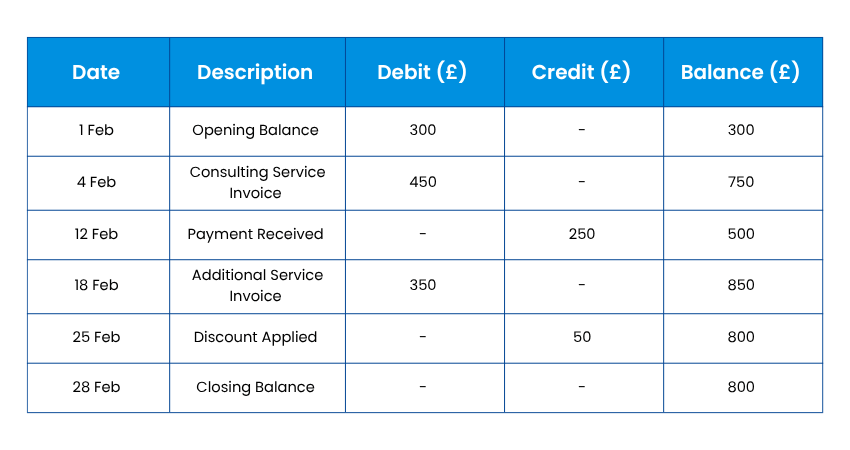
In this example:
1) The client had an opening balance of £300 from previous services.
2) Two service invoices were added during February.
3) A partial payment and discount reduced the balance amount.
4) The final outstanding balance at the end of the month became £800.
Statement of Account vs Balance Sheet
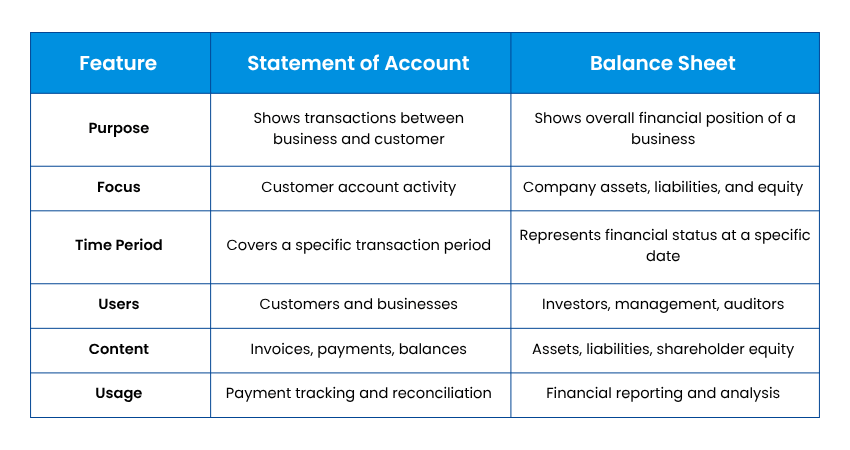
A Statement of Account and a balance sheet are both important financial documents, but they are used for different purposes. A Statement of Account mainly tracks invoices, payments, credits, and outstanding balances.
On the other hand, a balance sheet gives an overview of a company’s overall financial position at a particular point in time. It shows the company’s assets, liabilities, and owner’s equity. While a Statement of Account supports payment tracking, a balance sheet is mainly used for financial reporting and business analysis. Here is a detailed analysis of their difference:
Conclusion
A Statement of Account plays an inevitable role in tracking customer payments and maintaining accurate financial records. Whether used by small businesses or large organisations, a well-prepared SOA helps in effective accounting and financial management. With proper record keeping and regular updates, businesses can improve accuracy, maintain professionalism, and build stronger customer relationships.
Enhance your understanding of accounting principles with the ACCA Foundations Training – Join now!
Frequently Asked Questions
Q. Who Prepares a Statement of Account?
A Statement of Account is usually prepared by the accounting, finance, or billing department of a business. Small businesses may prepare it manually, while larger organisations often use accounting software to generate statements automatically.
Q. What is the Difference Between a Statement of Account and an Invoice?
An invoice requests payment for a specific transaction, while a Statement of Account provides a summary of multiple transactions over a certain period. The statement may include several invoices, payments, and outstanding balances in one document.
Q. Can a Statement of Account be Used for Reconciliation?
Yes, a Statement of Account is commonly used for reconciliation. Customers and businesses compare the statement with their own financial records to verify transactions, identify discrepancies, and confirm outstanding balances accurately.