Have Any Question?
 +44 7452 122728




 Back
Back




Net Profit Margin: Definition, Formula, Calculation and Examples
Net Profit Margin is a percentage that measures how much profit a business earns from its total revenue after deducting all expenses, taxes and operating costs. It helps track profitability, financial efficiency and business performance. Overall, it supports better decision-making, cost control, pricing strategies and business stability.Table Of Contents


 44 7452 122728
 20-May-2026
Author-Richard Harris
Profit is not about how much money comes in. It is about how much money is left after everything is paid for. A business may generate high sales and still struggle financially due to many reasons. This is why simply looking at revenue is never enough to understand a company’s true financial health. It is a sign that you need a Net Profit Margin for your business.
It helps companies evaluate profitability, control expenses and make smarter financial decisions. In this blog, we will explore what is Net Profit Margin, how to calculate it and practical ways to improve it for stronger business performance. Let's get started!
What is Net Profit Margin?
Net Profit Margin is a financial ratio that measures how much profit a business earns from its total revenue. It is expressed as a percentage and shows the amount of profit left after subtracting operating expenses, taxes, interest, cost of goods sold, and other business costs from total sales revenue.
In simple terms, Net Profit Margin reveals how efficiently a company converts revenue into actual profit. A higher margin usually indicates effective financial performance and cost management. Businesses commonly use this ratio to evaluate financial health and support better decision-making.

Why is Net Profit Margin Important?
Net Profit Margin is important because it helps businesses understand how much actual profit they keep after covering all expenses. It gives a clear picture of a company’s profitability, financial efficiency and overall business performance.
By analysing this ratio, businesses can identify whether they are managing costs effectively and generating sustainable profits. It also helps compare performance across different periods, competitors or industry benchmarks to identify areas for improvement.
How to Calculate Net Profit Margin: Formula and Explanation
Now, let’s check the formula for calculating Net Profit Margin:

Here is what each aspect of the formula refers to:
Net Profit:
Net Profit is the amount left after deducting all business expenses from total revenue. These expenses may include:
1) Cost of goods sold (COGS)
2) Operating costs
3) Taxes
4) Interest payments
5) Salaries
6) Rent
7) Utility bills
8) Production costs
Revenue:
Revenue is the total income a business earns from selling products or services before deducting any expenses.
Net Profit Margin Example
Let’s understand Net Profit Margin with a simple example. Imagine that a company called ABC Solutions has the following financial details for the year:
1) Total Revenue: £600,000
2) Cost of Goods Sold: £250,000
3) Operating Expenses: £180,000
4) Taxes and Interest: £50,000
Step 1: Calculate Net Profit
First, you need to subtract all expenses from total revenue:
Net Profit = 600,000 − (250,000 + 180,000 + 50,000)
= 120,000
Thus, the company’s Net Profit is £120,000.
Step 2: Calculate Net Profit Margin
Now, you can apply the Net Profit Margin formula:
Net Profit Margin = (120,000 / 600,000) × 100
= 20%
Interpretation
ABC Solutions has a Net Profit Margin of 20%. This means the company keeps £20 as profit for every £100 earned in revenue after covering all expenses. A 20% margin is generally considered a strong indicator of good profitability and financial efficiency.
Enhance your knowledge of tax legislation and financial reporting with the Principles of Taxation (PTX) Course – Register today!
Key Factors Affecting Net Profit Margin
Several factors can influence a company’s Net Profit Margin. Understanding these factors helps businesses improve profitability and maintain financial stability. Let's check what they are:
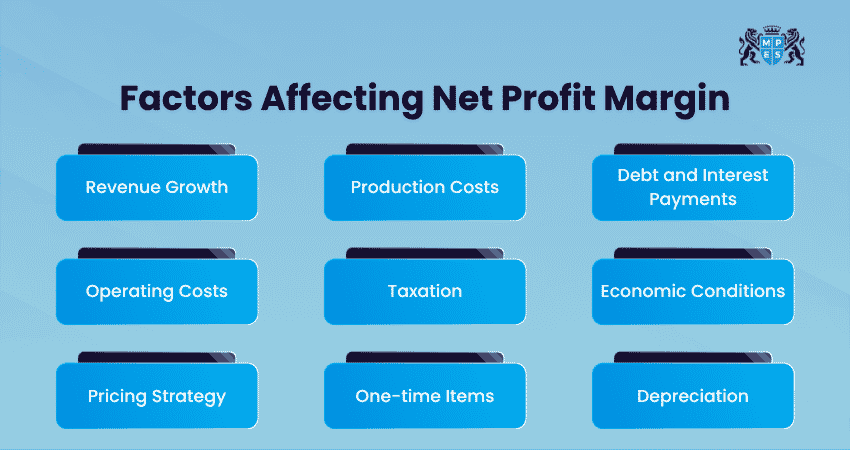
Key Factors Affecting Net Profit Margin
1) Revenue Growth: Increasing sales revenue can improve margins if expenses remain controlled. However, rapid growth without proper cost management may reduce profitability.
2) Operating Costs: Higher operational expenses such as rent, salaries, utilities and logistics can lower Net Profit Margin.
3) Pricing Strategy: Incorrect pricing may reduce profits. Setting prices too low can hurt margins, while excessively high prices may reduce sales demand.
4) Production Costs: An increase in raw material costs or manufacturing expenses can negatively affect profitability.
5) Taxation: Higher tax obligations reduce overall net profit, which can lower Net Profit Margin.
6) One-time Items: One-time gains or losses, such as asset sales or legal settlements, can temporarily affect Net Profit Margin. Businesses should analyse these separately to understand their regular operating performance.
7) Debt and Interest Payments: Businesses with high debt often face significant interest expenses, which can reduce profitability.
8) Economic Conditions: Inflation, recession, and changes in consumer spending behaviour can impact both revenue and expenses.
9) Depreciation: Depreciation reduces net profit over time because it accounts for the decrease in the value of business assets such as equipment, machinery and vehicles.
Common Pitfalls of Net Profit Margin and How to Avoid Them
Businesses often make mistakes while analysing or improving Net Profit Margin. Avoiding these common pitfalls can lead to accurate financial assessments and better strategic decisions. The following are the most common pitfalls and tips on how to avoid them:
1) Misunderstanding Net Profit
Some businesses confuse gross profit with net profit. Gross profit only considers direct production costs, while net profit includes all expenses. To avoid this mistake:
1) Include taxes, operating costs and interest in calculations
2) Review complete financial statements regularly
2) Ignoring Business Expenses
Failing to account for hidden or indirect expenses of your business can result in inaccurate profit calculations. To avoid this mistake, you can maintain detailed expense tracking systems to ensure accuracy. Here are some of the expenses that you can miss from adding:
1) Maintenance costs
2) Software subscriptions
3) Employee training expenses
4) Insurance premiums
3) Ignoring Industry Benchmarks
A 10% Net Profit Margin may be excellent in one industry but poor in another. Therefore, make sure to compare your margin against industry standards rather than relying on general assumptions. For example:
1) Retail businesses often have lower margins
2) Software companies may achieve much higher margins
4) Not Adjusting for Seasonal Changes
Many businesses experience seasonal fluctuations in revenue and expenses. Ignoring these seasonal variations can lead to inaccurate Net Profit Margin analysis. To avoid this mistake, businesses should evaluate Profit Margins over an entire year for an accurate financial picture. Examples of seasonal changes include:
1) Holiday sales fluctuations
2) Peak and off-season demand
3) Changes in customer spending patterns
4) Temporary increases in operating costs
5) Focusing Too Much on Short-term Results
Some businesses focus on improving short-term profits by cutting expenses such as marketing, employee training or product quality. While this may temporarily increase Net Profit Margin, it can affect long-term business growth and customer satisfaction. To avoid this, you should balance short-term profits with long-term financial planning through:
1) Prioritising sustainable business growth
2) Maintaining consistent service standards
3) Focusing on long-term customer value
4) Making balanced financial decisions
6) Neglecting Cash Flow Analysis
A business may appear profitable but still face financial difficulties due to poor cash flow management. Late customer payments, excessive inventory or delayed receivables can create cash shortages. To avoid this, businesses should regularly monitor both Profit Margins and cash flow statements. Ways to improve cash flow management include:
1) Maintaining emergency funds
2) Tracking payments
3) Managing inventory
4) Reviewing cash flow reports regularly
7) Overlooking Non-operating Income and Expenses
One-time gains or losses can affect Net Profit Margin and create a misleading picture of business performance. Thus, businesses have to separate non-operating income and expenses from normal operational activities when evaluating profitability. Examples of non-operating items include:
1) Asset sales
2) Legal settlements
3) Unexpected financial losses
4) Insurance compensation payments
Understand modern business challenges and financial decision-making with the Business, Technology and Finance (BTF) Course – Sign up soon!
Ways to Improve Your Net Profit Margin
Improving Net Profit Margin requires a combination of cost control, revenue growth and operational efficiency. Below are some practical strategies businesses can implement:
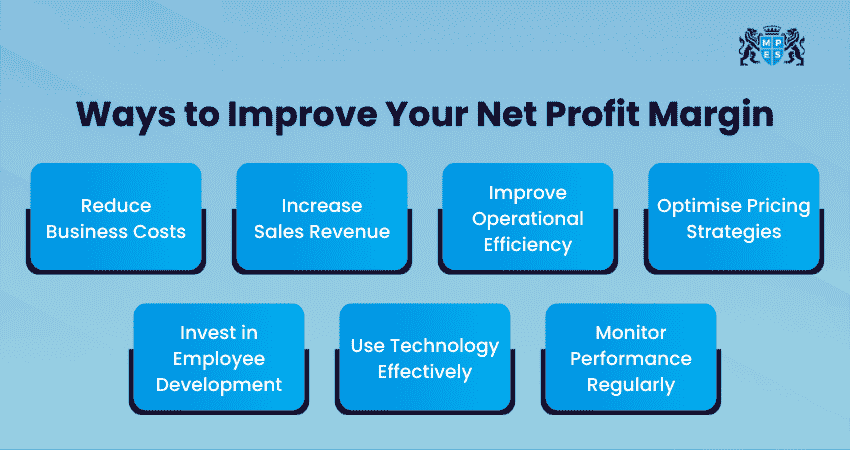
1) Reduce Business Costs
Controlling unnecessary expenses is one of the fastest ways to improve profitability. However, cost reduction should not compromise product quality or customer satisfaction. Businesses can reduce costs by:
1) Minimising waste
2) Reducing energy consumption
3) Negotiating with suppliers
2) Increase Sales Revenue
Boosting revenue without significantly increasing expenses improves Profit Margins. Upselling and cross-selling strategies can also increase average customer spending. Some of the other ways to increase revenue include:
1) Expanding into new markets
2) Introducing new products or services
3) Improving marketing campaigns
4) Enhancing customer retention
3) Improve Operational Efficiency
Efficient operations help businesses reduce delays, waste and resource misuse. This often leads to higher productivity and reduced costs. Businesses can improve operational efficiency by:
1) Streamlining daily workflows
2) Automating repetitive tasks
3) Improving inventory management
4) Using performance tracking tools
4) Optimise Pricing Strategies
Pricing plays an important role in improving Net Profit Margin. Setting the right price helps businesses maintain profitability while staying competitive in the market. Businesses can optimise pricing strategies by:
1) Reviewing prices regularly
2) Understanding customer demand
3) Analysing competitor pricing
4) Avoiding underpricing products or services
5) Invest in Employee Development
Skilled employees often improve productivity, customer service and overall business performance. Investing in employee development can support long-term profitability and operational efficiency. Businesses can invest in employee development by:
1) Providing regular training programmes
2) Improving employee communication skills
3) Encouraging skill development
4) Offering performance feedback and support
6) Use Technology Effectively
Technology can help businesses reduce costs, improve accuracy and increase efficiency. Using the right tools also supports better decision-making and operational management. Businesses can use technology effectively by:
1) Using Accounting Software
2) Implementing inventory management systems
3) Automating routine business tasks
4) Using data analytics tools for insights
7) Monitor Performance Regularly
Regular performance monitoring helps businesses identify financial problems early and improve decision-making. It also helps companies track profitability and operational efficiency over time. Businesses can monitor performance regularly by:
1) Reviewing financial reports frequently
2) Tracking business expenses consistently
3) Comparing performance with industry benchmarks
4) Setting clear financial goals and targets
Advantages and Disadvantages of Net Profit Margin
Now, let’s check the advantages and disadvantages that a Net Profit Margin brings to every business:
Advantages of Net Profit Margin
Below are the advantages of maintaining a proper Net Profit Margin:
1) Measures Overall Profitability: Net Profit Margin considers all business expenses, providing a complete picture of overall profitability and financial performance.
2) Helps in Business Decision-making: Businesses use this ratio to make better decisions related to pricing, budgeting, cost control and growth strategies.
3) Supports Competitor Comparison: Companies can compare their Profit Margins with competitors in the same industry to evaluate performance.
4) Attracts Investors and Lenders: Strong Profit Margins often indicate financial stability, which can increase investor confidence and improve funding opportunities.
5) Easy to Calculate and Understand: The formula for Net Profit Margin is simple, making it easy for businesses of all sizes to use and analyse.
Disadvantages of Net Profit Margin
Though Net Profit Margin has a lot of benefits, it has its limitations too. So, here are its disadvantages:
1) Varies Across Industries: Profit Margins differ between industries, making comparisons across different sectors less accurate.
2) Can be Affected by One-time Items: Asset sales, legal settlements or unexpected financial gains and losses can temporarily affect Net Profit Margin.
3) Does not Measure Cash Flow: A business may show strong Profit Margins but still face cash flow problems due to poor financial management.
4) May Encourage Short-term Decisions: Some businesses may reduce important long-term investments simply to improve short-term profitability.
5) Does not Explain Operational Issues: Net Profit Margin shows overall profitability, but does not identify the exact operational problems affecting performance.
Conclusion
Net Profit Margin is a critical financial metric that helps businesses measure profitability and operational efficiency. Understanding how to calculate and analyse it enables businesses to take informed decisions regarding pricing, cost management and operational improvements. Whether you are running a small business or managing a large organisation, regularly analysing this margin can help you build a financially successful business.
Improve your understanding of finance, assurance and business concepts with ACA Certificate Level Training – Join now!
Frequently Asked Questions
Q. What is a Good Net Profit Margin Ratio?
A good Net Profit Margin depends on the industry. In general:
1) 5% is considered low
2) 10% is considered healthy
3) 20% or higher is considered strong
However, industries such as retail typically have lower margins, while software and technology companies often achieve higher margins.
Q. Can Startups Have a Negative Net Profit Margin?
Yes, startups can have a negative Net Profit Margin, especially during the early stages of growth. This often happens because they invest heavily in product development, marketing and expansion. In many cases, it is a normal part of building a strong and sustainable business, but long-term losses may indicate financial challenges.
Q. What are the Differences Between Net Profit Margin and Gross Profit Margin?
Net Profit Margin measures the profit remaining after deducting all business expenses, taxes and operating costs from revenue. Gross Profit Margin only considers direct production costs. Therefore, Net Profit Margin provides a complete view of profitability, while Gross Profit Margin focuses mainly on production efficiency.